Endangered
Southern clubshell
Pleurobema decisum
The southern clubshell (Pleurobema decisum) is a medium-sized freshwater mussel found only in the Mobile River Basin of Alabama, Georgia, Mississippi and Tennessee. Dams, silt and polluted water have broken its range into isolated pockets. The IUCN Red List assessed it as Endangered in 2012.
How to recognise it
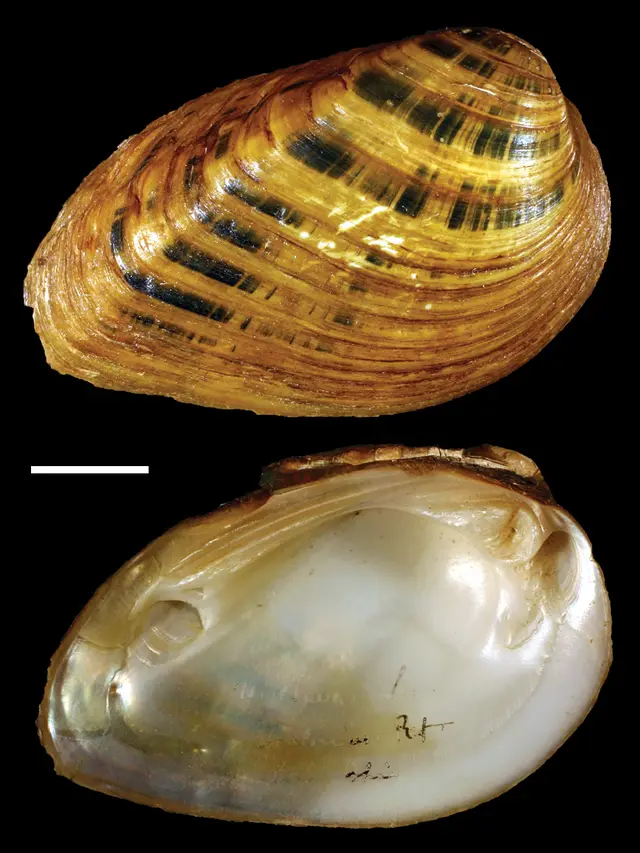
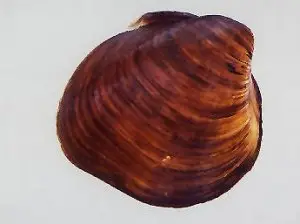
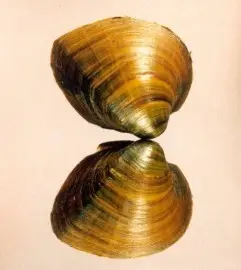
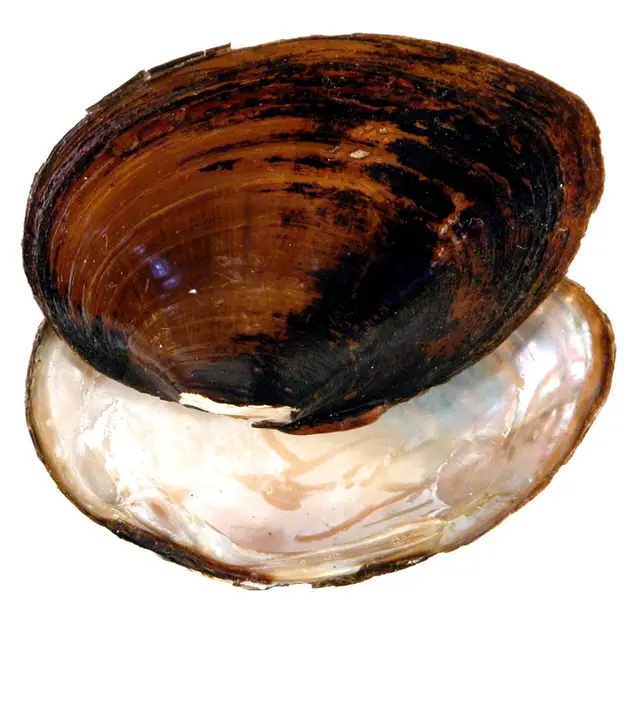
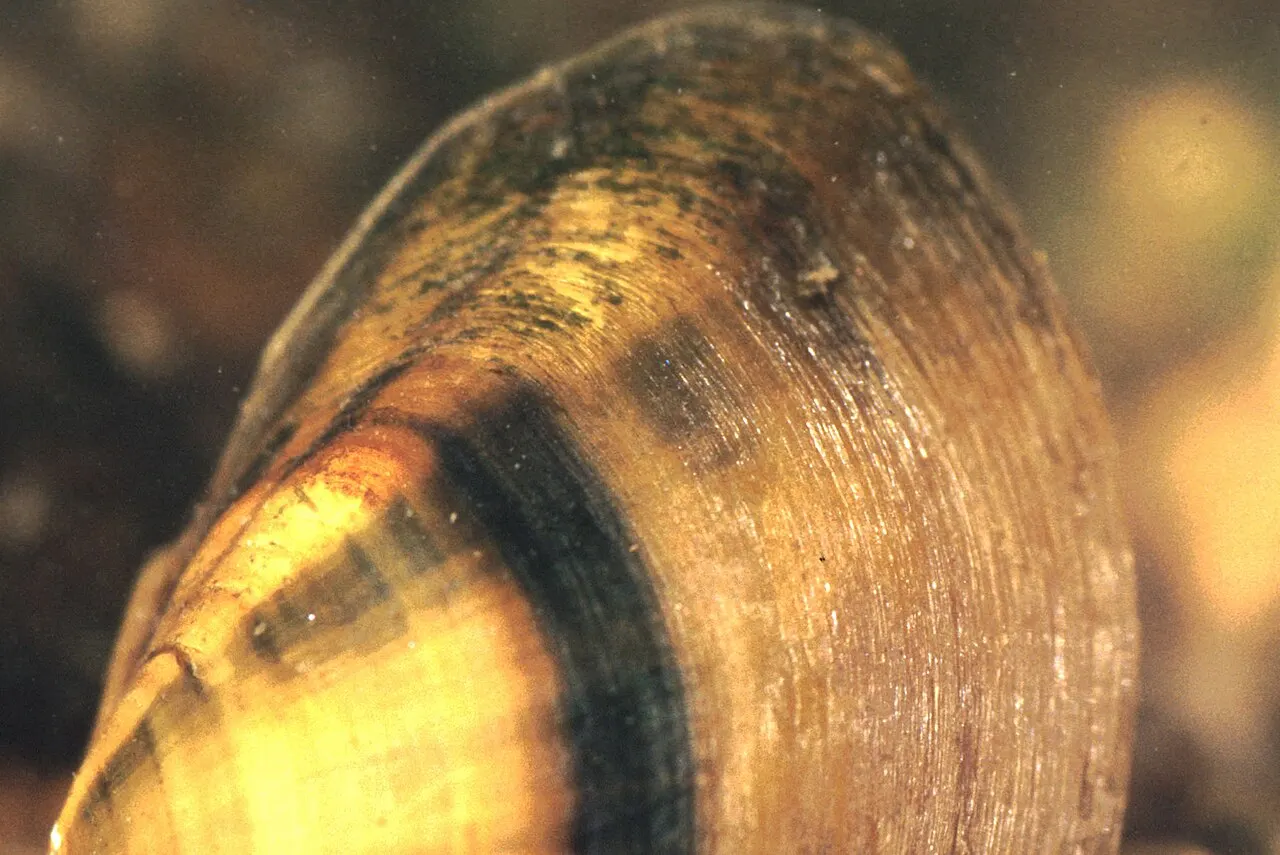
It's a medium-sized mussel with a roughly rectangular shell that runs from yellow to yellowish brown. Isaac Lea described it in 1831, and it was once filed as Unio decisus. It belongs to the Unionidae, the river mussels.
Where it lives
Adults live partly buried in gravel and sand on the beds of large creeks and rivers, taking food from the water that passes over them. The Red List habitat is permanent rivers and streams.
Historically the species occurred in every major river system of the Mobile Basin except the Tensaw-Mobile River, including the Alabama, Tombigbee, Black Warrior, Cahaba, Tallapoosa and Coosa. It has since disappeared from the main channels of the Tombigbee and Black Warrior and from a number of their tributaries. Federal recovery documents say it still lives in tributaries of the Tombigbee, Alabama, Cahaba, Coosa and Tallapoosa systems.
Pins are Wikidata “endemic to” fields. Orange dots, when present, are GBIF occurrence tiles — survey bias included.
How it lives
Like many river mussels, its young depend on a fish. The larvae clamp onto minnows of the genus Cyprinella (three species are named as hosts), then drop off as juveniles and settle on the stream bed. The Red List gives a generation length of 18 to 19 years.
Why it is in trouble
The 2012 assessment lists sewage, sediment and soil erosion, dams, mining, housing and commercial development, oil spills, drought and floods. It describes the population as severely fragmented and still declining.
The picture isn't uniformly bleak. The species was federally listed as endangered in 1993, and the US Fish and Wildlife Service says its situation has improved substantially since. Local stretches of the Coosa River, Big Canoe Creek, the Cahaba River, Bull Mountain Creek, Bogue Chitto Creek, the Buttahatchee River and the Sipsey River hold common to abundant mussels. The Sipsey has the best population, with densities of 0.36 to 17.71 mussels per square meter depending on the site. Even so, the range remains highly fragmented, and each population is isolated and exposed to polluted runoff, drought and chance events.
What is being done
The Red List records site protection and management, captive breeding, reintroduction and a genome resource bank. A federal amendment to the recovery plan (the original dates to 2000, which set no measurable goals) sets delisting criteria: at least ten populations that are stable or growing, with young animals and several age classes, at least one in each occupied sub-basin (Alabama, Cahaba, Coosa, Tallapoosa and Tombigbee), and threats managed so the species stays viable.
The amendment says a well-developed propagation and reintroduction strategy is needed, and that the Sipsey population may be strong enough to support limited translocations.
Sources
Written for this catalog in our own words from the sources below, checked against them on 12 November 2026. Population figures are estimates and carry the year they were made. Status and assessment year: IUCN. 2026. The IUCN Red List of Threatened Species. Version 2026-1. iucnredlist.org.