Critically Endangered
Rough pigtoe pearly mussel
Pleurobema plenum
The rough pigtoe (Pleurobema plenum) is a freshwater mussel found only in the United States, now hanging on in a handful of rivers in the Ohio River basin. The IUCN Red List assessed it as Critically Endangered in 1996. Its best remaining population is in Kentucky's Green River.
How to recognise it
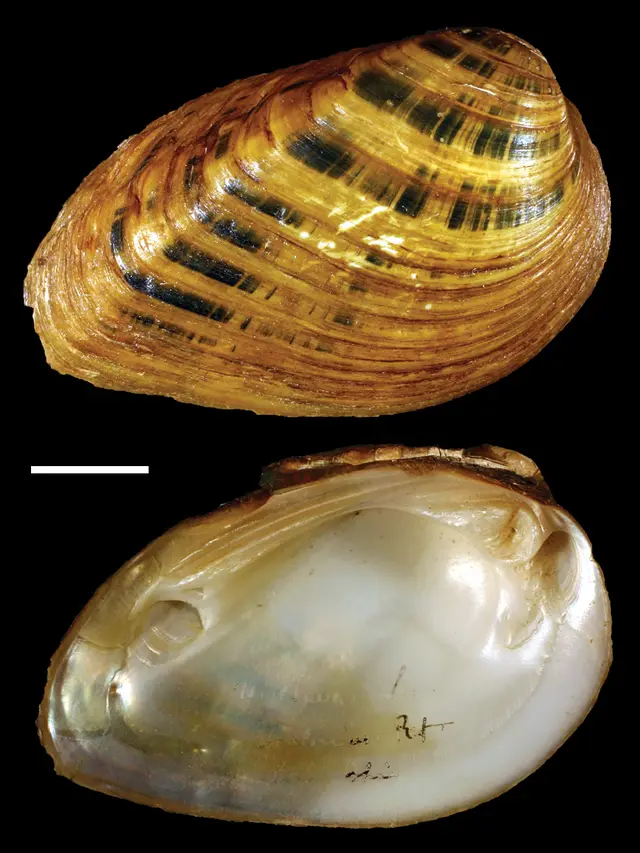
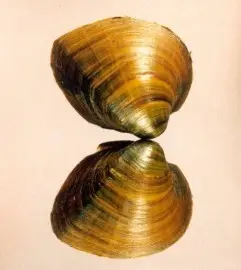
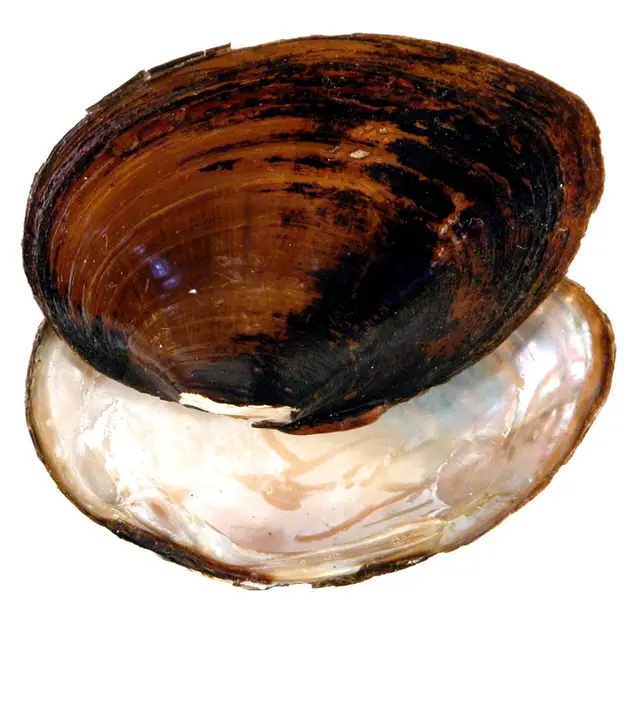
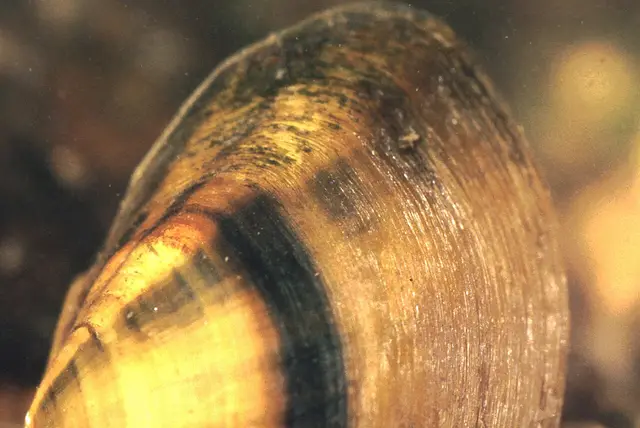
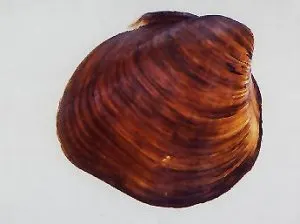
It's a chunky, roughly triangular mussel with thick, inflated shells. Adults reach about 6.4 cm long and 7 cm high. The outside is slightly glossy, yellowish to reddish brown, with a cloth-like texture. Inside, the pearly lining runs from white to pink, red or orange.
It belongs to the river mussel family, Unionidae. Older texts also list it as Unio plenus.
Where it lives
The species was first described from the Ohio River near Cincinnati in 1840. Historic records come from the Tennessee and Cumberland basins, the Ohio River drainage, the Ozarks and the Mississippi River mainstem. Today it survives only as remnants of that range.
A federal five-year review, drawing on data through 2013, lists populations in portions of the Clinch, Tennessee, Cumberland, Green and Barren rivers. All of them drain to the Ohio River. It favours firm, clean gravel, sand and silt in deeper stretches of larger streams, buried with only the rear edge of the shell and its siphons showing.
Pins are Wikidata “endemic to” fields. Orange dots, when present, are GBIF occurrence tiles — survey bias included.
How it lives
Rough pigtoes live a long time, more than 20 years according to the federal review. Like other freshwater mussels, they presumably release larvae that spend time on a fish host. The rosefin shiner and possibly the bluegill are reported hosts, but the review lists finding the host as an unmet research priority and says life history details remain unknown.
The animals are also hard to count. Part of any population sits below the streambed surface, so surveys miss individuals, and young ones are the hardest to find.
Where the populations stand
The Green River in Kentucky probably holds the best remaining population. In 2005 the species made up 3.51 percent of mussels sampled at Glenmore but only 0.04 percent at Munfordville. Only old adults had been seen there. In 2012 a survey of Pool 4 turned up 48 individuals of various sizes along about 13 river miles of channel, which suggests a viable group.
In the Clinch River, quadrat sampling from 2004 to 2007 pointed to a stable, reproducing population in a short stretch of 10 to 15 miles in Tennessee. In the Tennessee River itself the mussel is extremely rare. Tailwaters below Wilson Dam in Alabama gave a few signs of recruitment, though one survey found a single animal among 110 quadrats.
The Cumberland River is the unclear case. One regional assessment treated the species as gone from the whole river. Tennessee wildlife staff argued too little survey work had been done to say so, and the review called it possibly functionally extinct there. Indiana's only recent live record is a single mussel from the East Fork White River in 1992.
Why it is in trouble and what is being done
The 1984 recovery plan blamed silt, dams and pollution. Those pressures haven't gone away. Sewage, farm runoff, mining and gas development, road building, dredging and the way dams alter flow all still affect its rivers. Mussels also appear more sensitive to some pollutants than the lab animals used to set water quality limits, and safe levels for this species have never been tested.
It has been federally listed as endangered since June 14, 1976. The 2013 review rated its status as stable but put recovery at the lowest band, 0 to 25 percent of plan objectives. No facility held the species in captivity. Since 2007, researchers have moved 101 adults within the Green River to bolster the Munfordville site, with no sign yet of young resulting. Surveys, host identification and lab rearing of juveniles are among the review's priorities.
Sources
Written for this catalog in our own words from the sources below, checked against them on 12 November 2026. Population figures are estimates and carry the year they were made. Status and assessment year: IUCN. 2026. The IUCN Red List of Threatened Species. Version 2026-1. iucnredlist.org.