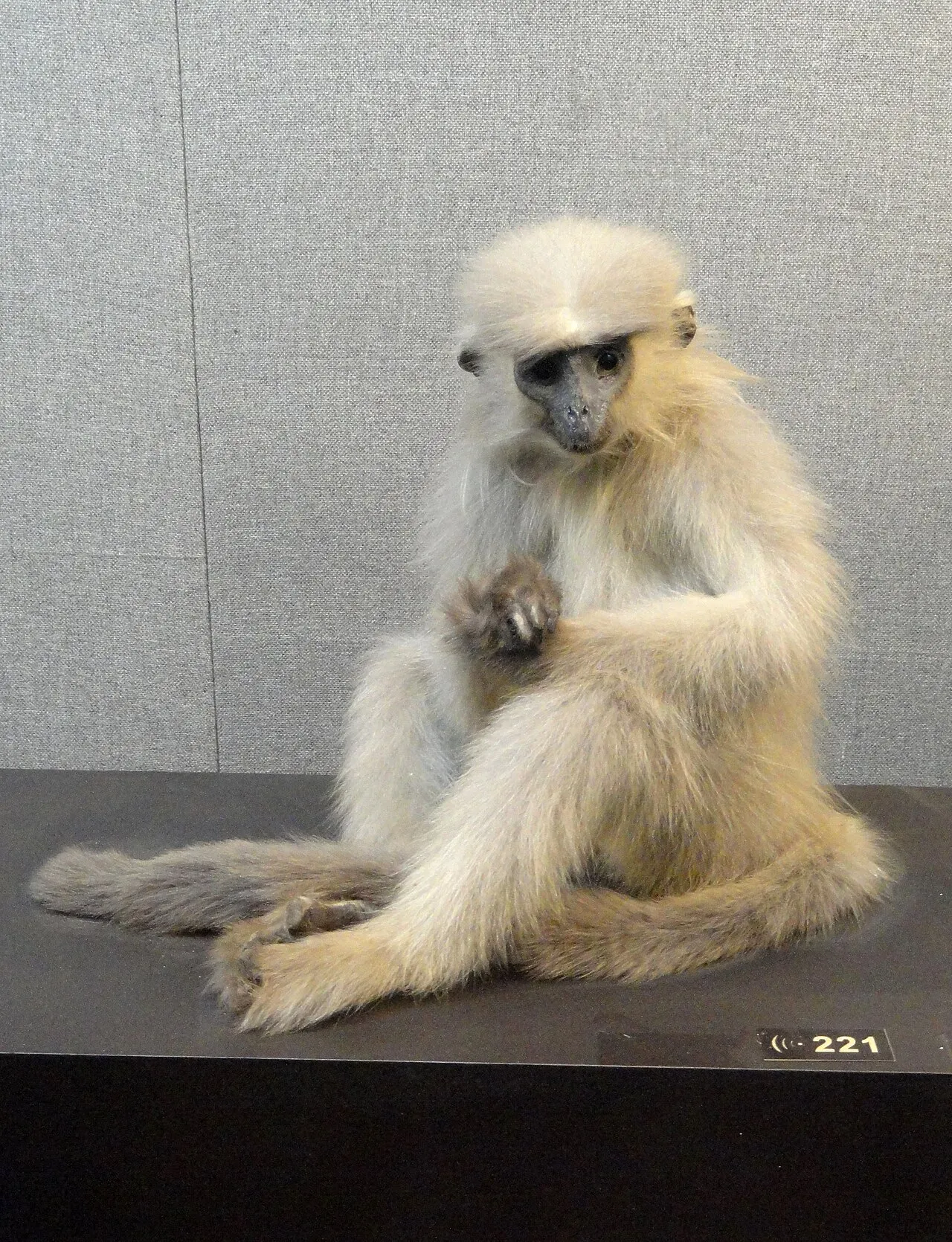
Endangered
Shortridge's langur
Trachypithecus shortridgei
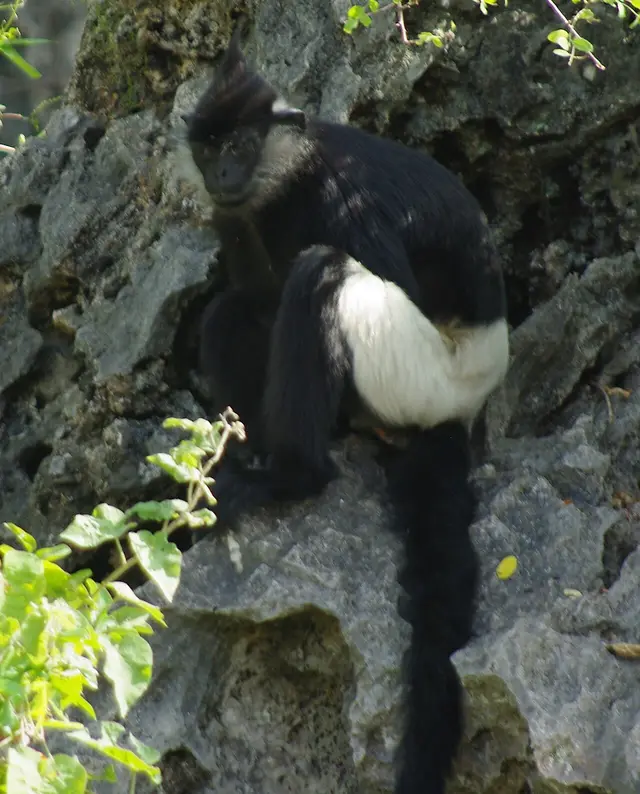
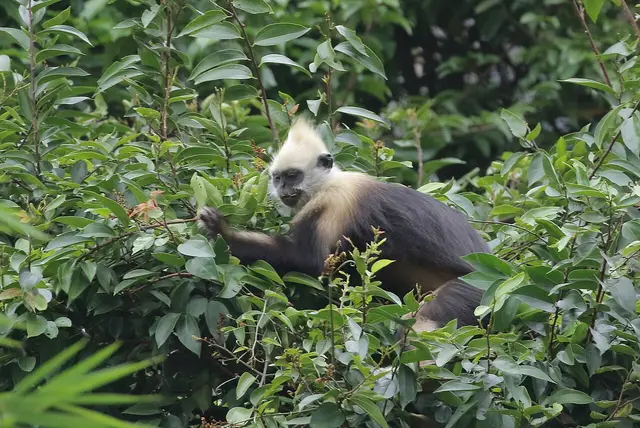
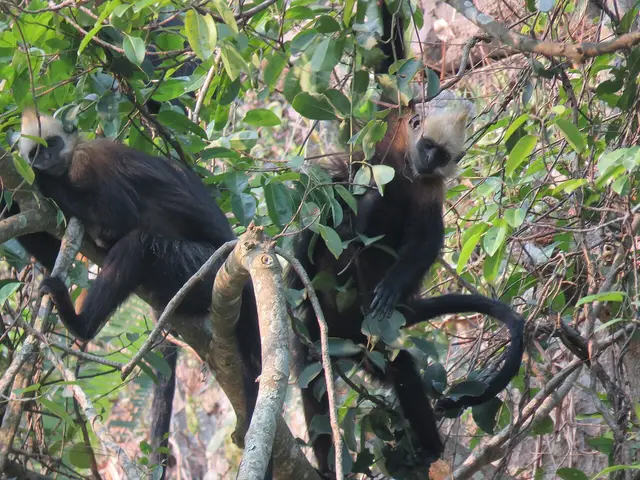
Shortridge's langur (Trachypithecus shortridgei) is an Old World monkey of the forests of northern Myanmar and north-west Yunnan in China. The IUCN Red List rates it Endangered (assessed 2020, population decreasing). Hunting and forest loss have thinned it, and only around 250 to 370 are thought to remain in China.
Where it lives
This langur is a leaf monkey of the subfamily Colobinae, described by Robert Wroughton in 1915. It is also called Shortridge's capped langur. Its range lies in north-eastern Myanmar and in north-west Yunnan, China, along the Dulong River.
The IUCN records it from lowland and montane moist forest, with sightings at elevations of roughly 200 to 2,500 metres. In China's Dulong valley, two groups that were watched closely lived in mixed evergreen and broadleaved forest close to the river. In Myanmar, camera traps set in Hkakaborazi National Park and Hponkanrazi Wildlife Sanctuary between 2015 and 2019 also recorded the species.
Pins are Wikidata “endemic to” fields. Orange dots, when present, are GBIF occurrence tiles — survey bias included.
Group life
Field work in the Dulong valley found that each group had one adult male, two or three adult females and up to five young animals. The two groups followed most closely numbered seven and nine animals.
How many are left
Nobody has a full count. A study published in the journal Oryx, based on interviews with 715 people and field surveys in 2012 and 2013, found about 19 groups in the Dulong valley and put the Chinese population at roughly 250 to 370 animals. An estimate from 1988 had suggested 500 to 600 in the valley, but its method is unclear, so the figures can't be compared with confidence.
For Myanmar there are no population figures. The Oryx study found no langurs during field work in the Gaoligong Mountains west of the Nu River, though interviewees reported twelve lone animals there.
Why it is in trouble
The IUCN lists hunting aimed at the species as a threat, along with housing, small-scale farming and dams that remove habitat. The animals are taken for food and for traditional medicine, and some are smuggled into China.
In the Dulong valley, the Oryx survey recorded steel-jaw traps and snares at densities high enough to kill langurs, and twelve langurs reported killed since the 1970s. Mature native forest there shrank by about 35 per cent between 1975 and 2009, partly through felling for fuel and building timber and clearing for grazing and cash crops such as black cardamom and walnut. Between 1999 and 2009, 21 langurs smuggled from Myanmar were confiscated in China.
What is being done
The species is on CITES Appendix I, which bars commercial international trade, and it is a Category I protected species in China. It occurs in at least three protected areas: Hponkanrazi Wildlife Sanctuary and Hkakaborazi National Park in Myanmar, and Gaoligongshan National Nature Reserve in China.
Protection on paper is weaker in practice. The Oryx study described a Chinese reserve whose rules were rarely enforced and which resentful local communities had little reason to follow. It recommended an independent review of reserve management, more local rangers to clear traps, and cooperation between China and Myanmar against smuggling. The IUCN records no recovery plan, no systematic monitoring and no captive population.
Sources
Written for this catalog in our own words from the sources below, checked against them on 12 November 2026. Population figures are estimates and carry the year they were made. Status and assessment year: IUCN. 2026. The IUCN Red List of Threatened Species. Version 2026-1. iucnredlist.org.