Endangered
Shortjaw kōkopu
Galaxias postvectis
The shortjaw kōkopu (Galaxias postvectis) is a scaleless freshwater fish found only in New Zealand, where it lives in bouldery, forest-shaded streams. The IUCN Red List assessed it as Endangered in 2014, and New Zealand ranks it Nationally Vulnerable. Its young go to sea and return upstream as whitebait.
How to recognise it
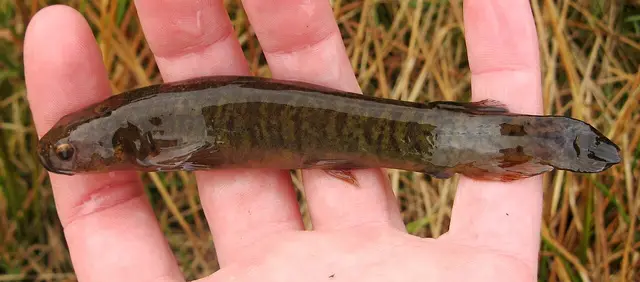
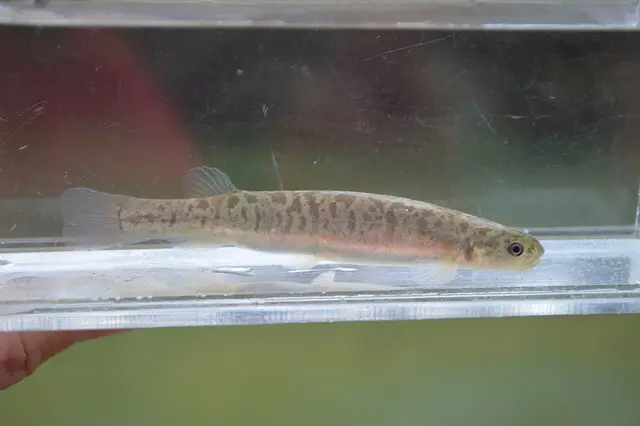
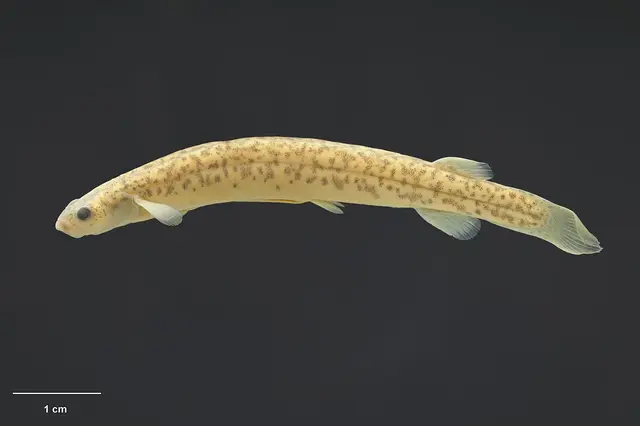
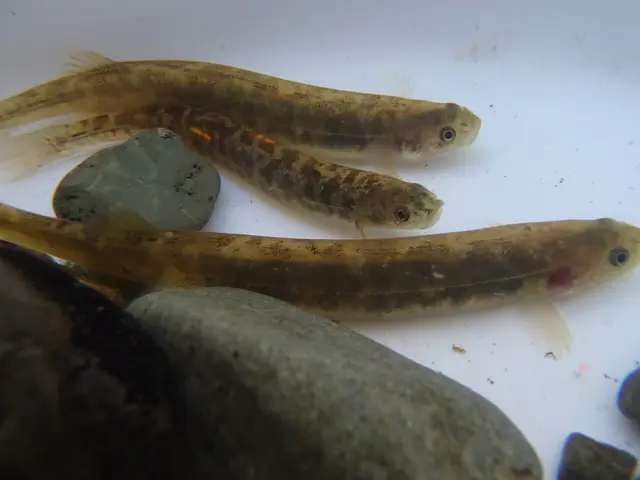
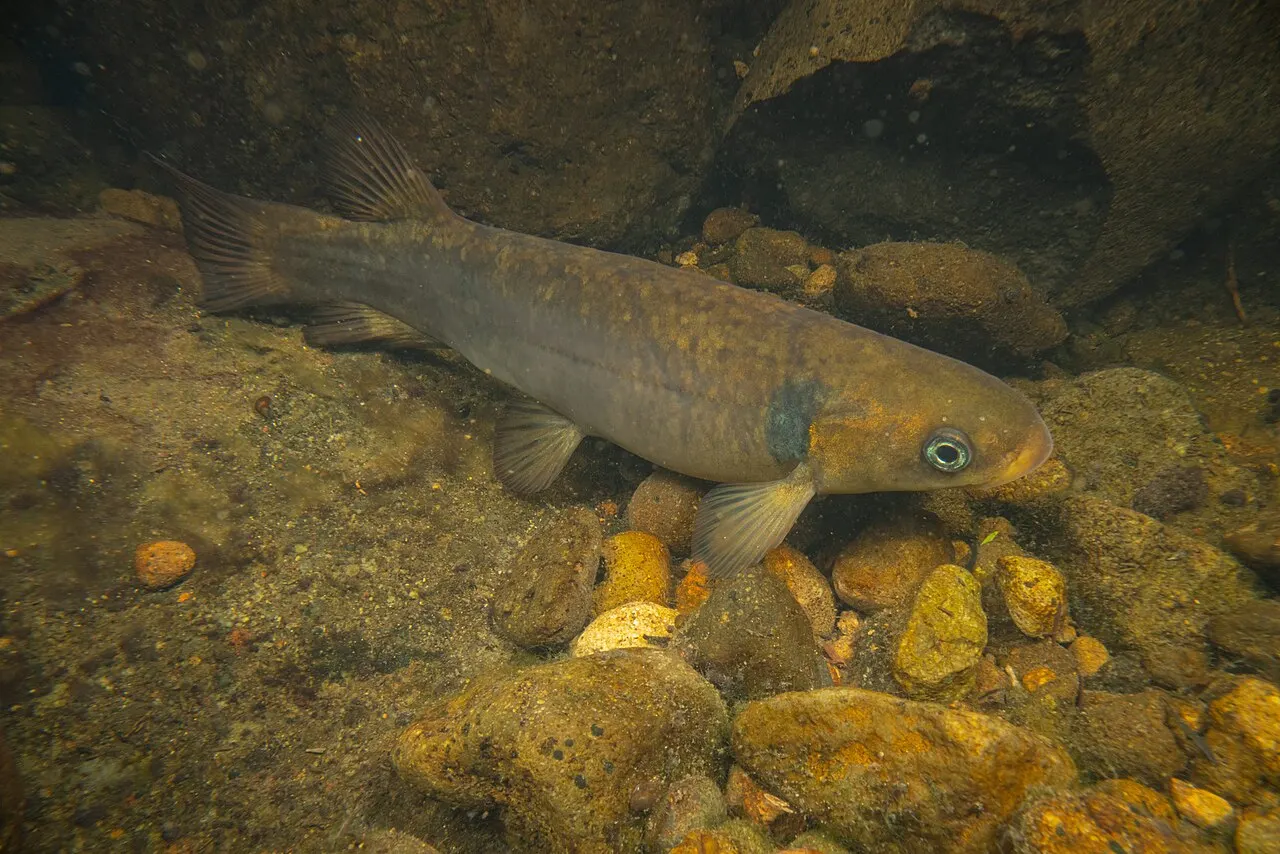
This is a large, scaleless galaxiid with a lower jaw shorter than the upper. Most adults measure 150 to 200 mm, and the biggest reach roughly 350 to 370 mm, depending on the source. Adults are marbled in brown to olive green, grey or black, with blue-black pigment behind the gills and a dark patch behind the gill cover.
Juveniles carry broad dark vertical bands that break into a marbled pattern as they grow. At about 50 to 60 mm, when they migrate upstream, they are hard to tell from young kōaro.
Where it lives
It occurs on both the North and South Islands, in rocky forest streams up to about 500 m above sea level. DOC names Northland, Taranaki, Wairarapa, Tasman, Marlborough and the West Coast as the regions with the largest populations, and the fish is not usually found on the east coast. The IUCN estimated its extent of occurrence at about 7,077 square kilometres in 2014, but the area it actually occupies at only about 18.5 square kilometres.
It favours small, intact, bush-covered streams with big boulders and logs. By day it hides under banks, logs and boulders. It can climb fairly high, steep falls, and has been recorded up to 200 km inland.
Pins are Wikidata “endemic to” fields. Orange dots, when present, are GBIF occurrence tiles — survey bias included.
How it lives
Shortjaw kōkopu feed at night, mostly on insects and other invertebrates, including insects that fall into the water from streamside plants. Individuals live for up to 15 years, possibly longer.
Spawning is thought to run from April to July. Eggs are laid in damp leaf litter and gravel on stream banks when rain lifts the water, and hatch when the next rise covers them. The larvae wash to estuaries or the sea, spend four to six months there, and return upstream as whitebait from September to November. That sea phase makes the species amphidromous, though NIWA notes that a first landlocked population has been found. A new population in the Kopuawhara catchment in Hawke's Bay was reportedly detected in 2023 through environmental DNA.
Māori traditionally caught kōkopu at night with a torch and scoop net, since the fish move slowly unless frightened.
Why it is in trouble
The main pressure is damage to the streams it depends on. DOC lists loss of native forest and streamside vegetation, more intensive land use, poorer water quality, water taken for irrigation, barriers to migration, competition and predation from introduced fish, and climate effects on spawning. A forestry-sector profile adds siltation and bank erosion from livestock and deer.
Juveniles can also be caught in the whitebait fishery. The IUCN rates the population as decreasing and lists ecosystem modification across much of the species' range as an ongoing threat.
What is being done
The 2014 assessment records that no harvest management plan was in place, and lists site protection and captive breeding as conservation actions for the species. Management measures proposed for forestry land include wide streamside corridors, fencing out livestock, controlling deer and goats, fish passage at barriers, managing water takes and regulating fishing for threatened species.
Sources
Written for this catalog in our own words from the sources below, checked against them on 12 November 2026. Population figures are estimates and carry the year they were made. Status and assessment year: IUCN. 2026. The IUCN Red List of Threatened Species. Version 2026-1. iucnredlist.org.