Critically Endangered
Roundhead galaxias
Galaxias anomalus
The Central Otago roundhead galaxias (Galaxias anomalus) is a small, scaleless freshwater fish found nowhere outside Otago, New Zealand, where it hangs on in headwater streams of the Taieri and Manuherikia catchments. The IUCN assessed it as Critically Endangered in 2014. Introduced trout are its biggest problem.
How to recognise it
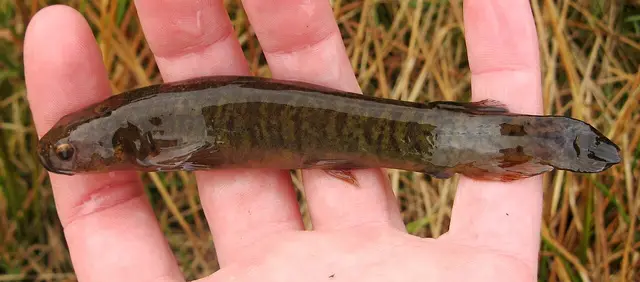
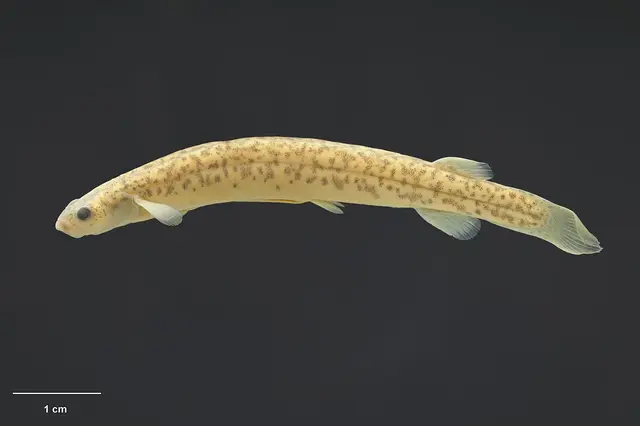
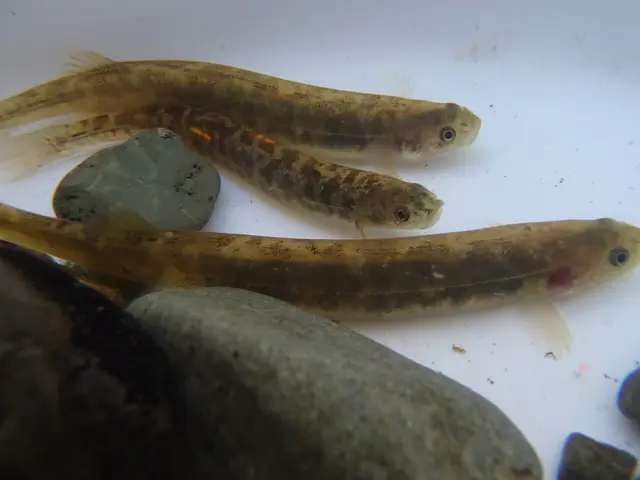
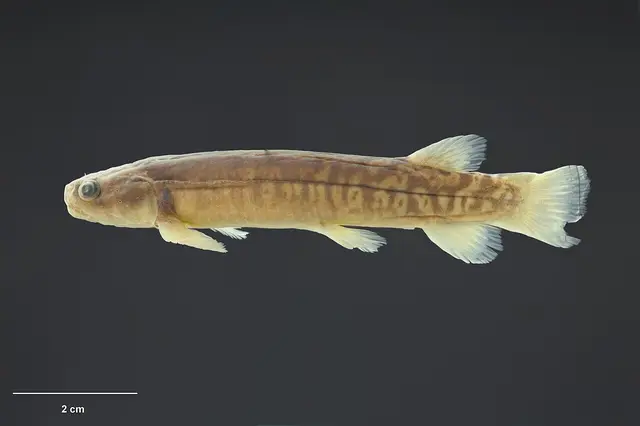
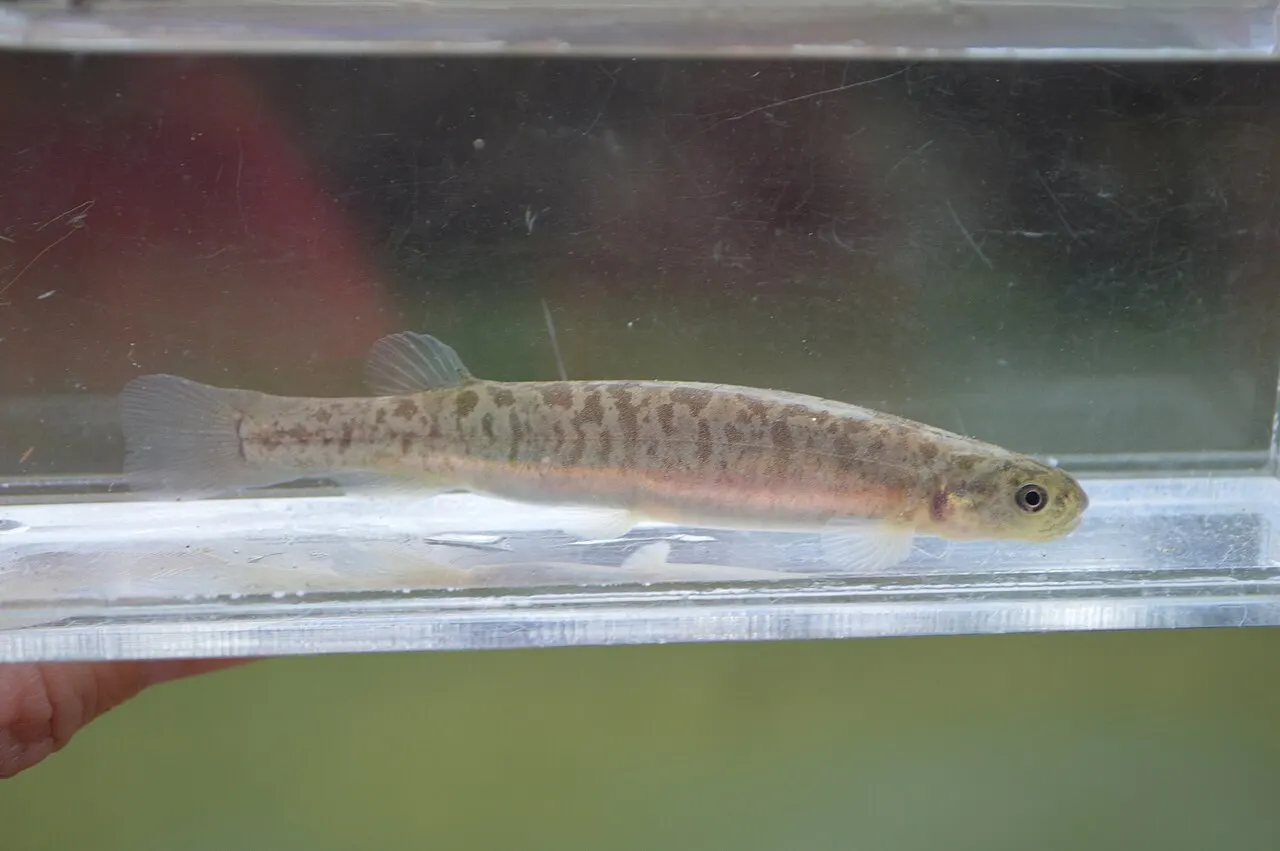
It's a slim, scaleless fish, usually up to about 10 cm long and occasionally reaching 15 cm. Rusty or burnt-brown markings run down the back in a broken pattern, and a close look can show a faint dusting of gold or silver flecks. Its dorsal fin sits far back, close to the tail.
It's easily mixed up with the flathead galaxias and the koaro, two relatives that share parts of the South Island.
Where it lives
The species is found only in Central Otago. It lives in headwater tributaries of the Taieri River upstream of Sutton, including the Maniototo and Strath Taieri plains, and in spring-fed tributaries of the Manuherikia River such as the Pool Burn and Ida Burn. The Ewe Burn and Kye Burn hold its strongholds.
Its streams are shallow, with gravel and cobble beds, at roughly 350 to 800 metres above sea level. It doesn't migrate to the sea during its life cycle. The fish copes with warm water and low flows, but needs shade from streamside plants and logs or boulders for cover.
Pins are Wikidata “endemic to” fields. Orange dots, when present, are GBIF occurrence tiles — survey bias included.
How it lives
Roundhead galaxias feed on small stream invertebrates such as mayflies and stoneflies. They spawn in spring, from late September into November, laying eggs roughly 2 mm across among porous cobbles and gravel.
They don't live long for a galaxiid, about three to four years, so a few bad seasons can cut a population hard.
Why it is in trouble
Trout, introduced to New Zealand about 150 years before 2014, eat these fish and push them out of streams. In 2014 Pete Ravenscroft, a Department of Conservation freshwater ranger, said trout were still spreading into new waterways without human help and that only two secure populations of this species remained in Otago. He warned it could go extinct within 20 to 30 years if trout invasions continued.
Other pressures include water taken from streams, drain clearance and land development, stock trampling banks, silt, nutrients, and the loss of streamside vegetation. The IUCN also lists storms, floods and droughts as threats. Freshwater ecologists estimated in 2023 a loss of about 50 percent of populations or numbers across the range over 25 years. A 2021 survey of Thomsons Creek found known locations had fallen from 11 to three population fragments.
Estimates of how much habitat is left vary. A 2014 press release gave 22.4 hectares, while the Department of Conservation now lists 91 hectares across 73 fragmented sites. The IUCN lists the population trend as decreasing.
What is being done
Work centres on keeping trout out. In early April 2023 a barrier opened on Thomsons Creek, part of a $150,000 catchment project, to protect the healthiest local population from brown trout moving upstream. Two other small populations in spring creeks are shielded by overhanging track culverts. The Otago Regional Council holds Fish and Game permits to remove trout from four Kye Burn tributaries and two Upper Clutha tributaries, and would like to add 25 to 30 barriers over five years. The IUCN lists site and habitat protection as needed actions.
Sources
Written for this catalog in our own words from the sources below, checked against them on 12 November 2026. Population figures are estimates and carry the year they were made. Status and assessment year: IUCN. 2026. The IUCN Red List of Threatened Species. Version 2026-1. iucnredlist.org.