Critically Endangered
Dusky Galaxias
Galaxias pullus
The dusky galaxias (Galaxias pullus) is a scaleless, light-brown freshwater fish about 15 cm long that lives only in a handful of tiny upland streams in Otago, on New Zealand's South Island. The IUCN Red List rated it Critically Endangered in 2014, and introduced trout are among the threats.
How to recognise it
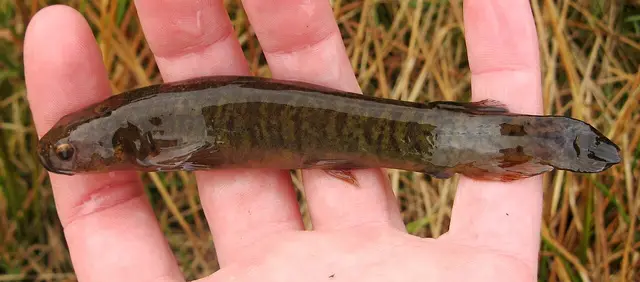
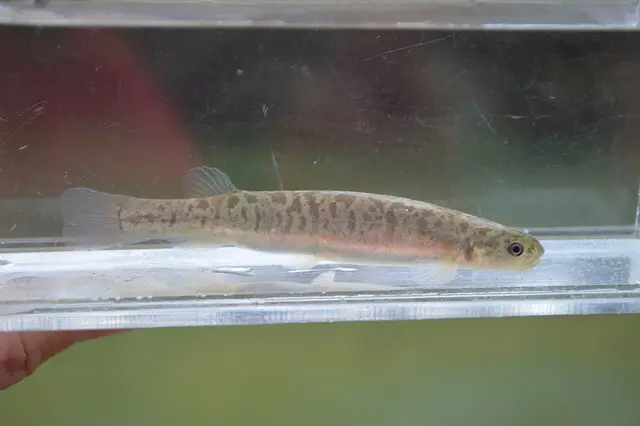
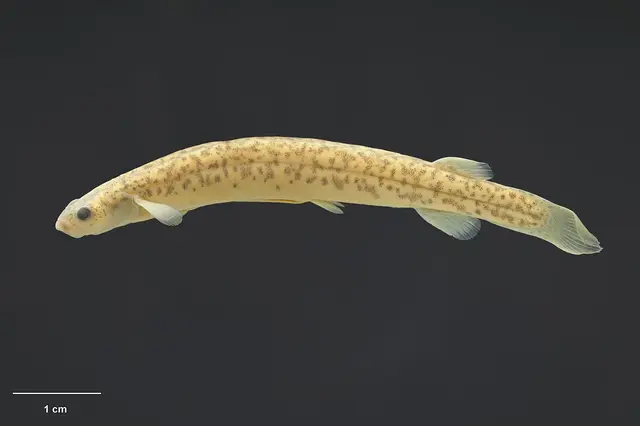
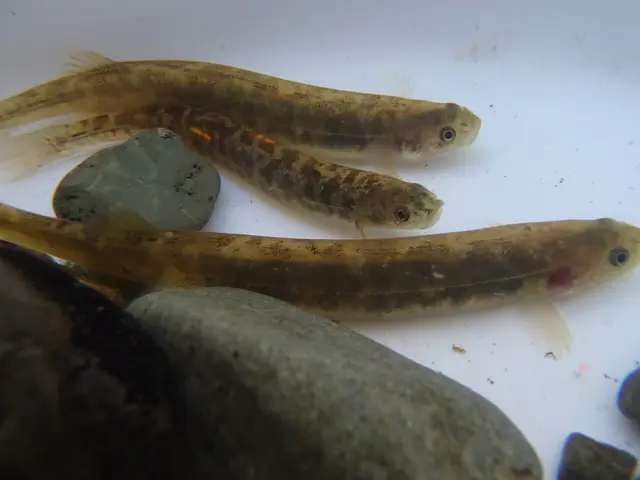
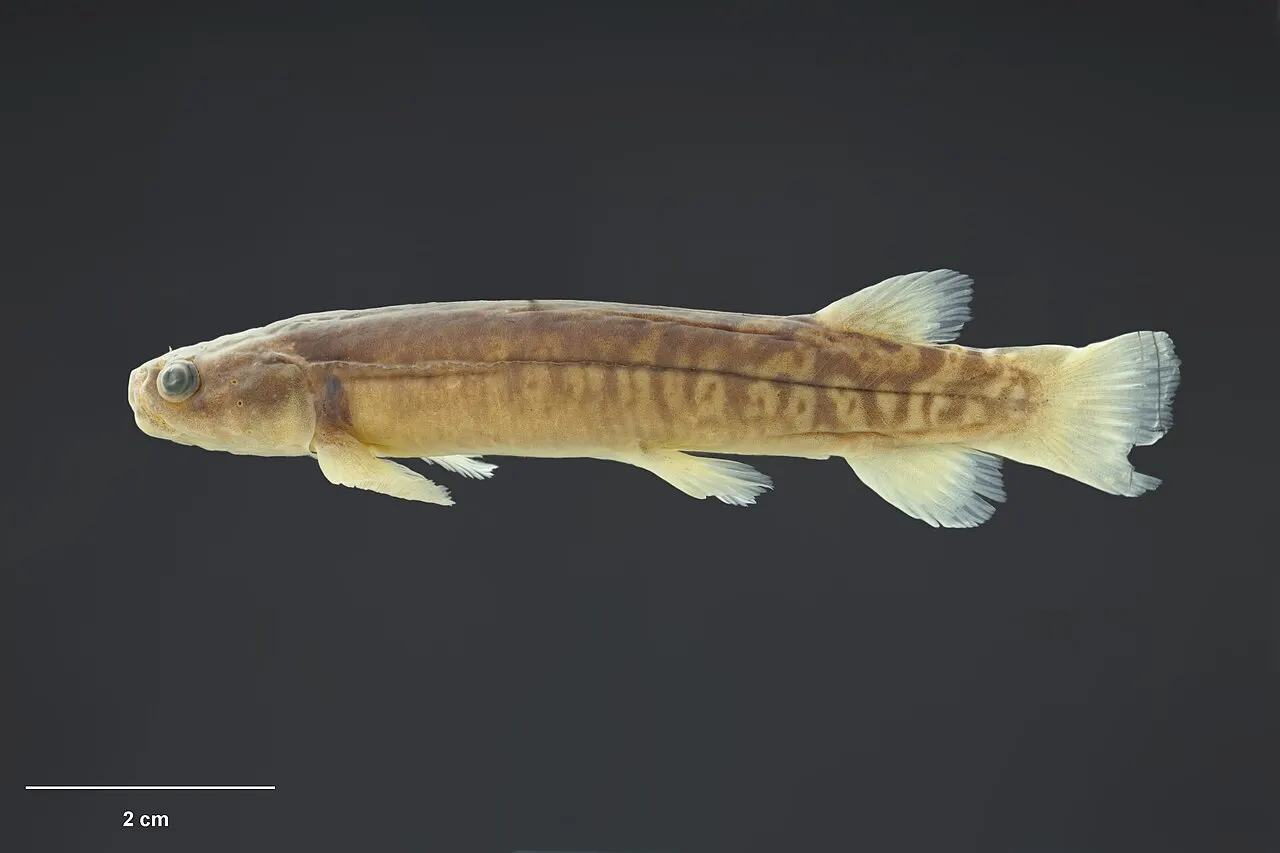
It's a light-brown fish with dark and light brown halo-shaped markings that break up along the back, a pattern New Zealand's Department of Conservation (DOC) likens to mismatched wallpaper. Like other galaxiids it has no scales, and its dorsal fin sits far back, close to the tail. Dark blotches show behind the gill openings.
Most adults reach about 150 mm. They're hard to spot in daylight, because they stay under banks and among gravel.
Where it lives
The species was formally described in 1997 by Robert McDowall and is found nowhere else. It lives in eastern Otago, mainly in small tributaries of the Waipori River around Lake Mahinerangi, with some populations in the Clutha (Mata-Au) and upper Taieri rivers.
The streams are headwaters small enough to step across, at roughly 400 to 1,000 m above sea level, set among tussock, manuka, hebe and coprosma. The IUCN assessment gives an extent of occurrence of about 528 square kilometres but an area of occupancy of only about 1 square kilometre. DOC counts 25 known populations sharing about 44 hectares of habitat.
Pins are Wikidata “endemic to” fields. Orange dots, when present, are GBIF occurrence tiles — survey bias included.
How it lives
Dusky galaxias eat small stream invertebrates such as mayflies and stoneflies, and sometimes insects that fall in from the bank. They don't migrate. Spawning runs from October to November, when eggs about 2 mm across are laid during flood flows, either in streamside vegetation or in small caves in the stream bank.
They can live up to 20 years. The IUCN assessment puts generation length at 8 years.
Why it is in trouble
DOC names introduced trout and brook char, which eat galaxiids, as a threat. The IUCN assessment lists invasive species affecting more than 90 percent of the population. Land use adds to the pressure: stock access to streams, loss of native streamside plants, forestry and development, small dams and farm water takes. These bring silt into the streams, reduce flows and strip away spawning habitat.
DOC reports that 25 percent of known populations were lost over what it calls the last decade, without dating that period. A forestry industry guide also points to culverts and fords with steep lips, which can block upstream movement.
What is being done
The IUCN assessment lists awareness and communication as a conservation action and names research on threats and on population size, distribution and trends as priorities. It records no conservation actions in place. A forestry industry guide for the species calls for wide planted streamside corridors, stock exclusion, fish passage at barriers, limits on water abstraction and keeping exotic fish and aquatic weeds out. DOC points readers to a guide on helping non-migratory galaxiids.
DOC's species page ranks the fish Nationally Vulnerable in New Zealand's own threat system. An older forestry industry guide lists it as Nationally Endangered.
Sources
Written for this catalog in our own words from the sources below, checked against them on 12 November 2026. Population figures are estimates and carry the year they were made. Status and assessment year: IUCN. 2026. The IUCN Red List of Threatened Species. Version 2026-1. iucnredlist.org.