Critically Endangered
Bignose galaxias
Galaxias macronasus
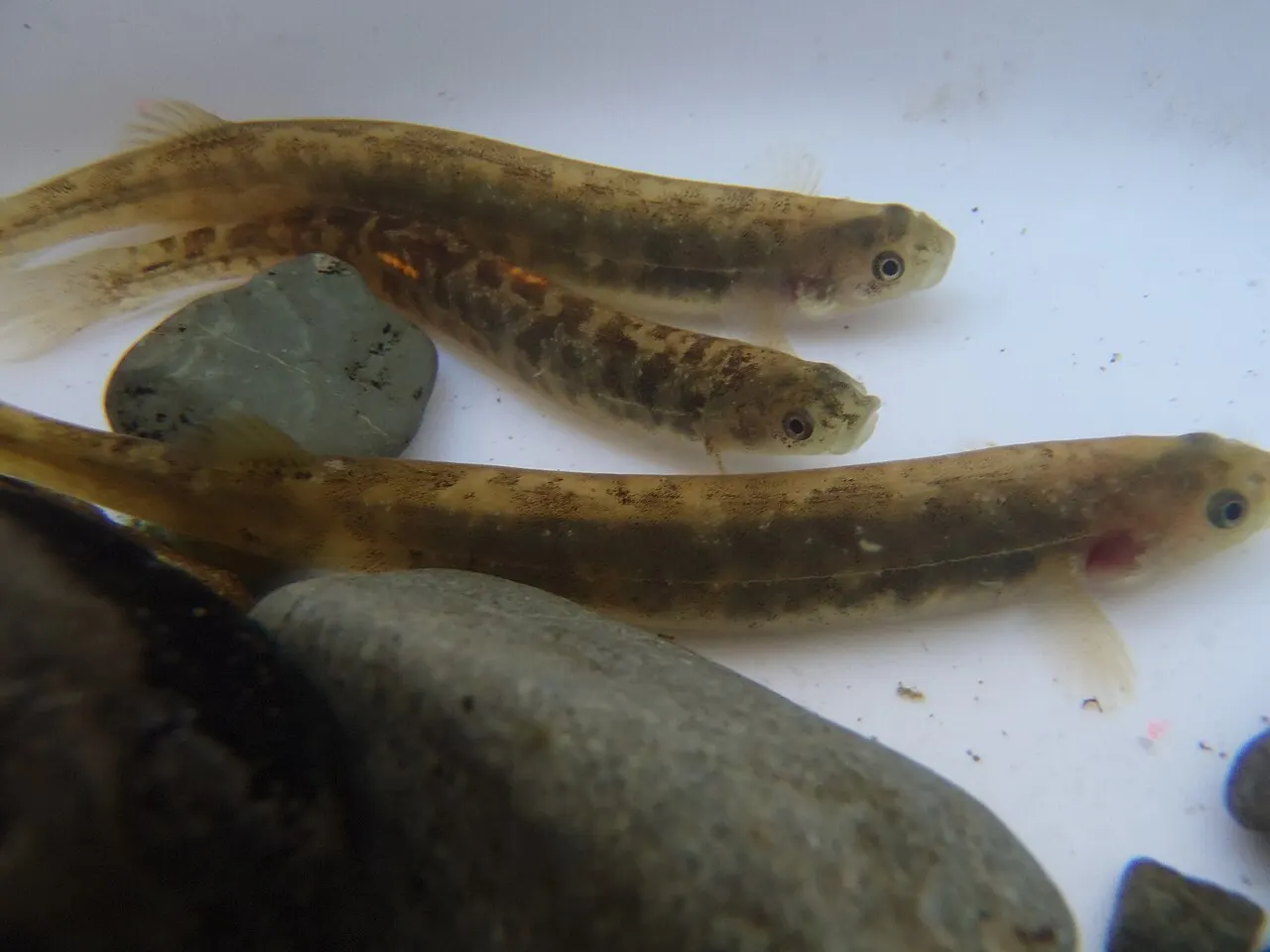
The bignose galaxias (Galaxias macronasus) is a small, scaleless freshwater fish found only in spring-fed streams of the upper Waitaki catchment in New Zealand's Mackenzie Basin. Scientists named it in 2003. The IUCN Red List rated it Critically Endangered in 2014, and introduced trout are among its threats.
How to recognise it
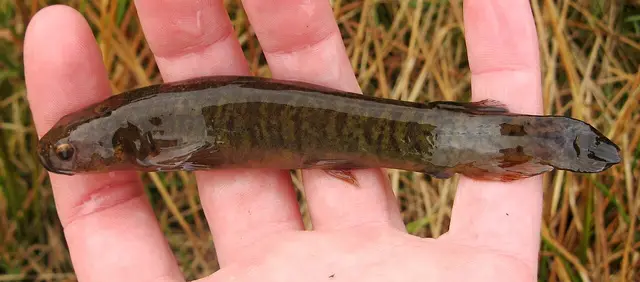
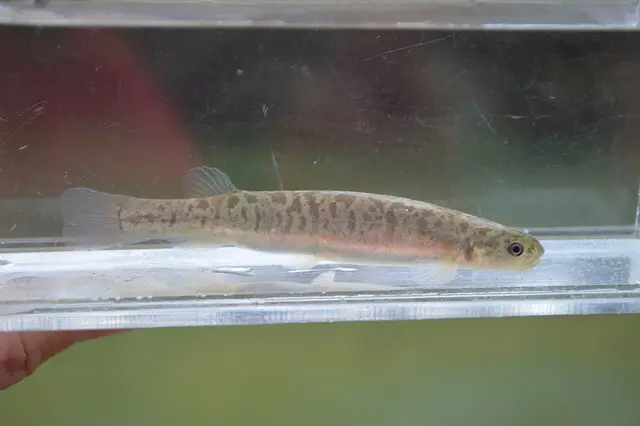
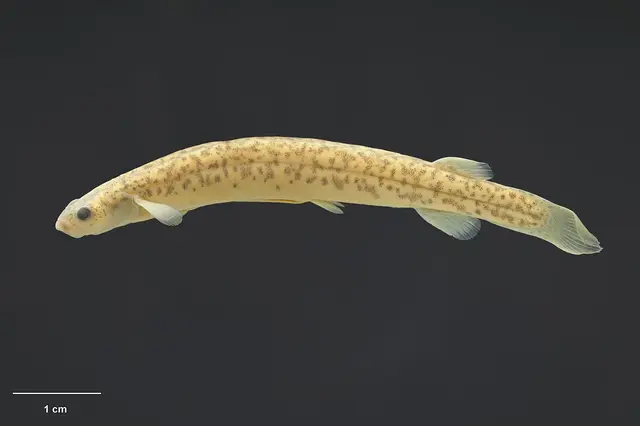
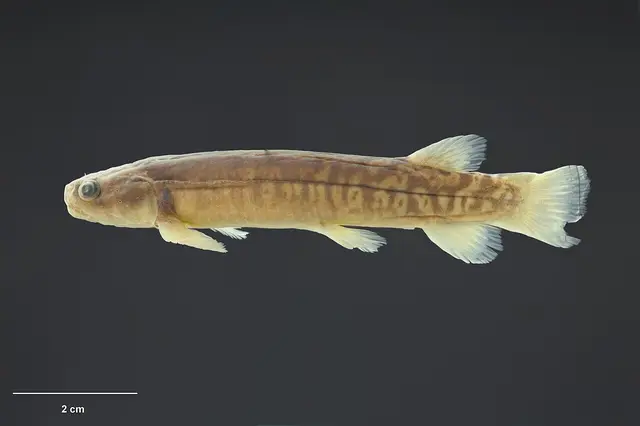
It's a slender, elongated fish with a distinctly rounded head, golden-amber with darker mottling. Like other galaxiids it has no scales, and its dorsal fin sits far back, close to the tail. Its pelvic fins have 4 to 6 rays (usually 5) and its tail fin 11 to 14.
It belongs to the small 'pencil' galaxiids, which resemble each other closely. Robert McDowall and Jonathan Waters described it as a new species in 2003 after DNA sequencing and body measurements showed it was distinct from its relatives.
Where it lives
The species lives in several places in the Mackenzie Basin, mostly in the upper Waitaki River catchment on the South Island. It tends to occupy small tributaries fed by springs and wetlands, in streams with good bankside cover, shade, and logs or boulders in the channel.
The IUCN estimates its extent of occurrence at 752 square km and the area it actually occupies at only 3.3 square km.
Pins are Wikidata “endemic to” fields. Orange dots, when present, are GBIF occurrence tiles — survey bias included.
How it lives
It does not migrate to the sea or carry out any life cycle migration, unlike some other New Zealand galaxiids. It feeds mostly at night on invertebrates. Little is known of its life history, but mature fish have been found in June and July, which suggests spawning in winter.
Why it is in trouble
Brown and rainbow trout were released in New Zealand rivers in the mid-to-late 19th century for sport. Trout eat native galaxiids that stay in their home streams, and the Red List names brown trout (Salmo trutta) as a threat. Other pressures include lost streamside vegetation, weeds, silt, high nutrients, bank erosion from livestock, goats and deer, culverts and fords that block upstream movement, and reduced flows from water abstraction.
The IUCN trend is decreasing. New Zealand's own classification rates it Nationally Vulnerable.
What is being done
The Red List assessment records no specific actions for this species. In the upper Waitaki, Department of Conservation staff have built barriers with a drop that trout can't jump, to keep them out of streams holding native galaxiids. The first went up at Fraser Stream after a 2009 survey that caught 25 bignose galaxias and 12 lowland longjaw galaxias, and there are now 12 in the catchment.
Floods can carry water over a barrier and let trout back in, so streams need regular checking. A University of Canterbury PhD project is studying how barriers and other measures can help the lowland longjaw recover.
Sources
Written for this catalog in our own words from the sources below, checked against them on 12 November 2026. Population figures are estimates and carry the year they were made. Status and assessment year: IUCN. 2026. The IUCN Red List of Threatened Species. Version 2026-1. iucnredlist.org.