Critically Endangered
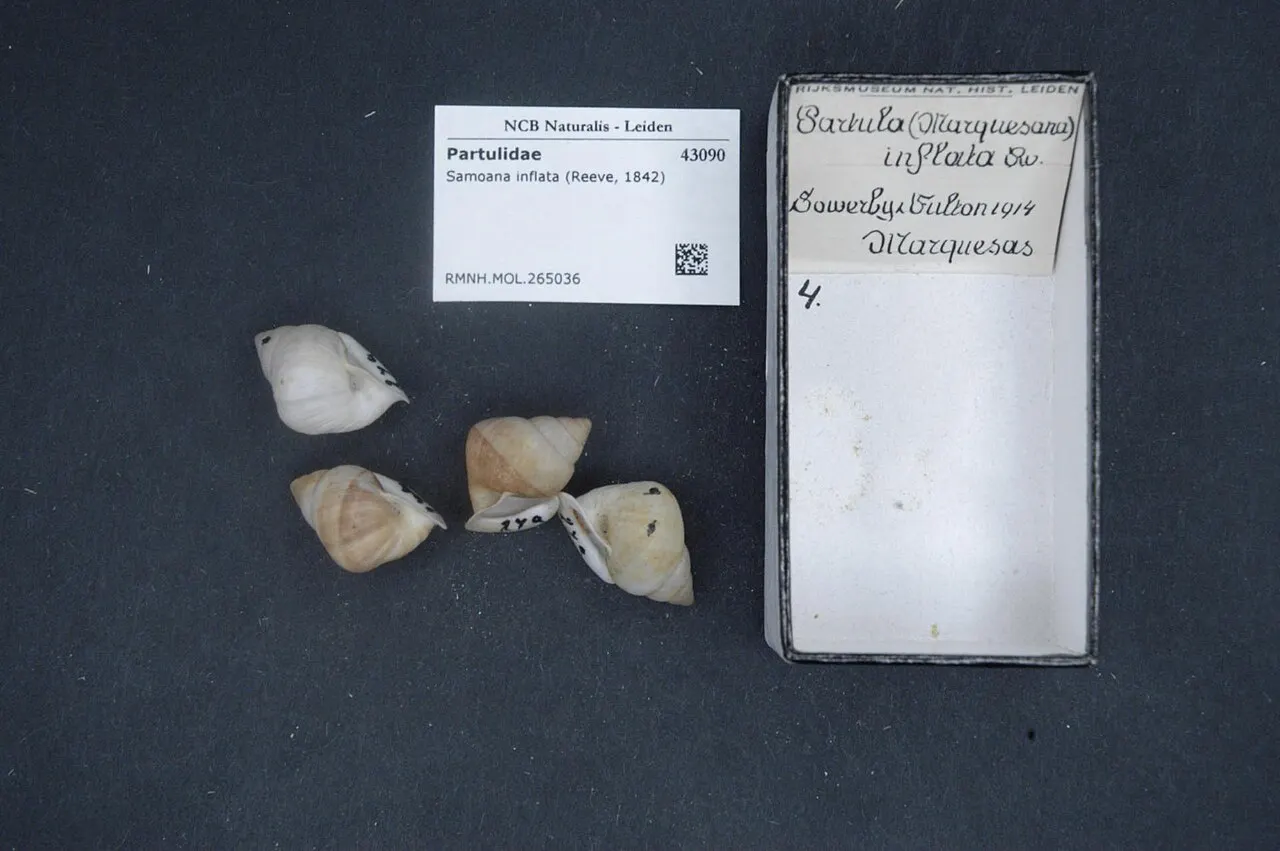
Samoana inflata
Samoana inflata
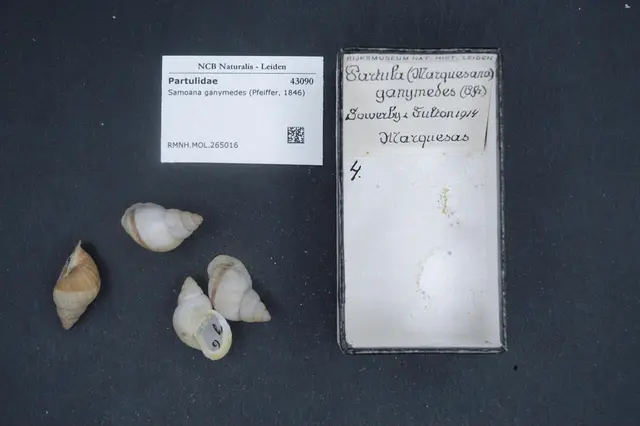
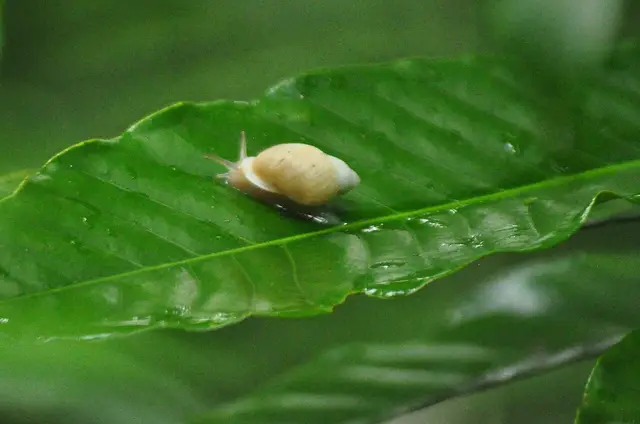
Samoana inflata is a Polynesian tree snail (family Partulidae) known only from Hiva Oa and Tahuata in the Marquesas Islands, French Polynesia. The IUCN Red List assessed it in 2024 as Critically Endangered (Possibly Extinct). Its last record dates to 1995 or earlier, and some databases already list it as extinct.
What it was
The species is an air-breathing land snail described by Lovell Reeve in 1842, who named it Partula inflata. It was later moved to the genus Samoana, and the name Bulimus thersites, published by Pfeiffer in 1842, is treated as a synonym. It belongs to Partulidae, a family of tree snails from Pacific islands.
The shell and habits of this snail are poorly documented, and no detailed description is available.
Where it lived
The only places it has ever been recorded are Hiva Oa and Tahuata, two neighbouring islands in the southern Marquesas. The IUCN assessment lists its habitat as tropical moist lowland forest, at elevations between about 250 and 800 m. It estimates the area the species occupies at 4 square kilometres, in a single location, and treats all remaining individuals as one subpopulation.
Pins are Wikidata “endemic to” fields. Orange dots, when present, are GBIF occurrence tiles — survey bias included.
What happened to it
The last records are thin. A database of recently extinct species gives 1995 or earlier as the last record, plus an empty shell found in 2009. It also cites a 2005 survey of the Marquesas, but that report was never published. The IUCN does not call the snail extinct. Its 2024 assessment says it is possibly extinct, meaning it is probably gone but a survivor hasn't been ruled out.
The threat the IUCN names is the rosy wolfsnail (Euglandina rosea), a predatory snail. It was brought to the Society Islands in 1974 to control the giant African snail, and it rapidly wiped out large numbers of native land snails there, including many partulids. The IUCN scores the threat to this species as affecting the whole population and capable of very rapid decline, but lists its timing as future rather than ongoing. How far the predator has spread on Hiva Oa and Tahuata is not documented.
What is being done
The IUCN lists no conservation actions in place for the species. Research needs recorded in the assessment are on population size, distribution and trends, and on threats.
Sources
Written for this catalog in our own words from the sources below, checked against them on 12 November 2026. Population figures are estimates and carry the year they were made. Status and assessment year: IUCN. 2026. The IUCN Red List of Threatened Species. Version 2026-1. iucnredlist.org.