Endangered
Samoana attenuata
Samoana attenuata
Samoana attenuata is a tree snail of the Society Islands in French Polynesia, now surviving on Raiatea, Tahiti and Moorea. The IUCN Red List lists it as Endangered (assessed 2024), after a 2009 Critically Endangered listing. The invasive rosy wolf snail wiped out most of its relatives.
How to recognise it
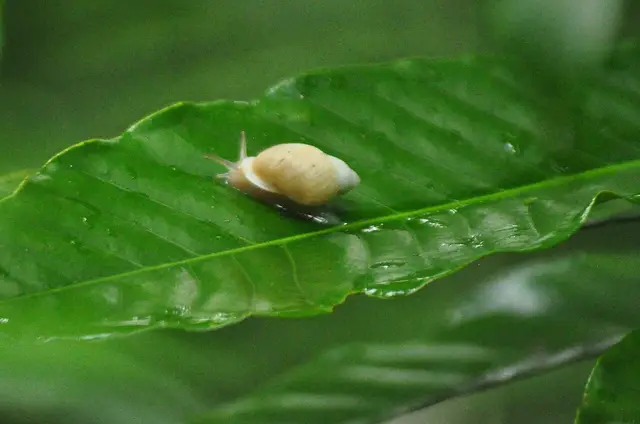
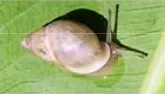
It belongs to the Partulidae, the Pacific tree snails. Field photographs from Raiatea show a thin, partly see-through shell through which the mottled body can be seen. The species was described by William Harper Pease in 1864, and it has also been known as Partula attenuata.
Where it lives
Samoana attenuata was widespread across the Society Islands, unlike most partulids, found on more than one island. Today it survives on Tahiti and Moorea, and a population was found on Raiatea in 2006 and reported in Oryx in 2008 (Lee and colleagues). It is reportedly lost from Bora Bora. The IUCN gives its elevation as 250 to 1,000 m, in moist lowland and montane forest, across three locations.
The Raiatea snails were on a ridge at about 750 m on Mount Tefatua, the island's highest peak. Raiatea once held about 34 partulid species, all thought lost in the wild, so the find was a surprise. The 2008 study raised the possibility of a high-altitude refuge, since laboratory work suggests the predator moves less well in cooler air, but said it is unclear whether the refuge is stable. Live predators were seen up to about 500 m on the mountain, and a few individuals climbing higher could wipe the snails out.
Pins are Wikidata “endemic to” fields. Orange dots, when present, are GBIF occurrence tiles — survey bias included.
Why it is in trouble
The rosy wolf snail (Euglandina rosea) was brought to the region in the late 1970s to control the giant African land snail, and was deliberately introduced to Raiatea in 1986. Native tree snails collapsed instead, and across the Society Islands most partulids vanished within years, and the IUCN records the invasive predator, which preys on and kills individual snails, as the key threat. It also notes extreme fluctuations in numbers. The population trend is unknown, and no population size has been published.
What is being done
The IUCN records the species as subject to ex situ conservation, and invasive species control is the action in place. Off-island captive breeding of Raiatean partulids began in 1991 under the International Partulid Conservation Programme, headed from the Zoological Society of London. The best-known release, between 8 and 15 April 2023, put 5,694 snails of seven Partula species on Tahiti and Moorea, and a wild-born adult Partula taeniata has been seen on Moorea after earlier releases. Those releases concern Partula, not this snail, but they show the approach: remove snails to safety, breed them, and return them to places where they can survive alongside the predator.
Sources
Written for this catalog in our own words from the sources below, checked against them on 12 November 2026. Population figures are estimates and carry the year they were made. Status and assessment year: IUCN. 2026. The IUCN Red List of Threatened Species. Version 2026-1. iucnredlist.org.