Endangered
Samoana burchi
Samoana burchi
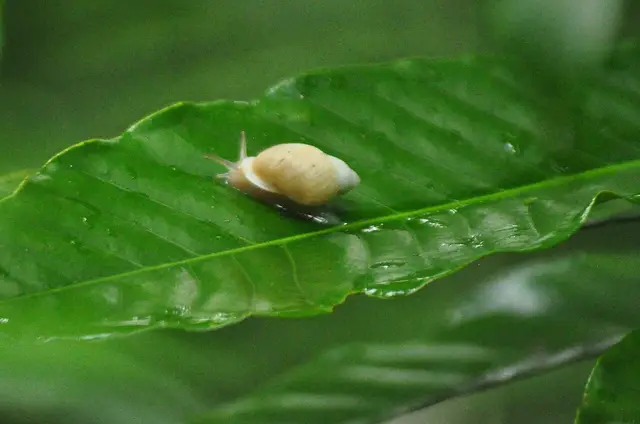
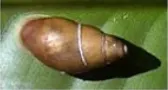
Samoana burchi is a small tree-dwelling land snail found only on the island of Tahiti in French Polynesia. It survives in two patches of mountain forest, on Mount Aorai and Mount Atara. The IUCN Red List assessed it as Endangered in 2024, after being listed as Critically Endangered in 2012, mostly because of an introduced predatory snail.
What it is
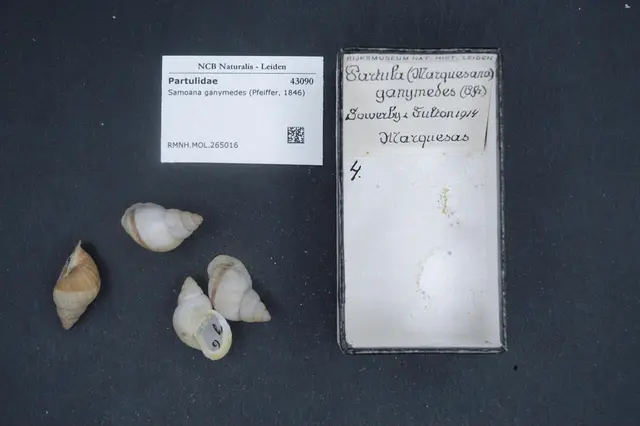
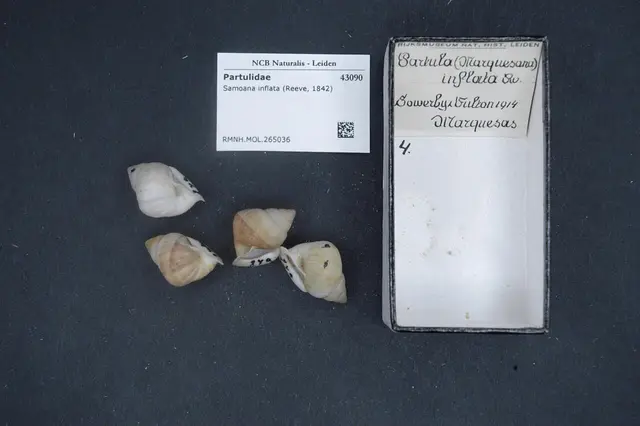
The snail belongs to the family Partulidae, the Pacific tree snails, which are known to biologists for their variety of shell patterns and for how badly they have fared since the 1970s. The genus Samoana holds about 23 species spread across Polynesia and the Mariana Islands. This one was described by Yoshio Kondo in 1973 and has no recorded synonyms in the GBIF taxonomy.
Little has been published about its shell, diet or breeding.
Where it lives
It is endemic to Tahiti, the largest of the Society Islands. Two separate and fragmented montane-forest populations are described, one on Mount Aorai and the other on Mount Atara. The Red List counts three locations and puts the extent of occurrence at between 193 and 376 square kilometres, with an occupied area of about 12 square kilometres.
The assessment records elevations from 800 to 2,200 m and a habitat of moist tropical or subtropical forest. The number of individuals is unknown, and the population trend is recorded as unknown.
Pins are Wikidata “endemic to” fields. Orange dots, when present, are GBIF occurrence tiles — survey bias included.
Why it is in trouble
The main threat is the rosy wolf snail (Euglandina rosea), a carnivorous snail that was released on Tahiti in 1974 by the French agriculture ministry to control the giant African snail. It hunts native snails instead. On Moorea, the neighbouring island, it caused the extinction of seven endemic Partula species within about ten years. The Red List scores it as affecting the whole population of Samoana burchi, with rapid declines.
A second predator, the New Guinea flatworm (Platydemus manokwari), is also named, though it is thought to affect fewer than half of the snails. This flatworm has spread across the Pacific, including the Society Islands, and is a known cause of land snail extinctions elsewhere. Habitat degradation and the death of individual snails are the stresses recorded.
What is being done
For the Partulidae in general, a captive-breeding programme that began in 1986 has returned snails to the wild. In April 2023 some 5,522 snails were released on Moorea and Tahiti. Those releases involve Partula species, though, and no source shows that Samoana burchi has been bred in captivity.
For this species, the Red List lists a genome resource bank as the only conservation action recorded and shows no protection or management measures in place.
Sources
Written for this catalog in our own words from the sources below, checked against them on 12 November 2026. Population figures are estimates and carry the year they were made. Status and assessment year: IUCN. 2026. The IUCN Red List of Threatened Species. Version 2026-1. iucnredlist.org.