Critically Endangered
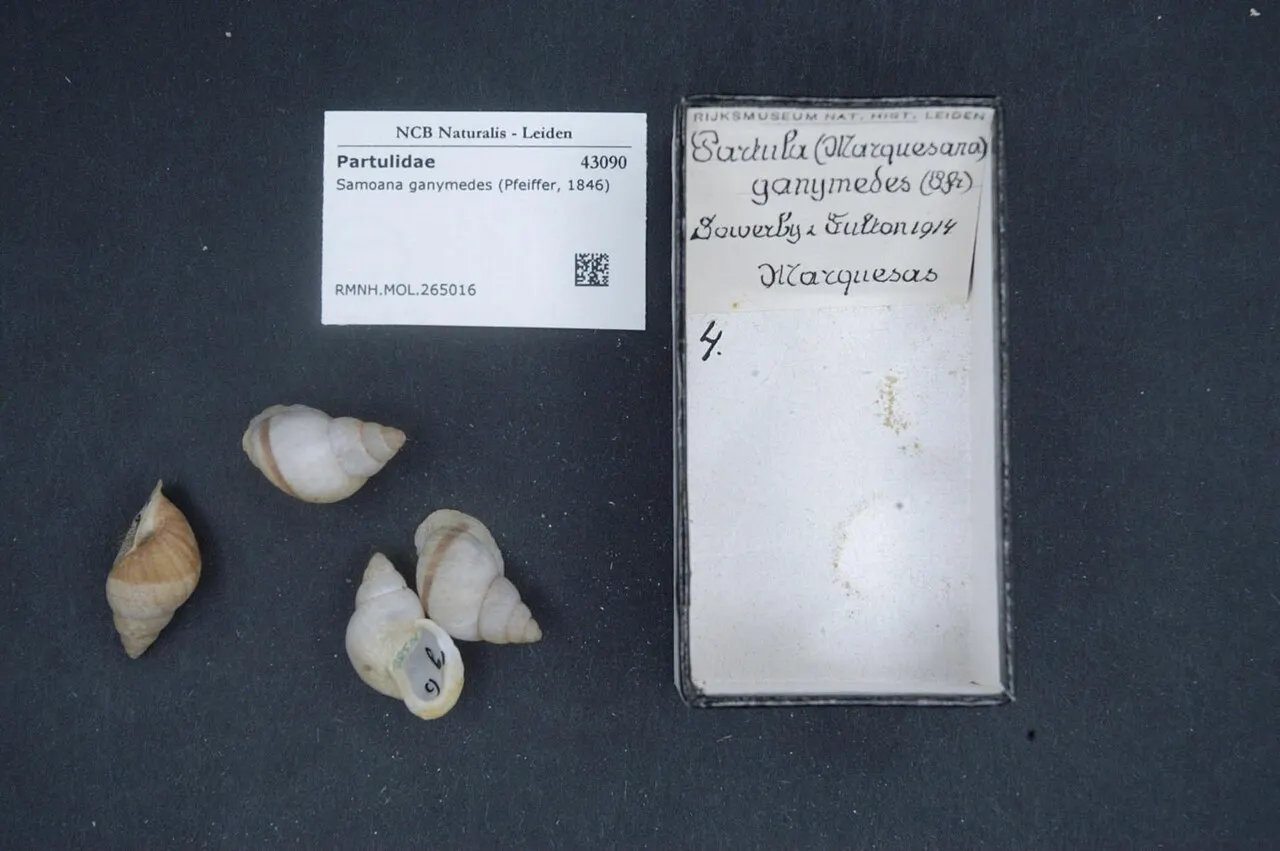
Samoana ganymedes
Samoana ganymedes
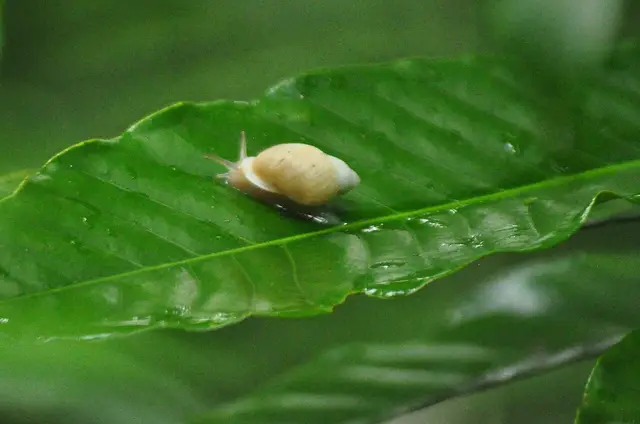
Samoana ganymedes, the Polynesian tree snail, is a small air-breathing land snail from the Marquesas Islands of French Polynesia, reportedly found on Tahuata and Hiva Oa. The IUCN Red List rates it Critically Endangered (assessed 2024) and lists its population as decreasing.
What it is
Samoana ganymedes belongs to the Partulidae, a family of tree snails found only on Pacific islands. The genus Samoana has about 23 species across Polynesia and the Mariana Islands. Pfeiffer named this species in 1846. Little has been published about its appearance or daily life, and no shell measurements turned up in the sources available.
Where it lives
The species is described as endemic to Tahuata and Hiva Oa, in the Marquesas. The IUCN assessment lists the Marquesas, counts one location, gives an elevation of 150 metres, and lists the habitat as tropical moist lowland forest.
It records the area the species occupies, and its range, as about 4 square kilometres, and treats all individuals as one subpopulation.
Pins are Wikidata “endemic to” fields. Orange dots, when present, are GBIF occurrence tiles — survey bias included.
Why it is in trouble
The IUCN assessment lists a single threat, a named species, scored as an ongoing high-impact threat. The best-known danger to partulid snails is the predatory snail Euglandina rosea, which the agriculture ministry released on Tahiti in 1974 to control the giant African snail.
On Moorea the predator was followed by the extinction of seven endemic partulid species within about ten years, and partulids are listed as extinct on Bora Bora, Tahaa and Raiatea. A French government invasive-species page says endemic tree snails in the Marquesas where the predator is present are threatened, with a rapid decline reported on Fatu Hiva. No source opened gives dates of its arrival on Tahuata or Hiva Oa.
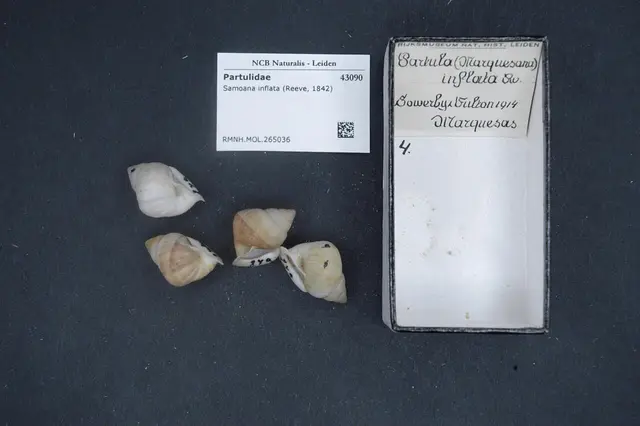
A close relative on the same two islands, Samoana inflata, is listed as extinct, with its loss dated to the 1990s or 2000s. Another, Samoana decussatula, is Critically Endangered and native to Hiva Oa. For S. ganymedes the assessment records a decreasing population with a continuing decline.
What is being done
The IUCN assessment lists invasive species control as the conservation action needed. It reports no conservation actions in place,, and no programme for this species is known.
Sources
Written for this catalog in our own words from the sources below, checked against them on 12 November 2026. Population figures are estimates and carry the year they were made. Status and assessment year: IUCN. 2026. The IUCN Red List of Threatened Species. Version 2026-1. iucnredlist.org.