Endangered
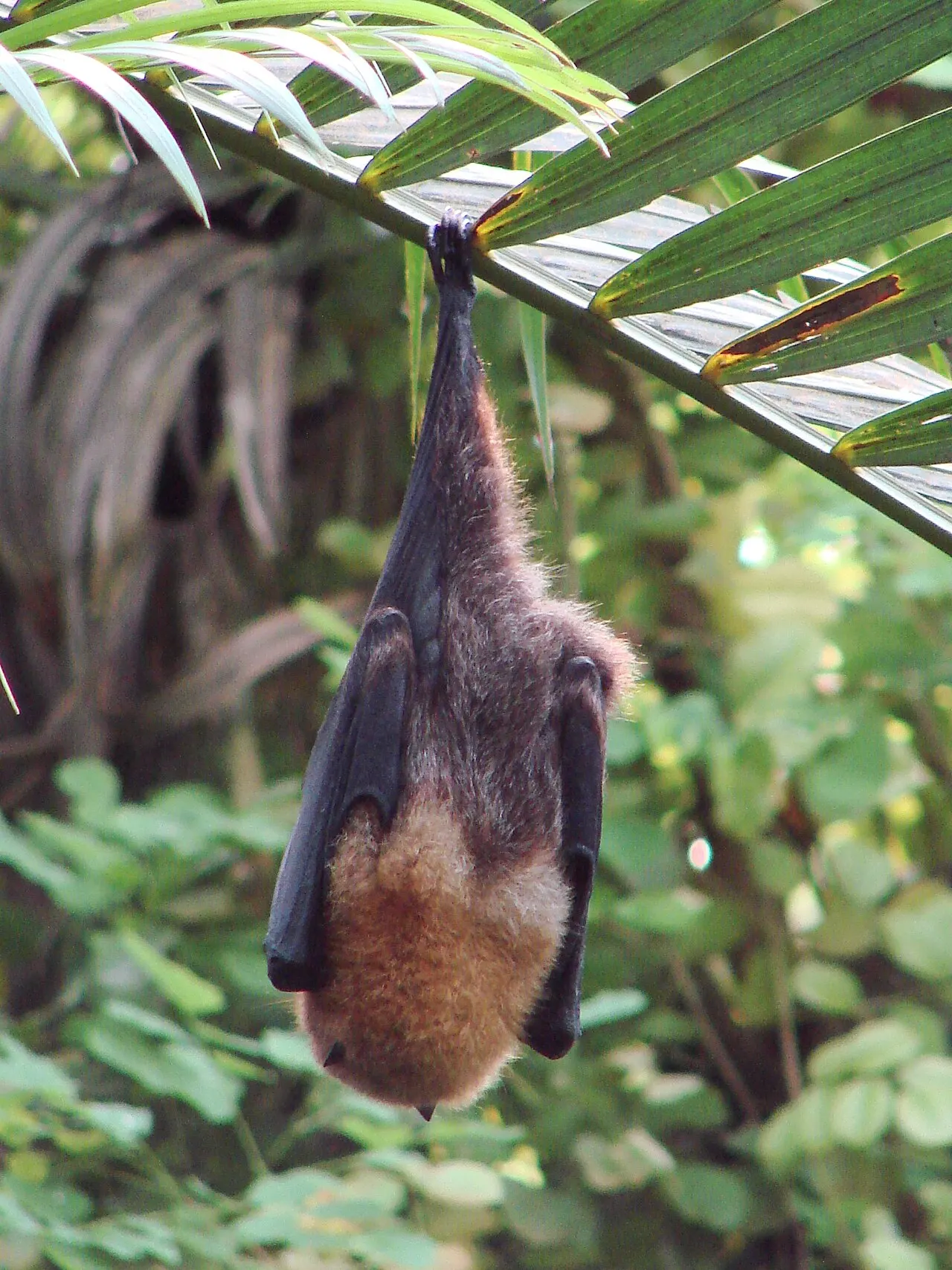
Rodrigues flying fox
Pteropus rodricensis
The Rodrigues flying fox is a fruit bat found in the wild only on Rodrigues, a small island belonging to Mauritius in the Indian Ocean. The IUCN Red List rated it Endangered in 2017, after earlier ratings of Critically Endangered, because numbers have climbed from a low of fewer than 100 bats in the 1970s.
How to recognise it
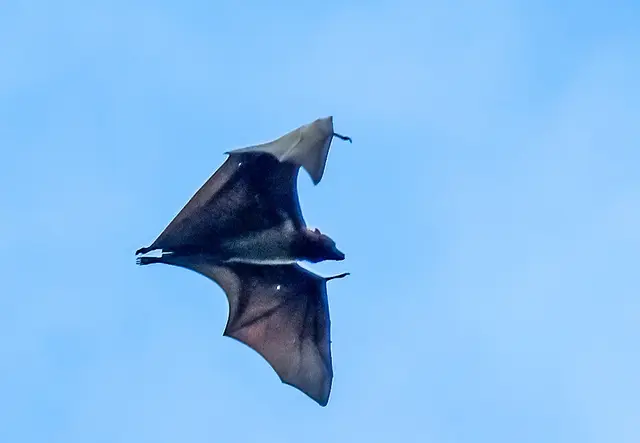
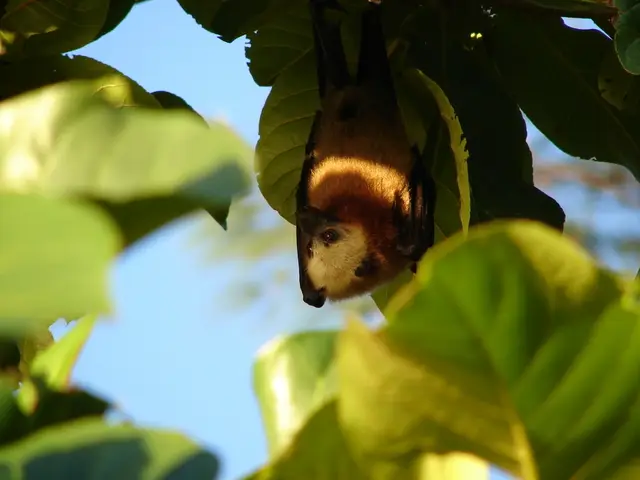
This is a medium-sized flying fox, up to about 20 cm long and weighing roughly 300 to 350 grams, with a wingspan of up to around 90 cm. It has big, widely spaced ears and no tail.
The fur is usually dark chestnut brown with a golden wash on the head, neck and shoulders, though individuals can also look silvery, yellow-orange or reddish. Males are generally a little larger than females.
Where it lives
The whole wild population is on Rodrigues, a small island in the Indian Ocean. The IUCN counts it as a single location, and lists its habitat as lowland moist forest, plus rural gardens and plantations, at up to about 400 metres above sea level. The estimated extent of occurrence is only 129 square kilometres.
Bats once lived on Mauritius and Round Island too, but they are gone from both. Rodrigues is the only place left where wild ones fly.
Pins are Wikidata “endemic to” fields. Orange dots, when present, are GBIF occurrence tiles — survey bias included.
How it lives
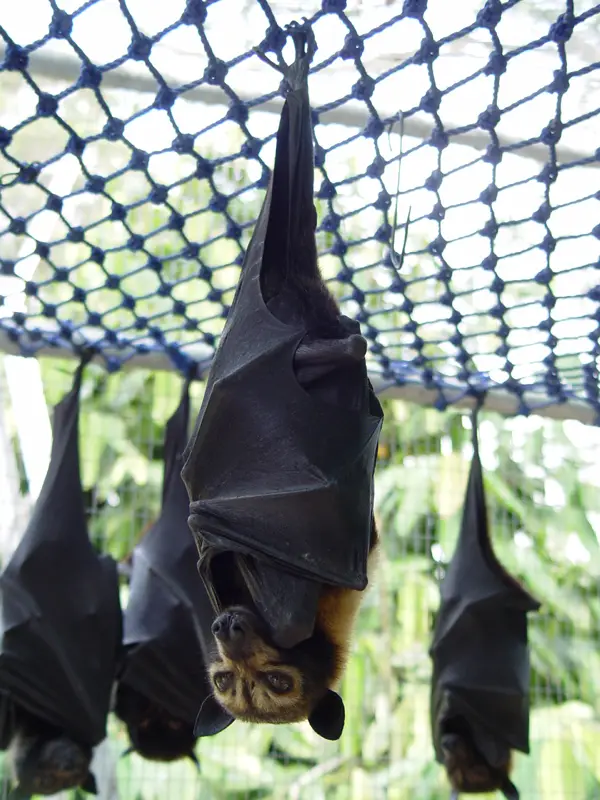
These bats are sociable. They spend the day hanging together in roost camps, which reportedly once often held more than 500 animals, and fly out at dusk to feed. They eat fruit, including mangoes, figs, tamarind and rose-apples, squeezing out the juice and soft pulp and dropping most of the tougher material. They find food by sight and smell and don't echolocate.
Males defend territories and gather harems of several females. In the wild, females give birth to a single pup, mostly between October and December. The pup clings to its mother for about a month and is weaned at two to three months.
Why it is in trouble
Forest on Rodrigues was cleared for farming and other uses, and the bats lost much of their habitat. Hunting for food also took bats. Cyclones are the lasting worry: with little forest left to buffer the damage, one bad storm can hit a population that lives in a single place. The IUCN lists storms and droughts among ongoing threats, and records extreme fluctuations in numbers.
Philadelphia Zoo reports about 1,000 bats on the island in the 1950s and fewer than 100 by the 1970s.
What is being done
The Jersey Preservation Trust, now Durrell Wildlife Conservation Trust, took 25 wild bats into a captive assurance programme. Zoos in several countries now keep colonies, and the species is managed under a North American Species Survival Plan. Philadelphia Zoo reports about 200 bats in US zoos.
On Rodrigues, a reforestation and education programme run by the Mauritian Wildlife Foundation began in 1994. The IUCN records that 71 to 80 percent of the population is inside protected areas, and it assesses the trend as increasing, with about 20,000 bats estimated in 2017.
Sources
Written for this catalog in our own words from the sources below, checked against them on 12 November 2026. Population figures are estimates and carry the year they were made. Status and assessment year: IUCN. 2026. The IUCN Red List of Threatened Species. Version 2026-1. iucnredlist.org.