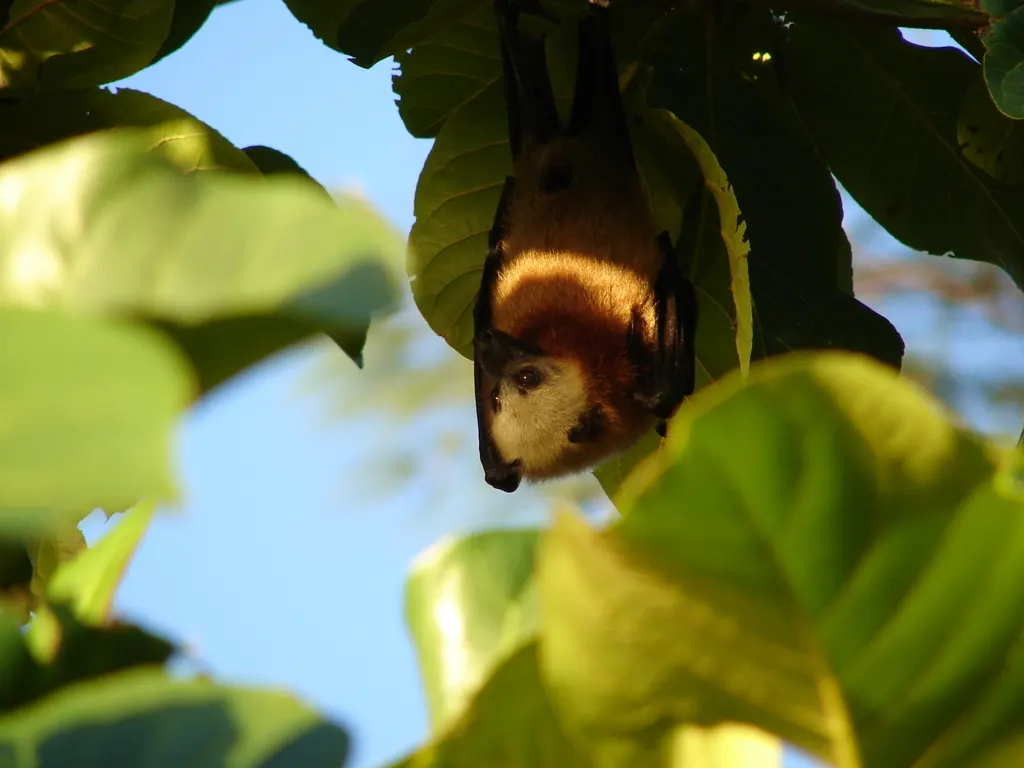
Endangered
Aldabra flying fox
Pteropus aldabrensis
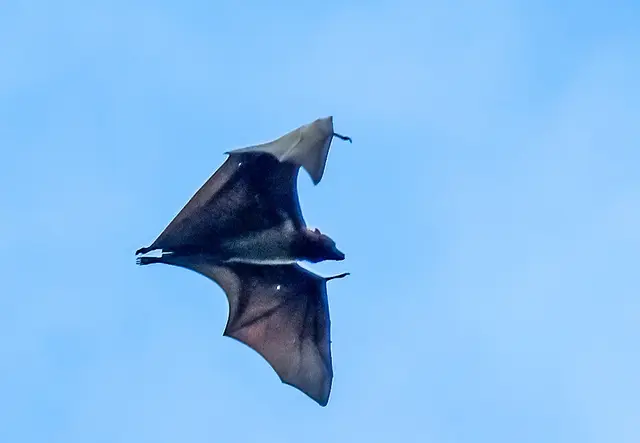
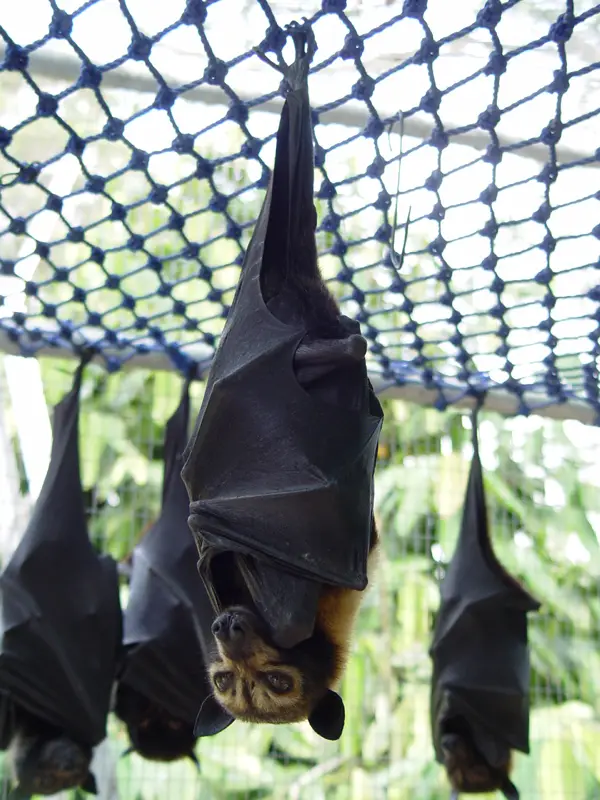
The Aldabra flying fox (Pteropus aldabrensis) is a fruit bat found only on Aldabra Atoll in the Seychelles. The IUCN Red List rated it Endangered in 2020, with an estimated 200 to 250 animals living on one remote coral atoll, so a single bad cyclone or drought matters a great deal.
A bat known from one atoll
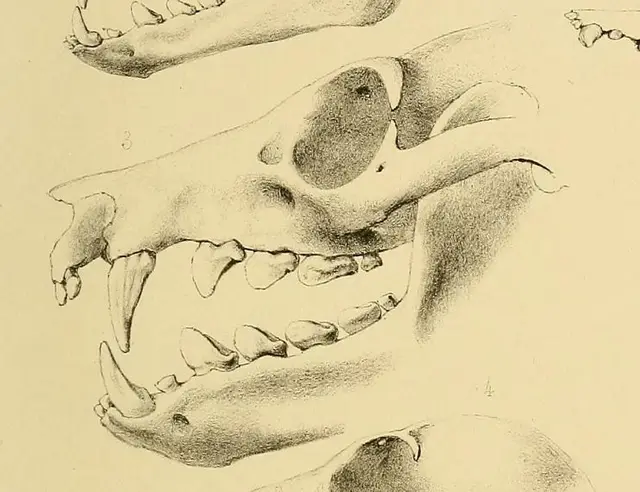
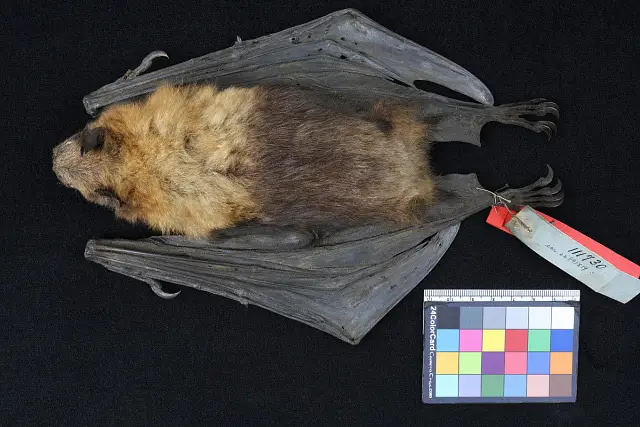
American biologist Frederick W. True named the species in 1893, working from two specimens that the naturalist William Louis Abbott had collected on Aldabra the year before. It was once treated as a subspecies of the Seychelles fruit bat, but the IUCN now lists it as a species in its own right.
It lives nowhere else. The IUCN assessment gives Aldabra as its only location, a restricted area of one to four locations, from sea level up to about 20 m.
Where it lives and what it eats
Its habitat is tropical dry shrubland and mangrove forest above the high-tide line. Like other flying foxes it eats plants. It has reportedly been seen taking fruit from Calophyllum inophyllum, Mystroxylon aethiopicum, Indian almond and several wild figs. It also feeds on coconut and sisal flowers and on grey mangrove leaves, and has been seen licking honeydew left by scale insects on fig trees.
The IUCN assessment describes the bats as gathering in groups (congregatory) and not migrating.
Pins are Wikidata “endemic to” fields. Orange dots, when present, are GBIF occurrence tiles — survey bias included.
How many are left
A 1968 estimate of about 250 bats led the bat biologist A. M. Hutson to call it one of the rarest bats in the world. The 2020 IUCN assessment gives a population size of 200 to 250 and a stable trend, so the number appears not to have changed much, though the assessment also notes a continuing decline in the area of habitat.
It qualifies as Endangered on two counts: a tiny range with ongoing habitat decline, and a very small population.
Why it is in trouble
The risks are natural ones that cannot be spread out across a bigger range. The assessment lists habitat shifting and alteration, storms and flooding, and drought, and it points to ecosystem degradation as the main stress. Tropical cyclones and sea level rise from climate change are also cited as risks elsewhere. With every bat on one low atoll, a single severe event could hit the whole population.
What is being done
The assessment says 91 to 100 percent of the population lies within protected areas. Listed conservation actions include habitat and natural process restoration, control of invasive and problematic species, site management, awareness work and training. It also records that no species recovery plan or systematic monitoring scheme was in place at the time of assessment.
Sources
Written for this catalog in our own words from the sources below, checked against them on 12 November 2026. Population figures are estimates and carry the year they were made. Status and assessment year: IUCN. 2026. The IUCN Red List of Threatened Species. Version 2026-1. iucnredlist.org.