Endangered
Nicobar flying fox
Pteropus faunulus
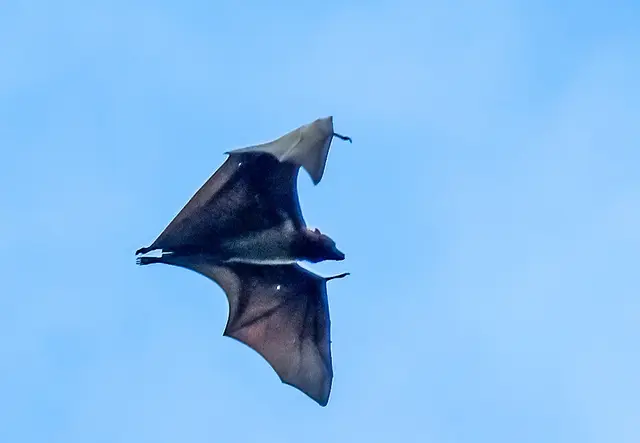
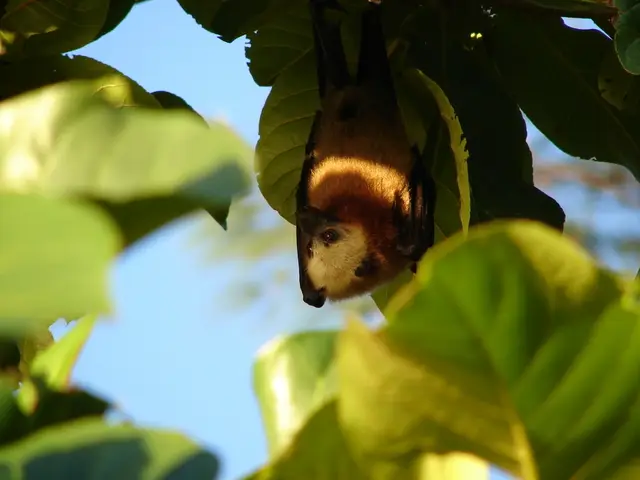
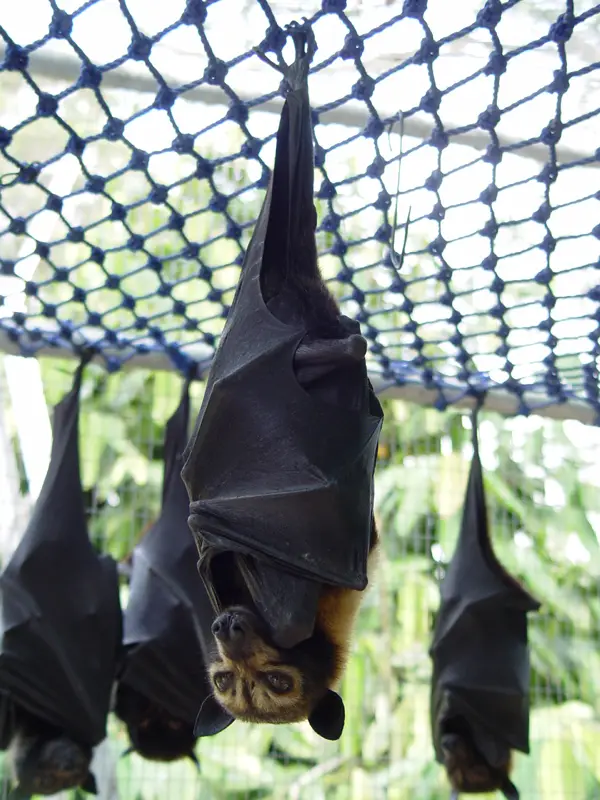
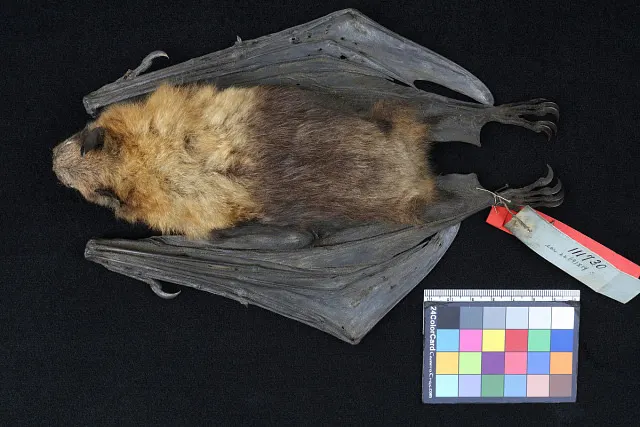
The Nicobar flying fox (Pteropus faunulus) is a fruit bat found only in the Nicobar Islands of India. Described from a single island in 1902, it then went unrecorded for about a century. The IUCN rated it Endangered in 2019 because its range is small, fragmented and shrinking.
Where it lives
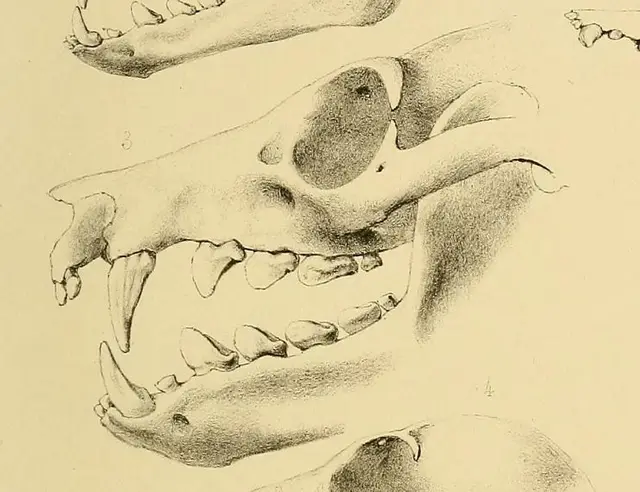
This is a flying fox, one of the large fruit bats of the family Pteropodidae, and it is endemic to the Central Nicobar Group, a cluster of islands belonging to India. Gerrit Miller described it in 1902 from Car Nicobar.
A survey published in Oryx in 2014 recorded the species again after roughly a century. It did not find the bat on Car Nicobar itself, where it is probably locally extinct. The IUCN assessment counts six locations, all low-lying (sea level to 200 m), within an extent of about 1,800 square kilometres. It lists lowland moist forest as its main habitat, with mangrove forest above the high tide line as a marginal one.
Pins are Wikidata “endemic to” fields. Orange dots, when present, are GBIF occurrence tiles — survey bias included.
How it lives
Flying foxes are the largest native mammals on the Andaman and Nicobar archipelagos. In a pilot radio-tracking study from January to March 2006, 11 bats (nine males and two females) were followed for 45 days on Kamorta Island.
Their day roosts sat well away from the places where they fed. Males roosted 2.1 to 12.4 km from their foraging areas, and females 7.5 to 10.8 km.
Why it is in trouble
The IUCN lists hunting, with the bat as the target, and storms and flooding among the threats. It describes the population as decreasing and severely fragmented, and it gives no population estimate.
The Oryx survey found that hunting for sport was the main pressure. Hunters mostly shot flying foxes while they fed, between about 6 and 8 in the evening, during the January to March flowering of Ceiba trees. Air guns were the usual tool and catapults were used occasionally. The survey found no dependence on bat meat as a protein source.
There is a widespread belief in the medicinal value of the meat, though nobody who had eaten it reported any healing effect. The IUCN also records use as medicine. One radio-collared bat was traced to a hunter's home, where its tag was recovered.
What is being done
At the time of the 2019 assessment, conservation sites had been identified over the whole range and the species occurred in at least one protected area. There was no species recovery plan and no systematic monitoring scheme. The IUCN also records that it is covered by international trade controls.
The Oryx survey reported that, in 2010, a voluntary ban on hunting during Ceiba flowering was in place in settlements on Kamorta and Trinket. It urged a conservation programme built with local communities, with this bat as a flagship species, protection for foraging sites near settlements, and a fresh look at the special hunting rights that Section 56 of India's Wildlife (Protection) Act of 1972 gives indigenous communities. It also noted that Little Nicobar and Bompuka sit outside the protected area network.
Sources
Written for this catalog in our own words from the sources below, checked against them on 12 November 2026. Population figures are estimates and carry the year they were made. Status and assessment year: IUCN. 2026. The IUCN Red List of Threatened Species. Version 2026-1. iucnredlist.org.