Endangered
Dils' grayling
Dils' grayling
Dils' grayling (Dils' grayling) is a brown butterfly of dry, rocky mountain slopes in northern Greece and one site in south-western Bulgaria. It flies once a year, in summer. The IUCN assessed it as Endangered in 2025, and a 2022 search of its Greek haunts found none.
How to recognise it
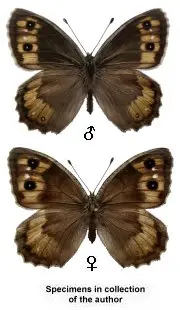
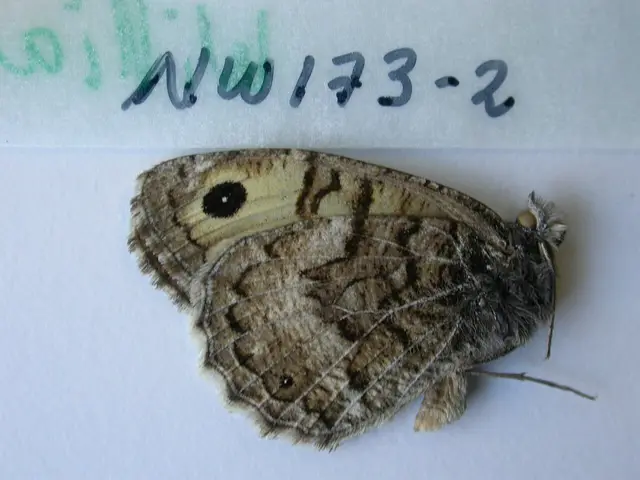
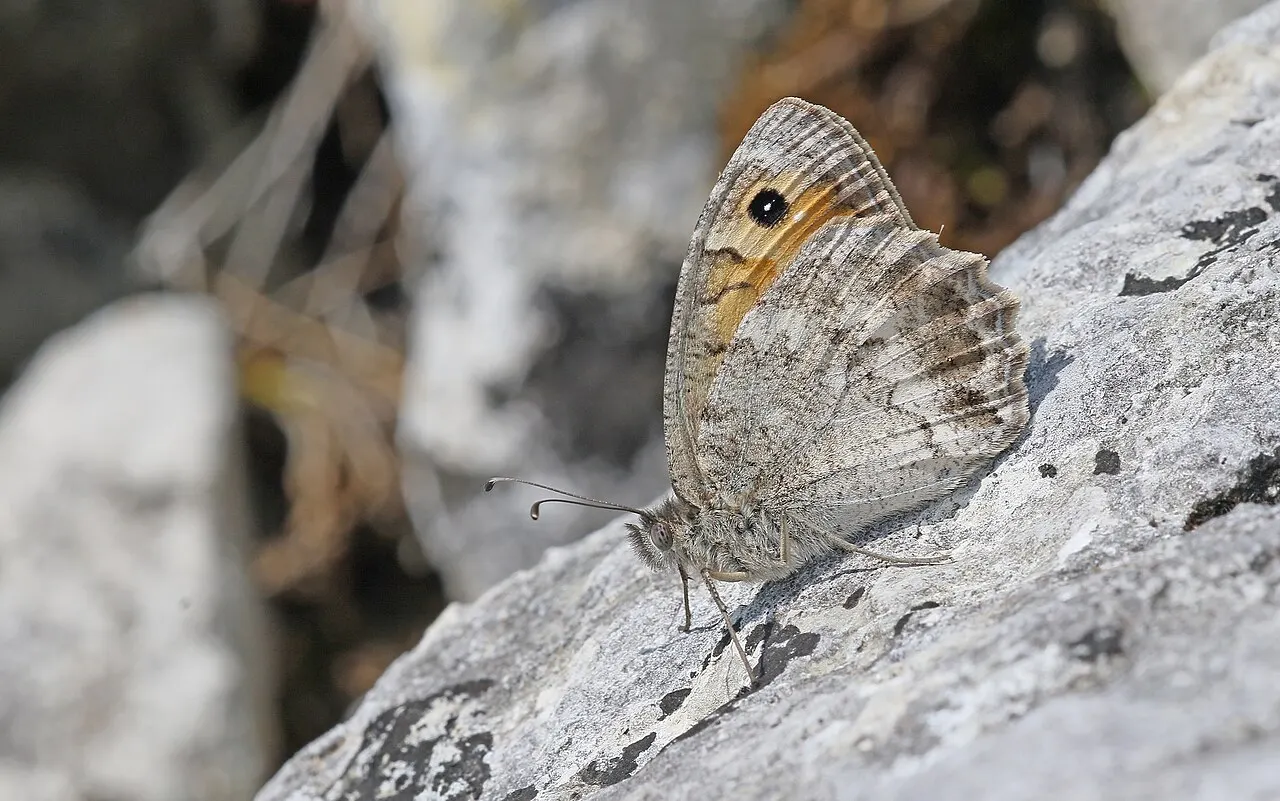
A medium-sized grayling in the family Nymphalidae. Males have a wingspan of about 49 to 54 mm and females about 52 to 62 mm. It resembles other graylings. Butterfly databases list Pseudochazara mniszechii and the false grayling (Arethusana arethusa) as similar species.
It was formally described only in 1981, by De Prins and Van der Poorten, from the Granitis area of Drama in northern Greece.
Where it lives
In Greece it is recorded from the Phalakron massif, the Menikion mountains and Mount Orvilos. In Bulgaria it is known from the southern slopes of Gradishte Hill in the South Pirin mountains. The Red List gives an extent of occurrence of about 244 square kilometers and an area of occupancy of about 140 square kilometers, across populations it describes as severely fragmented.
The Red List gives an elevation range of roughly 600 to 1,400 m, while a lepidopterists' database quotes 800 to 1,800 m. The butterfly occurs on steep, rocky slopes, scree and Mediterranean-type shrubby vegetation, including slopes with shrubs and small trees.
Pins are Wikidata “endemic to” fields. Orange dots, when present, are GBIF occurrence tiles — survey bias included.
How it lives
There is one generation a year, and adults reportedly fly from mid-June to late July. Females lay eggs on grasses, often in shaded crevices among rocks, and the caterpillars feed on grasses. Beyond that, the life history is thinly documented.
Why it is in trouble
The range is tiny and the habitat is changing. In 2022 a seven-person trip led by Simon Spencer for the European Butterflies Group searched northern Greece for the butterfly and found none. The group's report says the area where it had been recorded is changing through different grazing regimes and increased quarrying, and that further surveys are urgently needed to establish its status.
The Red List assessment records ecosystem conversion and degradation, a decreasing population and continuing decline in the area it occupies.
What is being done
Part of the range lies in at least one protected area, and the Red List records site protection, site management, awareness work and training among conservation actions, at international, national and local levels. The species is not covered by international legislation or trade controls. Surveys to find out where it still survives are the most urgent need.
Sources
Written for this catalog in our own words from the sources below, checked against them on 12 November 2026. Population figures are estimates and carry the year they were made. Status and assessment year: IUCN. 2026. The IUCN Red List of Threatened Species. Version 2026-1. iucnredlist.org.