Endangered
Crimean grayling
Crimean grayling
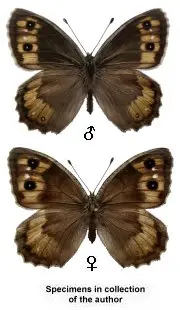
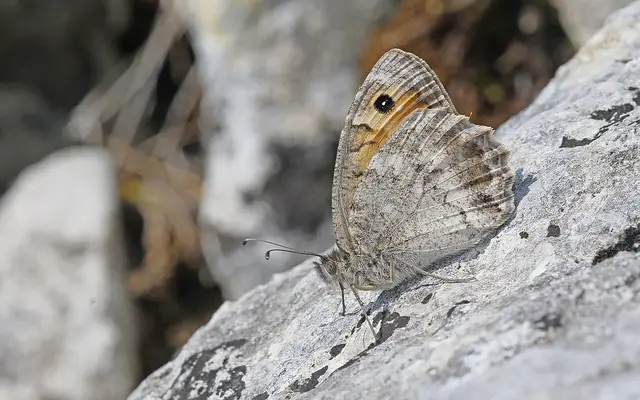
The Crimean grayling is a brown, rock-loving butterfly found only on the Crimean Peninsula. The IUCN Red List rated it Endangered in 2025 because its range is split into a handful of small sites and its numbers are falling. It flies in high summer on stony mountain slopes.
How to recognise it
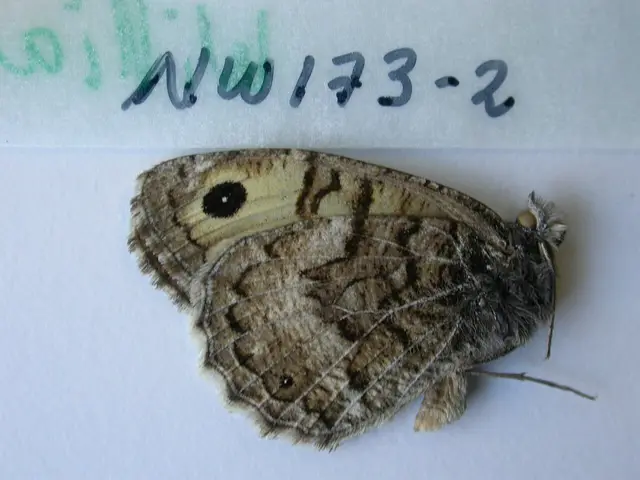
This is a brown butterfly of the family Nymphalidae, the group that holds the browns and graylings. Its wingspan is 45 to 58 mm. The entomologist Kusnezov (also spelled Kuznetsov) first described it from Crimea in 1909, and older lists may file it under another genus, as Hipparchia euxina or Satyrus euxina.
The English name Crimean grayling is the one used in European butterfly lists. The species is treated as an endemic of the Crimean Peninsula, so it is found nowhere else.
Where it lives
The original specimens came from near Yalta, on the southern slopes of Ai-Petri, at roughly 1,100 m. A Russian butterfly guide from 1997 describes its home as stony montane steppe on the southern slope of the Crimean mountains, the open upland grassland locally called yaila.
The Red List describes the habitat as rocky ground and temperate grassland and counts 5 locations, with an area of occupancy somewhere between 20 and 500 square kilometres. The population is severely fragmented, and at least part of it lives inside a protected area. The global biodiversity database GBIF holds only 21 occurrence records, a sign of how rarely the species is reported.
Pins are Wikidata “endemic to” fields. Orange dots, when present, are GBIF occurrence tiles — survey bias included.
How it lives
Adults are on the wing from June to August. The caterpillar's foodplant has not been proven. A 1985 account by the entomologist Nekrutenko suggested feather grass (Stipa pennata), and a European butterfly database lists feather grasses among the host plants. Beyond that, very little has been published about its life cycle.
Why it is in trouble
The Red List classes the butterfly as Endangered under criterion B1ab(v): a small range, a split population, and a continuing decline in the number of mature adults. The 2025 assessment lists two pressures. One is ecosystem modification, meaning changes to the grassland and rocky slopes it depends on. The other is recreational activity in its mountain habitat.
The species also appears in a list of animals included in the Red Data Book of Ukraine.
What is being done
The assessment lists site protection, site management and awareness work among the conservation actions, and the species occurs in at least one protected area. No species-specific recovery programme or monitoring scheme is known.
Sources
Written for this catalog in our own words from the sources below, checked against them on 12 November 2026. Population figures are estimates and carry the year they were made. Status and assessment year: IUCN. 2026. The IUCN Red List of Threatened Species. Version 2026-1. iucnredlist.org.