Endangered
Pileated Gibbon
Hylobates pileatus
The pileated gibbon (Hylobates pileatus) is a tree-dwelling ape of the forests of eastern Thailand, western Cambodia and southwestern Laos. The IUCN Red List rated it Endangered in 2020. Pairs sing loud duets to defend their territory, and Cambodia holds most of the remaining animals.
How to recognise it
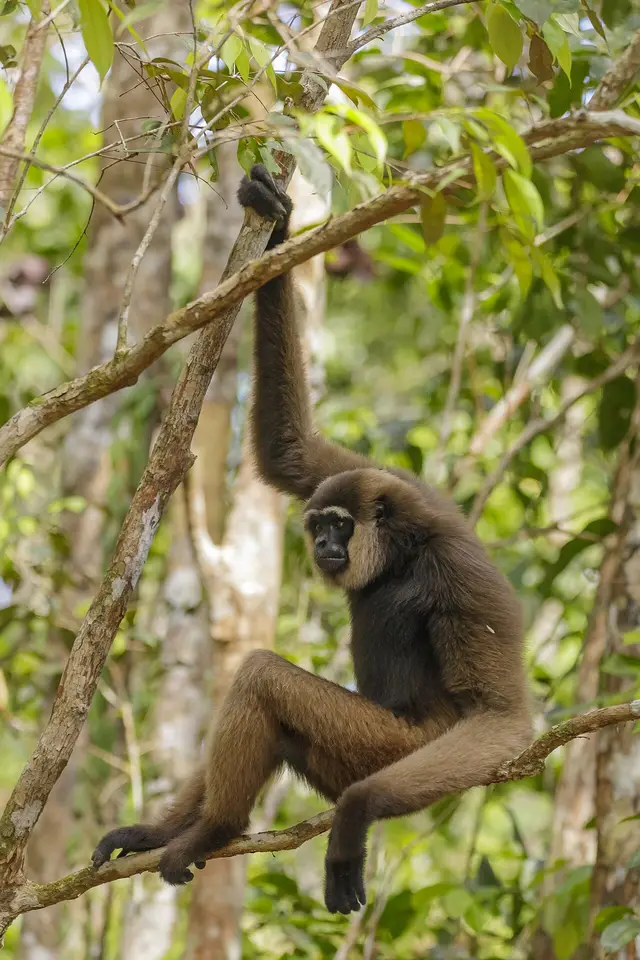
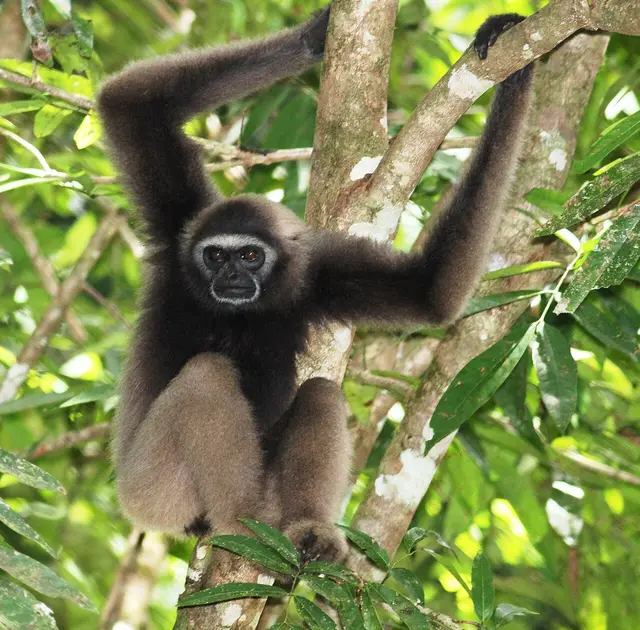
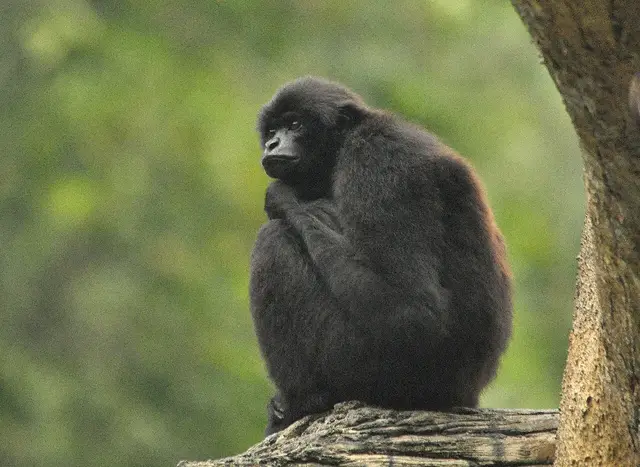
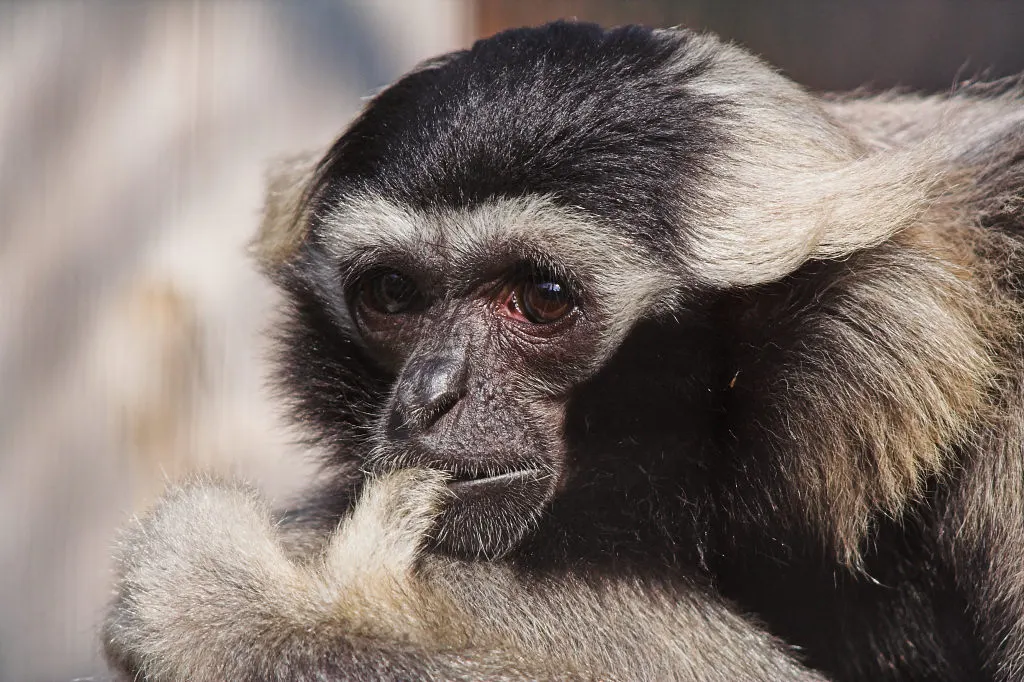
Adults weigh roughly 4 to 8 kg and measure 45 to 64 cm from head to rump, with long arms and no tail. The sexes look different. Males are almost entirely black, apart from a white ring around the face and white hands and feet. Females are buffy gray with a black cap that runs from the head down to the groin.
Babies are born buff and begin to show dark patches on the head and chest at about 10 months.
Where it lives
It lives in moist evergreen and mixed deciduous forest, up to about 1,500 m in Cambodia and about 1,200 m in Thailand. Cambodia west of the Mekong is the stronghold, including the Cardamom Mountains and the Northern Plains. In Thailand, Khao Yai, Thap Lan, Pang Sida and Ta Phraya national parks are among the places it survives, and Laos holds a smaller share.
It prefers tall, dense forest and is described as shy and elusive.
Pins are Wikidata “endemic to” fields. Orange dots, when present, are GBIF occurrence tiles — survey bias included.
How it lives
Gibbons swing through the canopy hand over hand. A family is usually a mated pair and its young, and a typical group has about four members. A pair defends its patch with long, loud calls, with both male and female joining in.
Fruit makes up most of the diet, with figs a large share, along with young leaves, insects and the occasional egg or small animal. Females produce a single young after a gestation of about 6 to 7.5 months. Captive animals have lived up to 31 years. Long-term field studies of the species are lacking, so many details are borrowed from better-known gibbons.
Why it is in trouble
Forest loss is the main problem. In Cambodia, agro-industrial plantations, land grabbing and clearing for farms, dams and settlements have taken habitat, and commercial hunting for meat and the pet trade adds to the toll. In Thailand, village hunting and encroachment into forest in eastern Khao Yai have been reported. The species has declined by more than 50% over about 45 years, and its generation length is put at 15 years.
Numbers are uncertain. The IUCN record lists about 47,000, while another summary gives roughly 50,000, including about 35,000 in Cambodia. Thailand was put at about 12,000 in its four largest forest areas (a 2004 to 2005 survey) plus 1,000 to 2,000 elsewhere, though an earlier study said 30,000. At Khao Yai it also interbreeds with white-handed gibbons.
What is being done
The pileated gibbon is on CITES Appendix I, which bans international commercial trade, and it occurs in many protected areas. In Cambodia's Northern Plains, the Wildlife Conservation Society reported in 2016 that ranger staffing had nearly doubled after 2013 and that only one gibbon hunting record was logged over two years, using SMART patrol software. Community land-use zones around villages have also been set up, and areas managed by recognised communities saw less habitat loss.
Rescued gibbons are cared for at Phnom Tamao in Cambodia, and in December 2013 a captive-bred pair was released in forest at Angkor.
Sources
Written for this catalog in our own words from the sources below, checked against them on 12 November 2026. Population figures are estimates and carry the year they were made. Status and assessment year: IUCN. 2026. The IUCN Red List of Threatened Species. Version 2026-1. iucnredlist.org.