Endangered
Eastern grey gibbon
Hylobates funereus
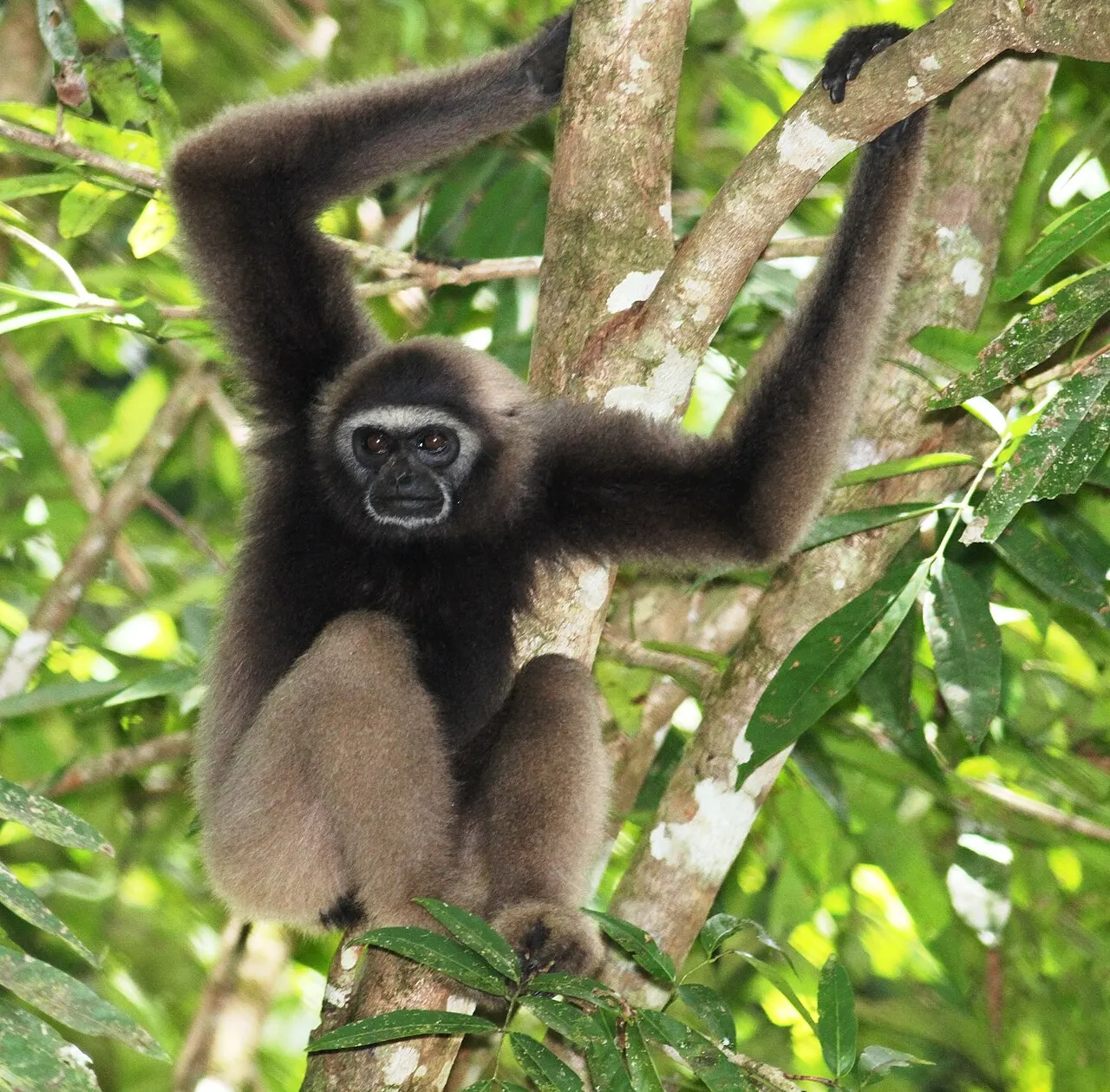
The eastern grey gibbon, also called the northern or East Bornean grey gibbon, is a small, tailless ape of northern and eastern Borneo's rainforests. The IUCN Red List classed it as Endangered in 2020, with numbers falling as forest is cleared and burned, and as animals are taken for the pet trade.
How to recognise it
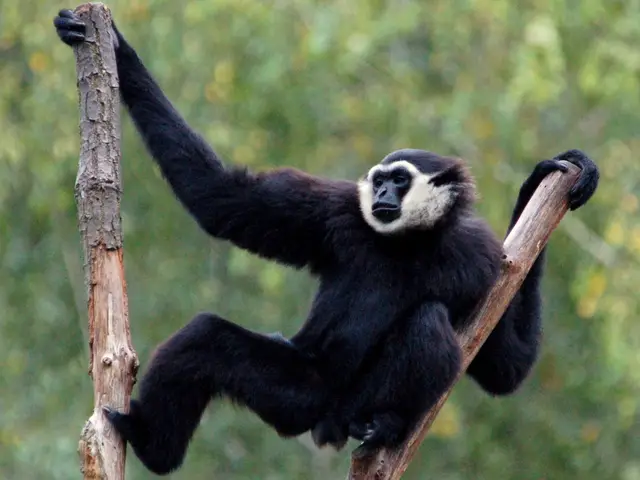
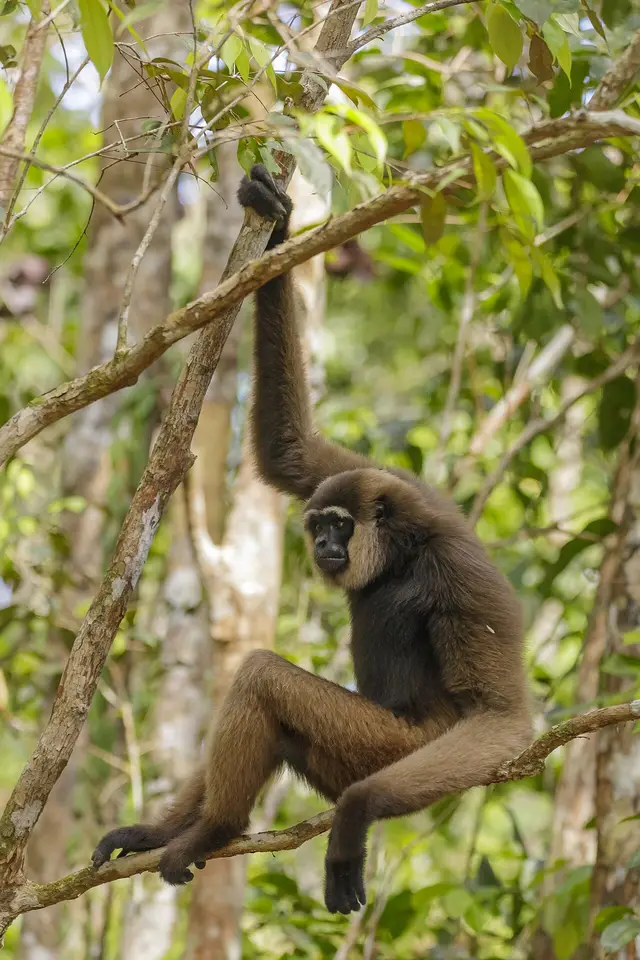
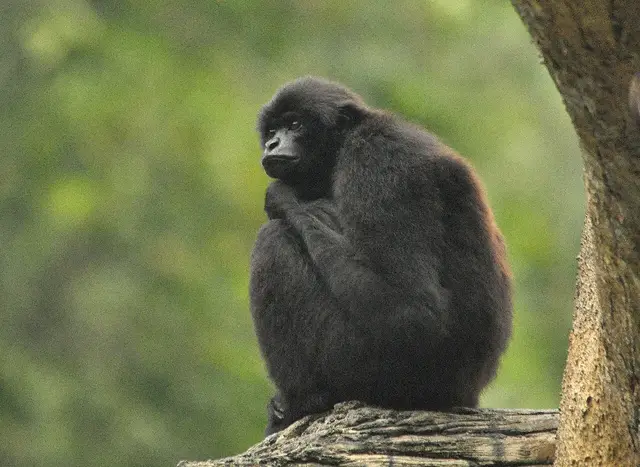
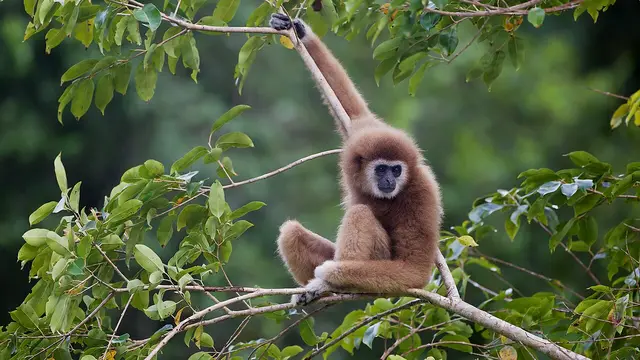
Like all gibbons it has no tail and very long arms. The fur is usually grey-brown, though the shade varies a lot between animals, and the brow is pale cream to white. Adults measure roughly 42 to 47 cm from head to rump and weigh about 5 to 6.4 kg.
Hearing one is often easier than seeing one. Males start singing alone before dawn, and the three gibbons followed in the Danum study sang duets until around noon.
Where it lives
The species is found only on Borneo, from Sabah south to the Mahakam River in East Kalimantan and west to the Baram area of Sarawak, including Brunei. It was long lumped with Mueller's gibbon and the western grey gibbon, and the three are now treated as separate species. They can still hybridise where their ranges meet.
The IUCN lists swamp forest, moist lowland forest and moist montane forest as its habitats, from about 100 m up to 1,700 m above sea level.
Pins are Wikidata “endemic to” fields. Orange dots, when present, are GBIF occurrence tiles — survey bias included.
How it lives
A typical group is a mated pair with their young. Gibbons live almost entirely in the canopy and rarely come down to the ground. In a study at Danum Valley in Sabah, two groups held home ranges of 33 to 34 ha, and the males covered about 1.1 to 1.3 km a day. They climbed into their sleeping trees roughly four hours before sunset.
Fruit is the main food, with figs especially valuable, and leaves fill the gaps. An earlier field study recorded a diet of 62% fruit and 32% leaves. Researcher Yoichi Inoue and colleagues found that in one group the adult female led travel more often than the male. They also saw an adult male carrying a 29-month-old infant, which they called a rare observation.
Why it is in trouble
The 2020 assessment records an ongoing decline and gives an estimated reduction of about 50%, based on lost habitat quality and exploitation. It lists oil palm and other plantations, farming, roads, mining, and fires among the causes. Fires have been made worse by El Nino dry spells. Animals are also taken for the pet trade, and conservation groups report that mothers are often killed to capture infants.
No reliable total population figure exists. At Danum, one group of four shrank to a single male by 2009 and then disappeared, and the researchers could not say why the others vanished or died.
What is being done
The species is on CITES Appendix I, which bars commercial international trade, and it occurs in at least one protected area, including the Danum Valley Conservation Area in Sabah. The IUCN records no recovery plan and no systematic monitoring scheme in place, and its list of needed actions includes site protection and management, awareness work and species recovery.
Visitors can see habituated groups at the Borneo Rainforest Lodge in Danum Valley, where one group has been used to rangers, guides and tourists since the lodge opened in 1994.
Sources
Written for this catalog in our own words from the sources below, checked against them on 12 November 2026. Population figures are estimates and carry the year they were made. Status and assessment year: IUCN. 2026. The IUCN Red List of Threatened Species. Version 2026-1. iucnredlist.org.