Endangered
Bornean white-bearded gibbon
Hylobates albibarbis
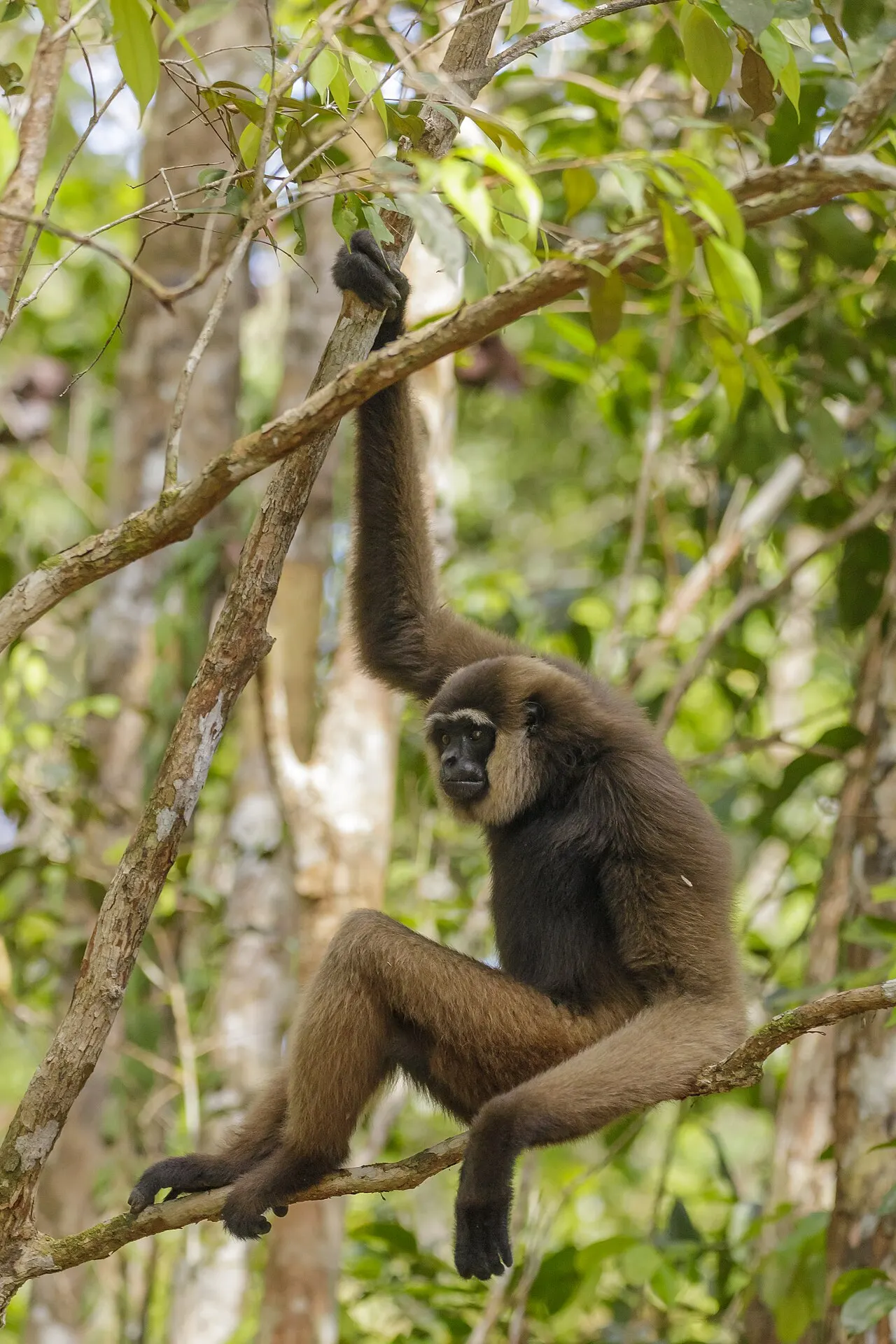
The Bornean white-bearded gibbon (Hylobates albibarbis) is a small tree-living ape confined to southern Borneo, in Indonesian Kalimantan. It is listed as Endangered (2020 assessment) because its forest is being logged, burned and converted to farmland. Family groups defend their own territories.
How to recognise it
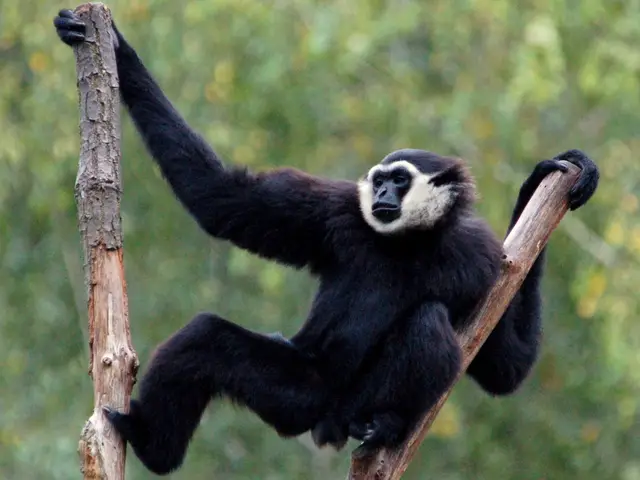
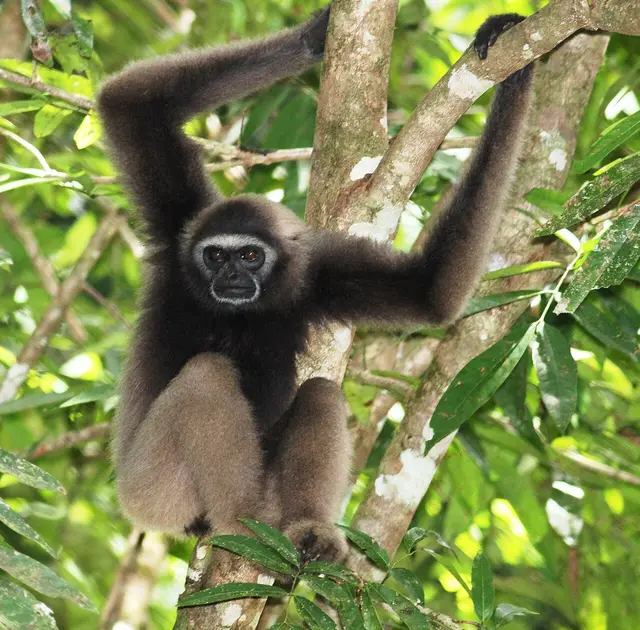
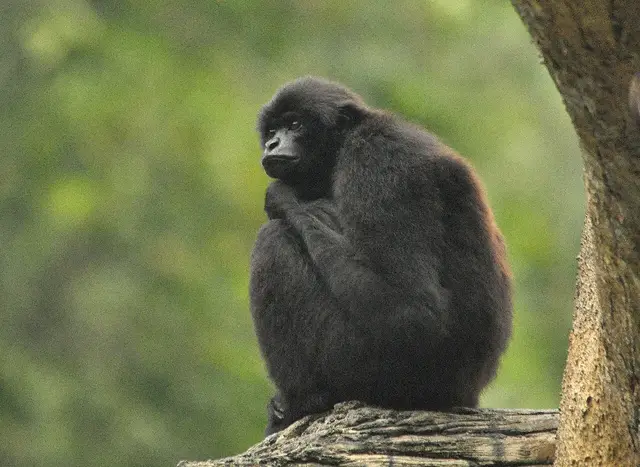
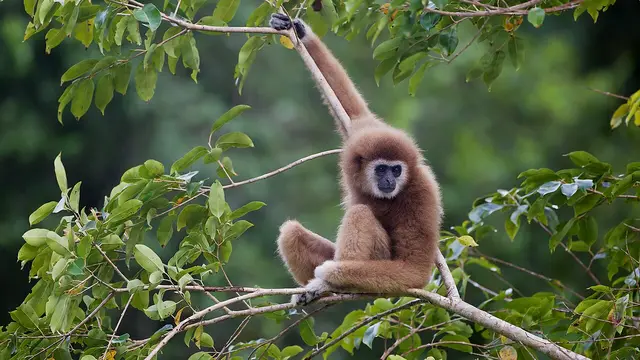
It is a tailless ape with grey to dark brown fur, a black face and a white beard. Adults are reported at roughly 43 to 64 cm in length, with males around 6 to 7 kg and females a little lighter at about 5.5 to 6.4 kg.
It was long treated as a subspecies of the agile gibbon, and is still sometimes called the Bornean agile gibbon. DNA work has led authorities including the IUCN to treat it as its own species, described by Lyon in 1911.
Where it lives
The range lies in Kalimantan, south of the Kapuas River and west of the Barito River. It has been recorded in forests up to about 1,200 m, with densities dropping as the land rises.
Habitat includes peat swamp, lowland and montane forest, and selectively logged or secondary forest, and animals also use heavily degraded former forest. A large share of its range is peat swamp, an ecosystem under heavy pressure. It occurs in Tanjung Puting, Gunung Palung and Bukit Baka-Bukit Raya national parks, which are regarded as strongholds.
Pins are Wikidata “endemic to” fields. Orange dots, when present, are GBIF occurrence tiles — survey bias included.
How it lives
Gibbons live in small family groups of a pair and their young, and swing through the trees hand over hand. Home ranges average about 28 hectares at Gunung Palung and 45 at Sabangau. Fruit reportedly makes up most of the diet (about 65 percent, with figs around 23 percent), supplemented by young leaves and insects.
Density estimates vary by forest type and come from older surveys. They give about 7.4 animals per square kilometre in logged peat swamp at Sabangau, about 8.7 in mostly heath forest at Tanjung Puting and about 14.9 in mountain forest at Gunung Palung. A tentative figure of 19,000 animals has been given for Sabangau's mixed swamp forest, one of the largest continuous populations left.
Why it is in trouble
The Red List gives the trend as decreasing. Legal and illegal logging, peat drainage and the spread of oil palm and other plantations have cut the forest that gibbons need, and small-scale and shifting farming add to the loss. Fire is a repeating danger. After the severe fires of 2015, the Borneo Nature Foundation found fewer gibbon groups at its Sabangau Forest study site, especially on the side nearest the burn, along with more frequent encounters between neighbouring groups as displaced animals pushed into occupied territory.
Hunting for food and capture for the wildlife trade also occur. Surveys of Kalimantan wildlife markets in 2003 and 2004 recorded 79 individuals.
What is being done
The species is protected under Indonesian law and listed on CITES Appendix I, which bars international commercial trade. The Red List notes habitat protection, harvest management and awareness work. At Sabangau, the Borneo Nature Foundation says the priorities are keeping fire out of the forest and replanting burned areas.
Sources
Written for this catalog in our own words from the sources below, checked against them on 12 November 2026. Population figures are estimates and carry the year they were made. Status and assessment year: IUCN. 2026. The IUCN Red List of Threatened Species. Version 2026-1. iucnredlist.org.