Endangered
Agile Gibbon
Hylobates agilis
The agile gibbon (Hylobates agilis), also called the dark-handed or black-handed gibbon, is a tailless, long-armed ape of the rainforest canopy. It lives on Sumatra and in a small part of the Malay Peninsula. The IUCN Red List assessed it as Endangered in 2020, with forest loss and the pet trade behind the decline.
How to recognise it
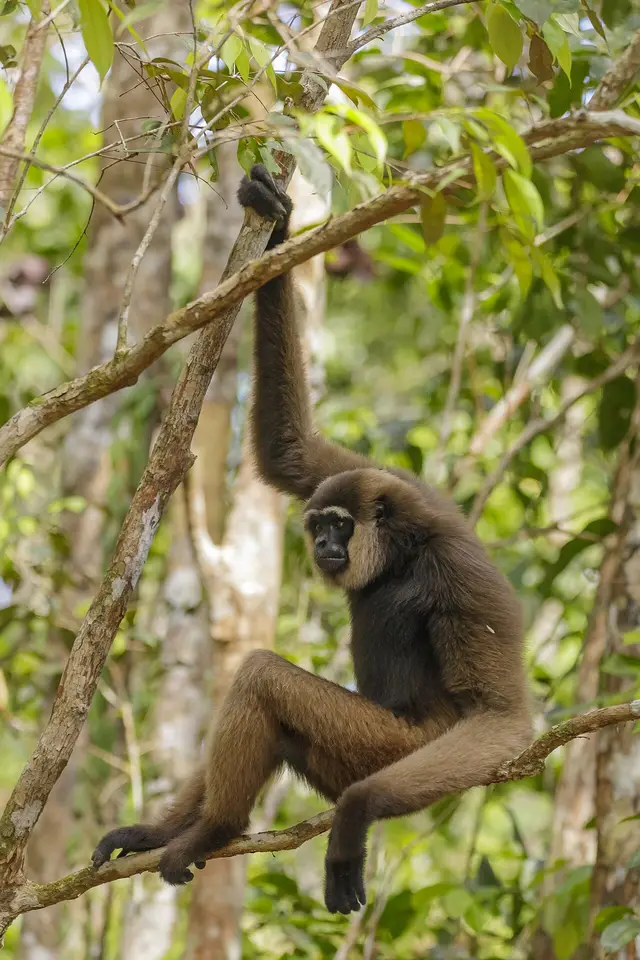
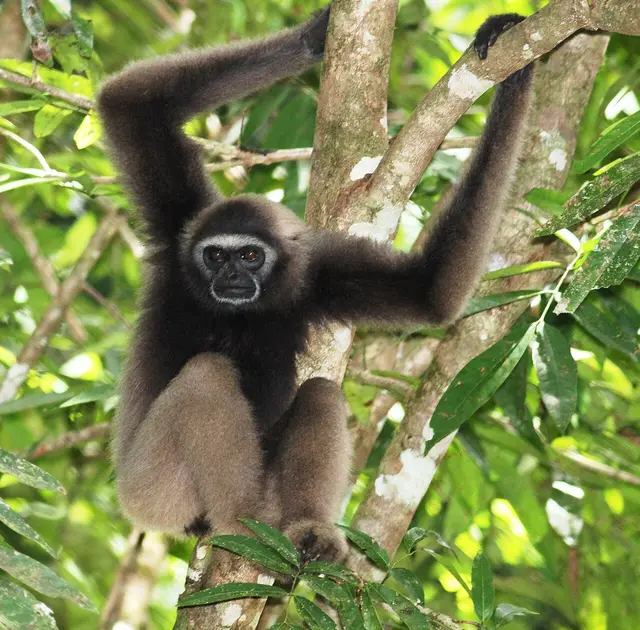
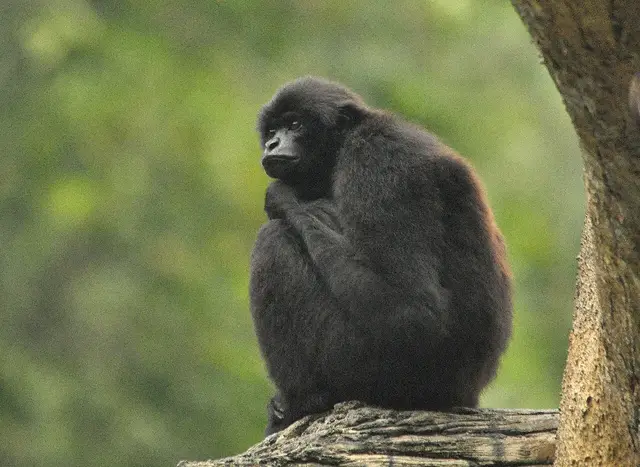
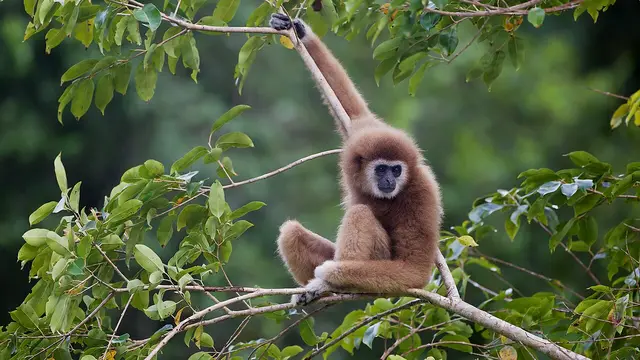
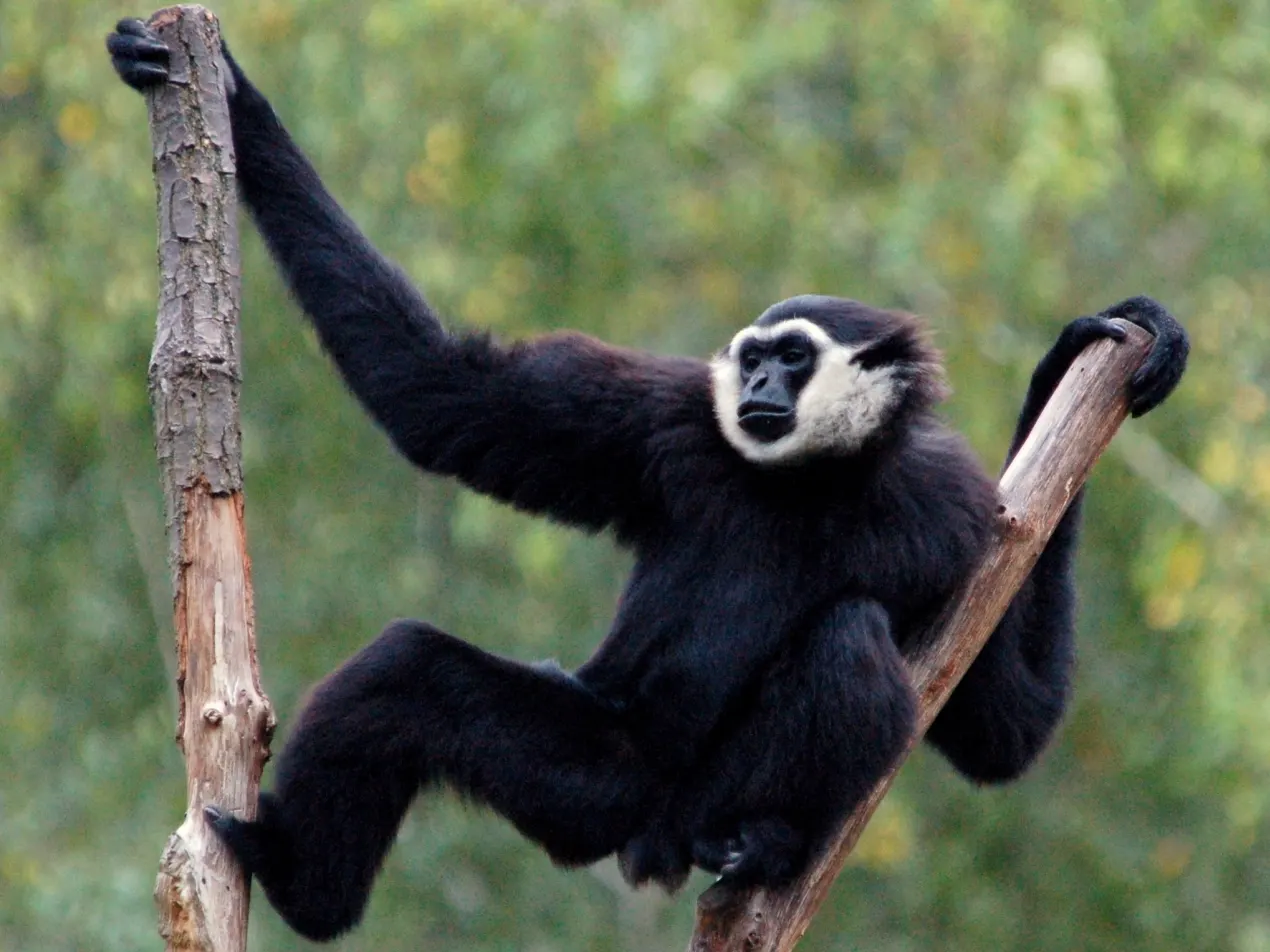
Coat colour varies from black through to red-brown. Every animal has a white brow band, and males also show white or light-grey cheeks. Head and body measure roughly 44 to 64 cm, and there's no tail. Wild adults weigh 4 to 6 kg, around 5 kg on average. Captive animals can reach 8 kg.
F. Cuvier described the species in 1821. Most experts recognise no subspecies, although some separate a mountain form from a lowland form. The white-bearded gibbon of Borneo (Hylobates albibarbis), once lumped in with it, is now treated as a separate species.
Where it lives
On Sumatra it occurs southeast of Lake Toba and the Singkil River, and it's the most widespread gibbon on the island. A smaller part of its range lies on the Malay Peninsula, in Peninsular Malaysia and southern Thailand near the Malaysian border. The IUCN records it in lowland, swamp and montane forest, from sea level to about 1,400 m. Some animals also use regenerating or selectively logged forest, provided trees remain.
Pins are Wikidata “endemic to” fields. Orange dots, when present, are GBIF occurrence tiles — survey bias included.
How it lives
Agile gibbons spend nearly all their time in the trees and rarely come down to the ground. They eat mostly fruit, with some leaves, flowers and insects. A family lives as a monogamous pair with its young inside a territory it defends with songs and visual displays. In a 2014 survey of Harapan Rainforest in Sumatra, groups held three to seven animals, averaging about four.
Females have a single young after roughly seven months, and weaning takes about two years. Young gibbons leave the family at around 8 years old to find a mate. The IUCN gives a generation length of about 15 years, so recovery is slow.
Why it is in trouble
The IUCN reports a decreasing population that is severely fragmented. Forest is being cleared for farms and plantations, small-holder and industrial alike, and also lost to shifting agriculture, mining and roads. Collection adds a second pressure: the IUCN lists intentional use, with the animal itself as the target, among the threats, and trade records show gibbons sold as pets.
A 2009 TRAFFIC report on Sumatra found the agile gibbon was the next most commonly traded gibbon after the siamang. It recorded 19 agile gibbons in Javan bird markets between 1994 and 2003, and another 19 in Javan rescue centres. The species is also on CITES Appendix I, which bars international commercial trade.
How many are left and what helps
No single range-wide count exists. A study published in 2014 at Harapan Rainforest, a restoration concession in lowland Sumatra of about 985 square km, estimated at least 6,070 and as many as 11,360 gibbons there, at densities of roughly 6.5 to 12 per square km. Older estimates for the island ran from 1.4 to 8.6 per square km. The study concluded that heavily logged forest can still matter a great deal if it keeps tree cover.
The IUCN lists site protection, harvest and trade management, habitat restoration and awareness work as conservation actions. It also records that no recovery plan or systematic monitoring scheme is in place. Conservation sites have been identified over only part of its range.
Sources
Written for this catalog in our own words from the sources below, checked against them on 12 November 2026. Population figures are estimates and carry the year they were made. Status and assessment year: IUCN. 2026. The IUCN Red List of Threatened Species. Version 2026-1. iucnredlist.org.