Endangered
Parosphromenus rubrimontis
Parosphromenus rubrimontis
The red-finned licorice gourami (Parosphromenus rubrimontis) is a tiny freshwater fish known only from Peninsular Malaysia. It lives in dark, acidic swamp streams near Bukit Merah in Perak. The IUCN Red List classed it as Endangered in 2019, mainly because its swamp habitat keeps being drained for farming.
How to recognise it
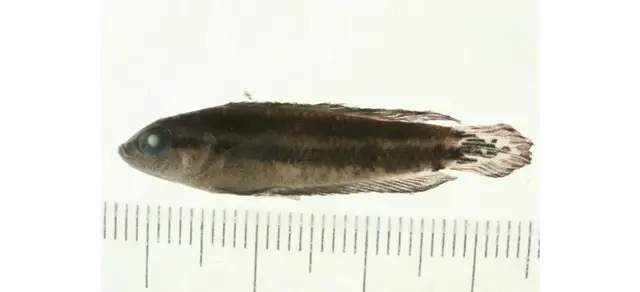
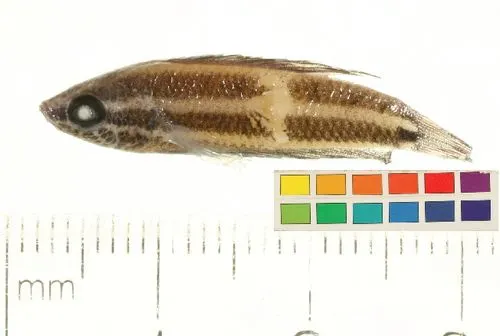
This is a very small fish. Hobbyist sources give a maximum total length of 3.5 to 4 cm, and the encyclopedia entry gives a standard length (excluding the tail fin) of 2.5 cm. It belongs to the gouramis, family Osphronemidae.
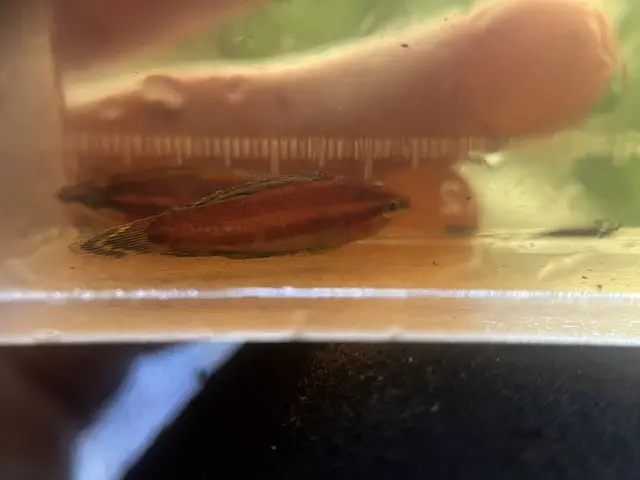
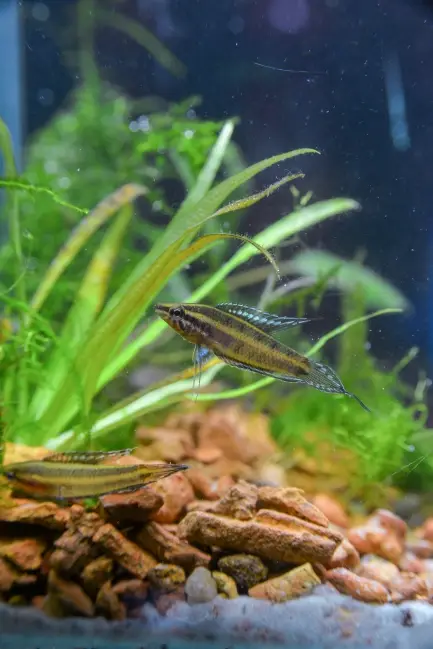
Breeding males are the showy ones. They have three black stripes on a light brown body, and the unpaired fins are black with a white edge and a red stripe through the middle. The ventral fins are blue to black-green with long black filaments, which helps separate males from similar licorice gouramis.
Like other gouramis it is a facultative air-breather, meaning it can gulp air at the surface but doesn't depend on it.
Where it lives
The species was described in 2005 by Maurice Kottelat and Peter Ng. Its name means red mountain in Latin, a reference to the town of Bukit Merah in the state of Perak, close to where the first specimens came from. The IUCN lists it as endemic to Malaysia, found in Peninsular Malaysia, and counts just 3 locations. Its estimated extent of occurrence is 65 (in the IUCN's usual unit of square kilometres).
It lives in black-water creeks and swamp, stained the colour of tea by humic substances. A specialist hobby group gives the water at wild sites as strongly acidic, with a pH of 3.5 to 4.5 and conductivity up to about 20 microsiemens per centimetre. The IUCN records swamp and peatland, and permanent streams, as its habitats.
Pins are Wikidata “endemic to” fields. Orange dots, when present, are GBIF occurrence tiles — survey bias included.
How it lives
Courtship is head-down, and females turn very pale, almost yellow, while courting. Aquarists who have bred the species report clutches averaging 20 to 40 eggs.
Little else has been published about its life in the wild. Diet and lifespan in nature aren't documented in the sources available.
Why it is in trouble
The main threat is farming. The swamp around the original collecting locality near Bukit Merah was drained and converted to oil palm plantation at about the time the species was first described. The IUCN lists agro-industry farming as an ongoing threat, with ecosystem conversion and degradation as the effects, though it rates the scope and severity as unknown. Its population trend is also unknown, and no population size has been estimated.
The small patches of swamp that still hold the fish face similar development pressure. A writer in TFH Magazine describes the fish as increasingly scarce and warns that expanding oil palm plantations could eventually wipe it out in the wild.
What is being done
The IUCN lists habitat protection, site protection and awareness work as conservation actions, and research on threats, ecology, habitat trends, distribution and population as needed. The assessment doesn't record any protection actually in place.
In captivity, the Parosphromenus Project says the fish first reached Europe from Bukit Merah in early 1984, and later imports came from remnant swamps near the same town. Keepers breed the differently coloured strains separately as a precaution. The species is demanding about water quality and hygiene, and it has often been sold under the wrong name, historically as P. deissneri.
Sources
Written for this catalog in our own words from the sources below, checked against them on 12 November 2026. Population figures are estimates and carry the year they were made. Status and assessment year: IUCN. 2026. The IUCN Red List of Threatened Species. Version 2026-1. iucnredlist.org.