Critically Endangered
Parosphromenus alfredi
Parosphromenus alfredi
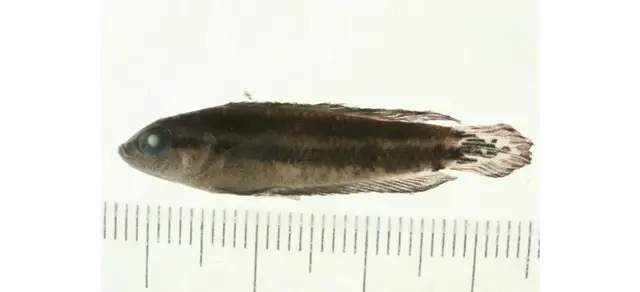
Alfred's licorice gourami (Parosphromenus alfredi) is a tiny blackwater fish, about 2.6 cm long, found only in a small part of eastern Johor, Malaysia. The IUCN rated it Critically Endangered in 2019 because its acidic peat swamp home is being cleared and altered.
How to recognise it
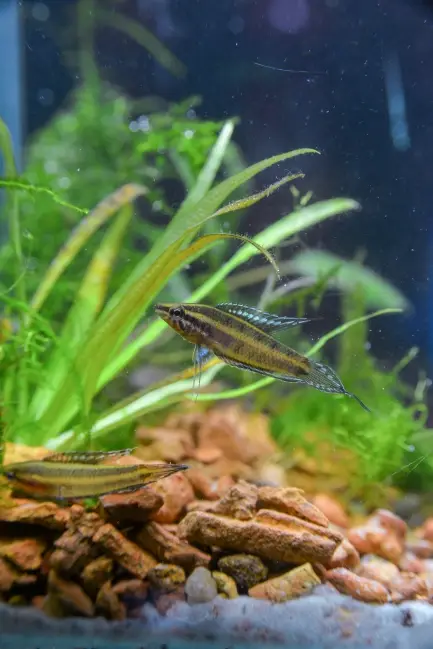
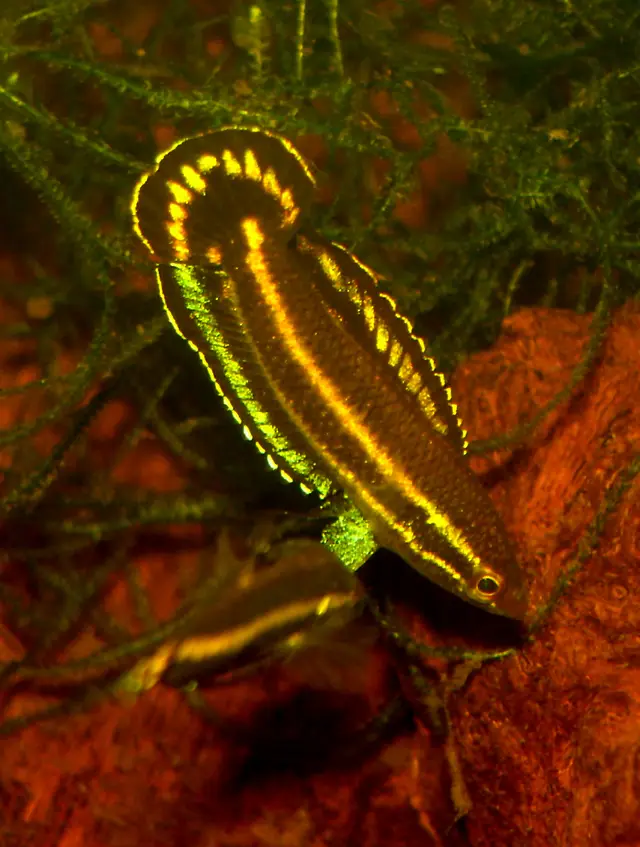
This is a very small gourami, reaching about 2.6 cm in standard length. Courting males are the showy ones, with a black band across the dorsal, anal and tail fins edged in bluish, iridescent ribbons, often with narrow red margins. Their pelvic fins are blue to black with pale filament tips.
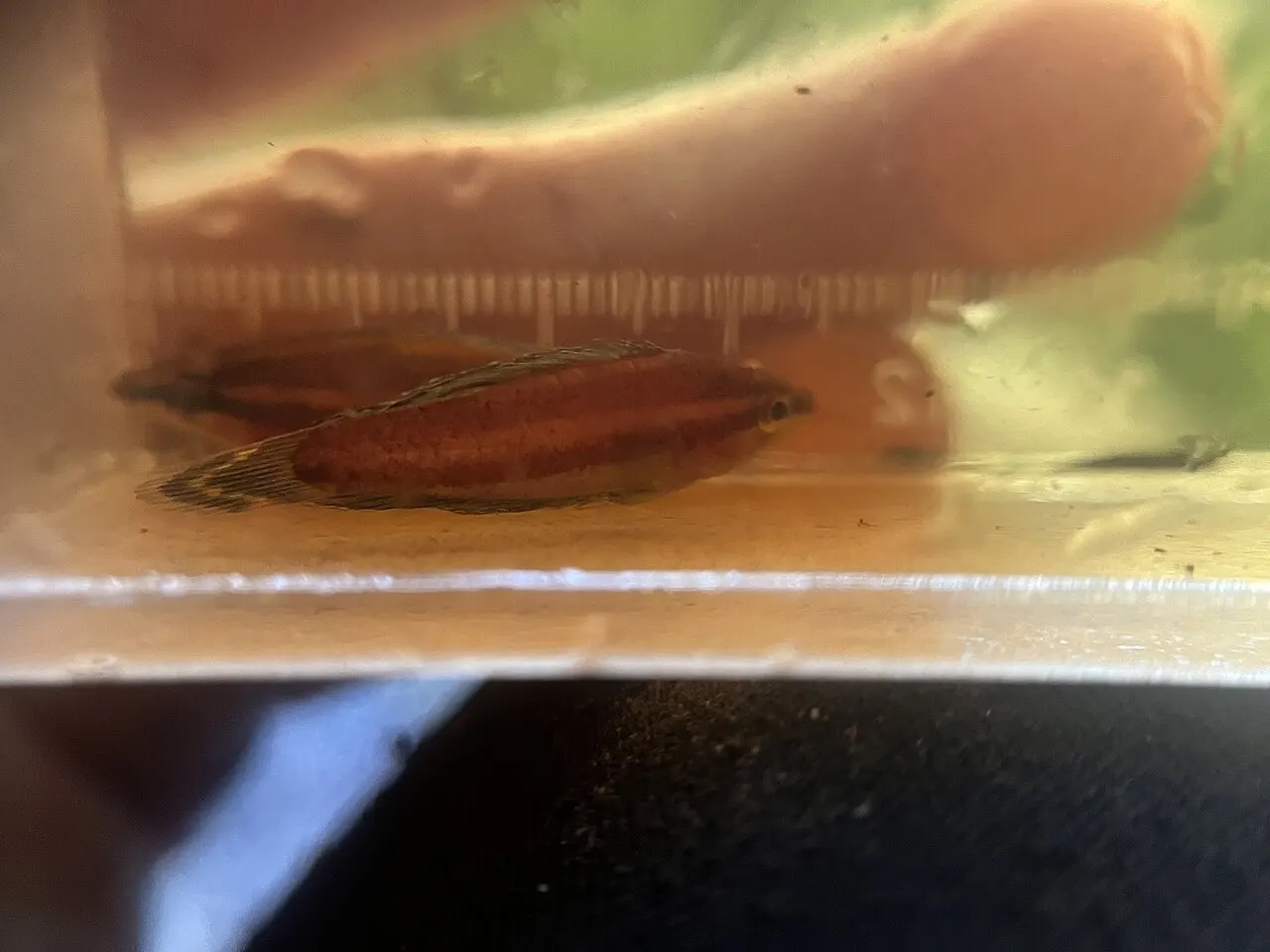
Females are duller and lack the blue and red fin bands. When ready to spawn they turn pale yellowish, and both sexes show a dark bar through the eye during courtship. The Parosphromenus Project notes that some differently coloured forms may have come from separate populations.
Where it lives
The fish is known only from eastern Johor in Peninsular Malaysia, around Kota Tinggi, Mawai and Desaru. The type locality has black, tannin-stained water with a pH of 4.5 to 5.0.
The IUCN records it from two localities in swamp forest, but the Desaru population is very likely extinct after conversion to oil palm. That leaves one location, with an estimated area of occupancy of 4 square kilometres.
It originally lived in peat swamp forest. What remains is mostly in altered habitat such as streams and roadside canals. Like other labyrinth fishes it can breathe air at the surface, though it does so less often than some relatives.
Pins are Wikidata “endemic to” fields. Orange dots, when present, are GBIF occurrence tiles — survey bias included.
How it lives
Licorice gouramis are micropredators that eat tiny invertebrates. Males defend a small territory around a cave in leaf litter and court with a head-down display. Eggs are laid during an embrace and stuck to the cave roof. The male tends the eggs and fry, and the female guards the surrounding area.
In aquarium observations eggs hatch in about a day to a day and a half, and the fry become mobile several days later.
Why it is in trouble
The 2019 assessment gives criterion B2ab(iii,v): a tiny range with continuing declines in habitat quality and in numbers. The population trend is decreasing. Listed ongoing threats are agro-industry farming and plantations, large-scale unintended harvest effects and other ecosystem modification, though the scale of each is unknown.
The IUCN names the conversion of peat swamp forest to industrial forestry and monoculture plantations, and says the remaining stream has been heavily modified to improve drainage. The Parosphromenus Project describes large parts of the original range as no longer habitable and rates the threat very high.
What is being done
The IUCN knows of no conservation actions in place. It recommends research on the fish's population, life history and threats, habitat protection, public education and, because only one population seems to remain, captive breeding.
The species was traded repeatedly in the 1990s and bred in Germany. After several generations in captivity, fertility problems and dwarf growth appeared, and local varieties were probably mixed. The Parosphromenus Project says the few remaining aquarium fish deserve renewed breeding effort, and links to an urgent survey project to rediscover the fish in Johor.
Sources
Written for this catalog in our own words from the sources below, checked against them on 12 November 2026. Population figures are estimates and carry the year they were made. Status and assessment year: IUCN. 2026. The IUCN Red List of Threatened Species. Version 2026-1. iucnredlist.org.