Critically Endangered
Parosphromenus quindecim
Parosphromenus quindecim
Parosphromenus quindecim is a tiny liquorice gourami from the blackwater peat swamps of West Kalimantan, on Indonesian Borneo. The 2019 Red List assessment rates it Critically Endangered, based on a very small known range that is shrinking as swamp forest is cleared.
How to recognise it
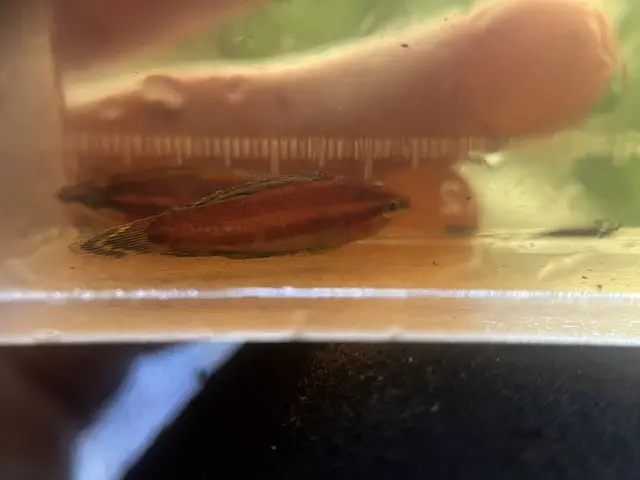
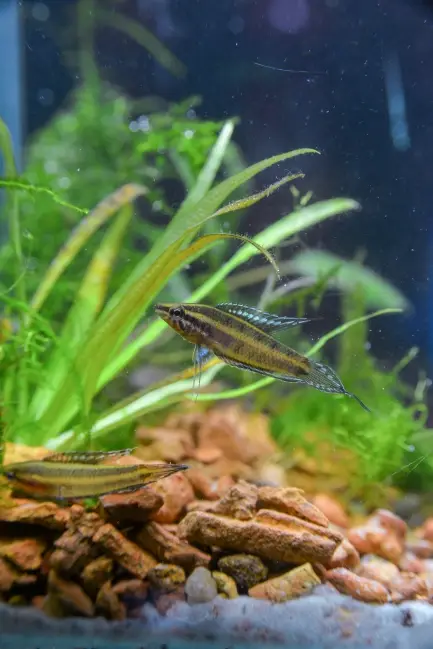
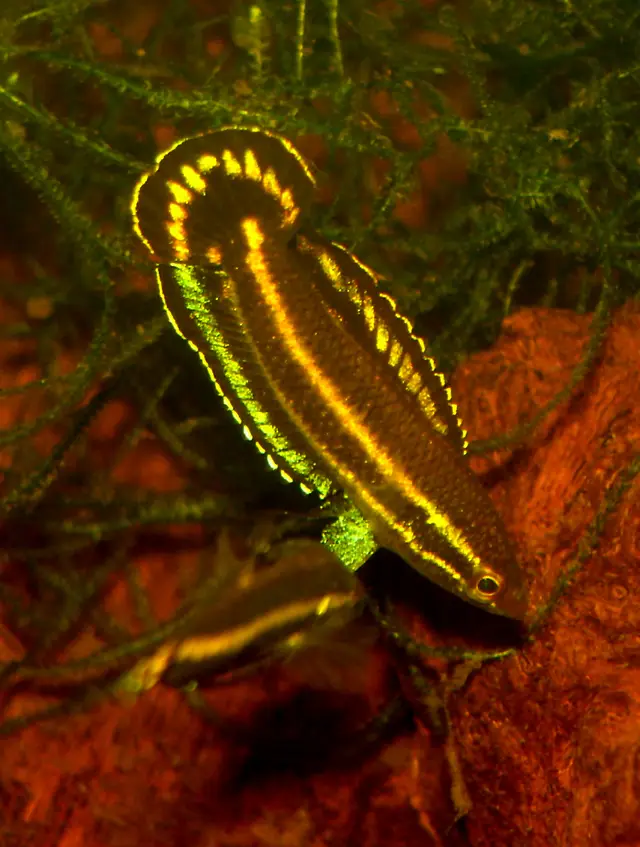
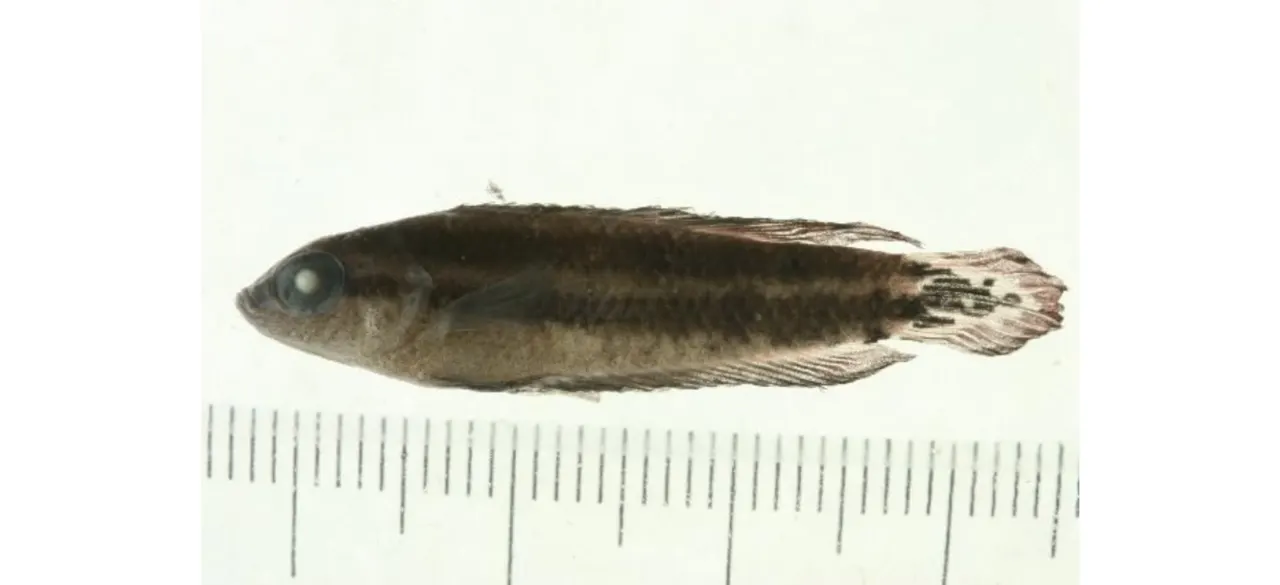
Kottelat and Ng described the species in 2005. The name means fifteen and refers to its dorsal fin spines, though aquarium sources give a count of 13 to 15. Published maximum sizes differ: 2.9 cm in standard length in one account, about 40 mm in one hobby profile and about 5 cm total length in another. Males have banded dorsal, anal and tail fins, with black, blue and red or red-brown bands. Females are paler, though dominant ones can be nearly as colourful.
Where it lives
It is known only from the Pawan and Liong river basins in southeastern West Kalimantan. The type locality is on the Liong, about 4 km north of Nanga Tayap. The Red List treats the range as a single location with an area of occupancy of about 4 square kilometres, and records that the area is declining. The full extent of its range is unclear, and for years the trade name Manis Mata pointed to a site about 100 km away where it may not occur.
It lives in peat swamp forest and the blackwater streams that drain it. Dense canopy keeps light low, the water is stained dark by humic acids, minerals are almost absent and pH can fall to 3.0 to 4.0.
Pins are Wikidata “endemic to” fields. Orange dots, when present, are GBIF occurrence tiles — survey bias included.
How it lives
It is reportedly a facultative air-breather, able to gulp air at the surface but not dependent on it. In aquariums it is a micropredator that takes live foods such as brine shrimp larvae and mosquito larvae and refuses most dry food. Pairs spawn in small caves or among leaf litter, and the male alone guards the eggs and young. Eggs hatch in 24 to 36 hours, and clutches can exceed 100 eggs.
Why it is in trouble
The Red List names agro-industry farming and plantations as ongoing threats, with ecosystem conversion and degradation as the effects. Some of its habitat has been cleared and drained for agriculture. The size of the population and its trend are unknown, and only a few localities are confirmed.
Collection played a smaller role. Fish were gathered near Nanga Tayap in 2001 and imported to Japan, then to Germany and elsewhere that year. They were traded rarely after that and, as far as is known, not after 2006. Most aquarium fish descend from the first import and a few private ones, so the captive gene pool is narrow.
What is being done
Site protection, habitat protection and awareness work are listed as actions needed. No conservation measures were recorded as in place at the 2019 assessment, which also calls for research on population size, distribution, threats and habitat trends.
Sources
Written for this catalog in our own words from the sources below, checked against them on 12 November 2026. Population figures are estimates and carry the year they were made. Status and assessment year: IUCN. 2026. The IUCN Red List of Threatened Species. Version 2026-1. iucnredlist.org.