Endangered
Parosphromenus paludicola
Parosphromenus paludicola
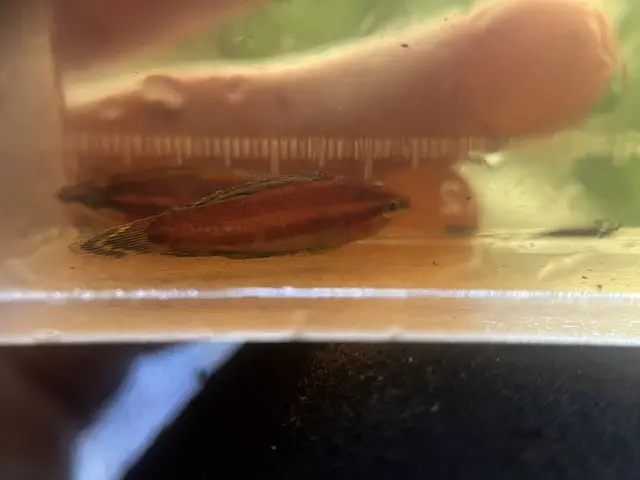
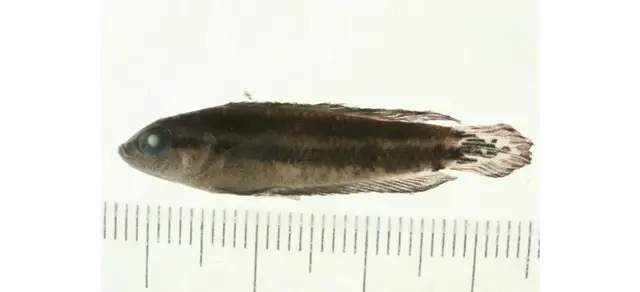
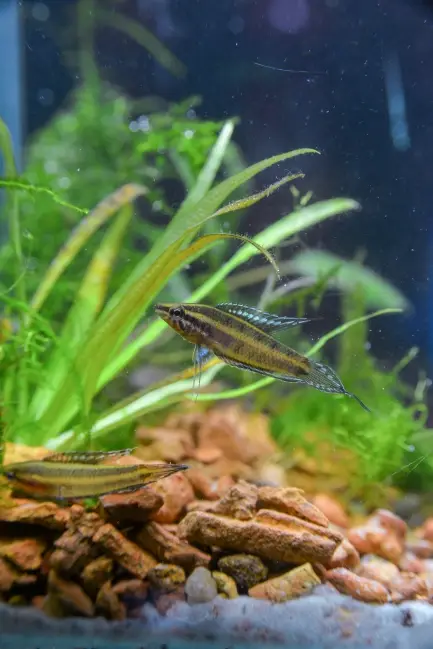
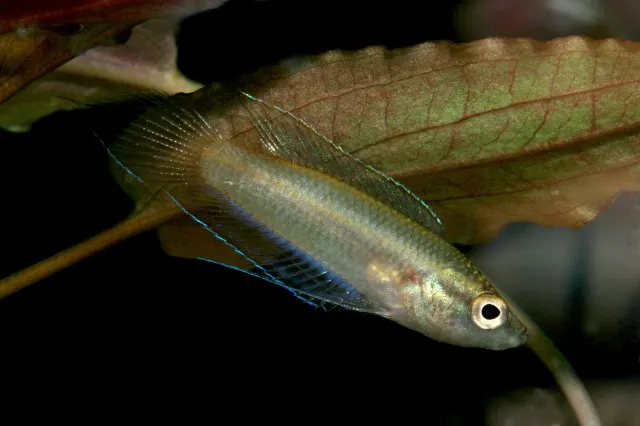
The swamp licorice gourami (Parosphromenus paludicola) is a fish under 4 cm long that lives in small forest streams and swamps in the north-east of the Malay Peninsula and southern Thailand. The IUCN Red List rated it Endangered in 2019. Males vary a lot in colour and carry very long ventral fins.
How to recognise it
This is a tiny, slender gourami that tops out at about 3.7 cm. It is more elongated than most of its relatives in the genus, and it has a high count of fin spines, 17 to 19 in the dorsal fin and 13 to 16 in the anal fin. Some populations have a dark spot on the flank, though it is often missing.
Males are the showy sex, and they vary from place to place. Colours run from pastel and beige-brown to bluish-pink, brown-red or nearly solid red, and every male has long filaments on the ventral fins. In most local forms, courting females turn pale beige-yellow. Unlike other licorice gouramis, this species shows almost no fluorescent colour on its unpaired fins.
Where it lives
The IUCN lists Thailand and Peninsular Malaysia as the range. In Malaysia it is found in the north-east of the peninsula (Terengganu), and in southern Thailand it is reportedly the only licorice gourami. The IUCN puts its extent of occurrence at about 1,720 square kilometres and counts four locations.
It lives in swamp forest, small creeks and freshwater pools, including peat swamp. Licorice gouramis as a group are known from very acid peat-swamp streams, but this species is more flexible. Most of its range lacks black water, and some populations live in clear water. Aquarium specialists give a workable range of about pH 4 to 6.5. It also turns up in roadside channels, reservoirs and ponds.
Pins are Wikidata “endemic to” fields. Orange dots, when present, are GBIF occurrence tiles — survey bias included.
How it lives
It can gulp air at the surface when oxygen runs low, but it isn't dependent on doing so. It doesn't migrate. Males build a bubble nest, though it often stays rudimentary, and a cave-like spot is accepted for spawning. Clutches of up to 100 eggs may be among the largest in the genus. The eggs sink, and one or both parents gather them into the foam.
Why it is in trouble
The IUCN names farming, plantations, housing and urban growth, and dumped rubbish as threats, all of which convert or degrade its wetlands. It also lists large-scale unintentional harvest. It records an ongoing decline in the area the species occupies, though the population trend is listed as unknown.
Specialists say the species is at lower risk than other licorice gouramis because it tolerates a wider range of habitats, but the risk is still significant, and high for some colour forms with small ranges. The collector Dennis Young reported that the original site of the Wakaf Tapei form has been destroyed.
What is being done
The IUCN notes that the fish occurs in at least one protected area, and it lists site protection, habitat protection and awareness work as conservation needs.
In aquariums, the species was first imported to Europe in 1977 by a hobbyist from Salzburg, who also bred it first. Apparently it wasn't traded commercially before the 1990s, and imports since then have mostly been sold under the wrong name, deissneri. Local forms are meant to be kept apart so they don't interbreed. The current aquarium stock of the Wakaf Tapei form is said to descend from a single breeding group kept by one couple.
Sources
Written for this catalog in our own words from the sources below, checked against them on 12 November 2026. Population figures are estimates and carry the year they were made. Status and assessment year: IUCN. 2026. The IUCN Red List of Threatened Species. Version 2026-1. iucnredlist.org.