Endangered
Parosphromenus opallios
Parosphromenus opallios
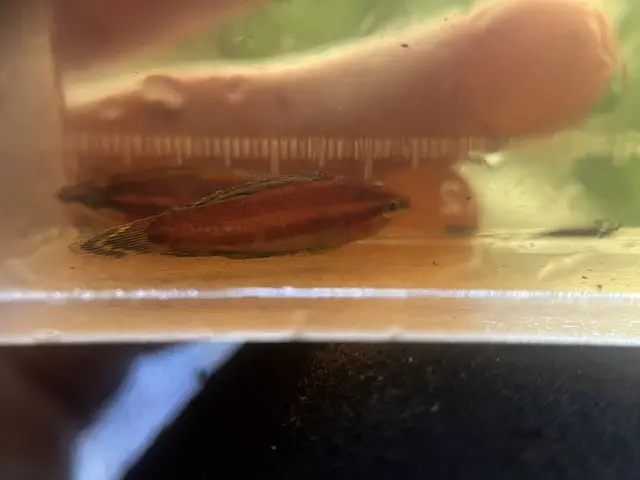
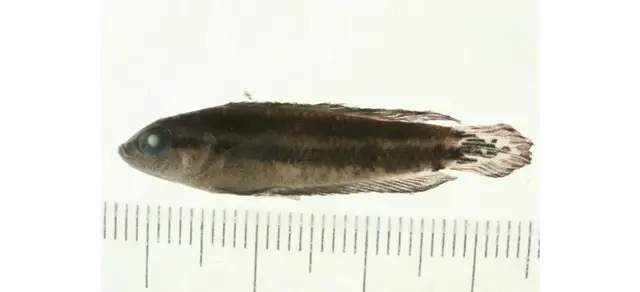
Parosphromenus opallios is a tiny liquorice gourami from the blackwater peat swamps of Central Kalimantan, Indonesian Borneo. Adults reach about 3 cm. The IUCN Red List rated it Endangered in 2019, because it occupies only two locations and its swamp habitat is being cleared for agriculture and plantations.
How to recognise it
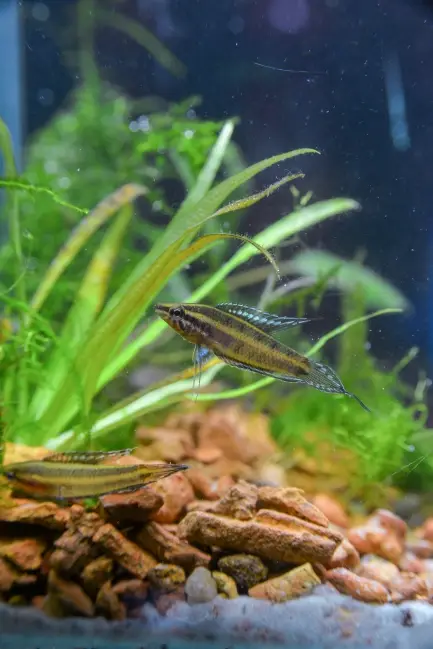
A liquorice gourami this size is easy to overlook. Adults reach about 2.5 to 3 cm in standard length. Males carry black fin bands edged in greenish blue, with a narrow blue band closer to the body, blue pelvic fins with a black tip, and clear pectoral fins. Females are duller, lack the blue fin bands, and have a more rounded dorsal fin edge.
Both sexes can darken quickly when aggressive, and breeding fish can show a dark bar through the eye. It is a facultative air-breather, meaning it can gulp air at the surface but does not depend on it. The species name comes from the Greek word for opal.
Where it lives
It is known only from Central Kalimantan, the Indonesian part of Borneo. The first specimens came from tributaries of the Arut drainage near Sukamara and Pangkalan Bun, and later records come from the Benipah system farther east. The full range is unclear.
It lives in peat swamp forest and in the slow blackwater streams that drain it, under dense canopy and dim light. The water there is stained dark by humic acids, carries almost no dissolved minerals, and can have a pH as low as 3 to 4. The IUCN lists both peatland swamps and permanent streams as suitable habitat.
Pins are Wikidata “endemic to” fields. Orange dots, when present, are GBIF occurrence tiles — survey bias included.
How it lives
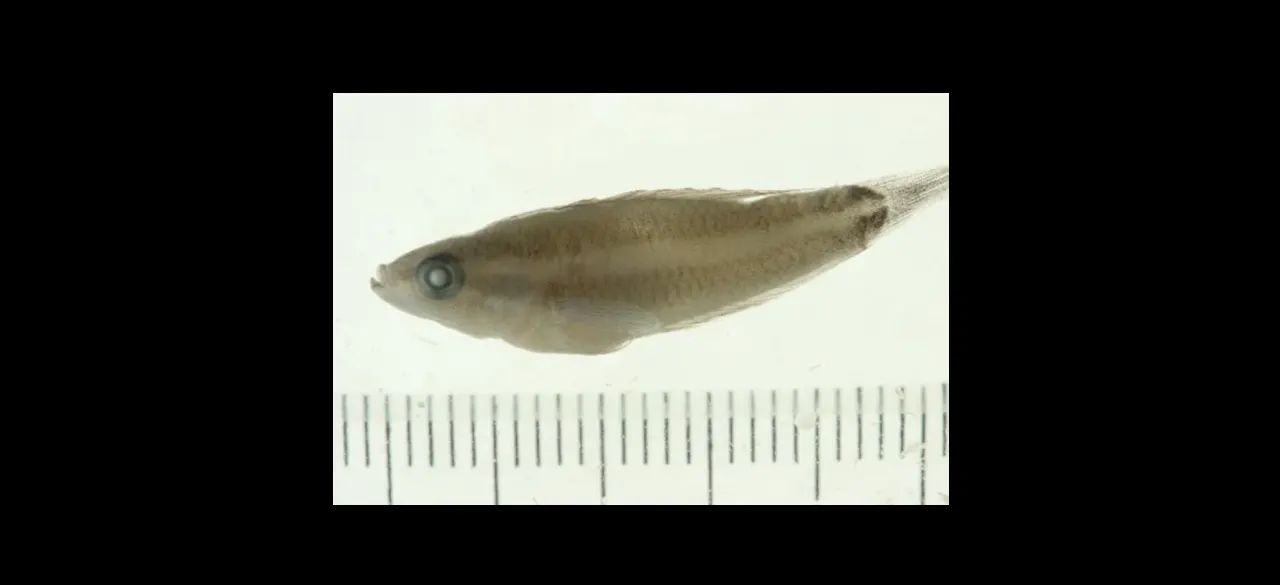
Breeding has been described mostly from aquarium observation. Spawning takes place in a small cave or among leaf litter, and both parents attach the eggs to the cave ceiling. The male alone guards the eggs and brood. Eggs hatch in about 24 to 36 hours, the fry become mobile 4 to 6 days later, and about 3 to 5 days after that they are free-swimming and leave the cave.
Why it is in trouble
The 2019 assessment gives an area of occupancy of just 8 square kilometres across two locations, and says that area is still shrinking. The population trend is recorded as unknown, and no population count exists.
The listed threats are farming and agro-industrial plantations that replace the swamp forest, plus harvest pressures. The IUCN also records use of the species as a pet or display animal. A hobbyist profile says that at Sukamara most vegetation around one pool has been cleared for agriculture, and that many populations now survive only in altered remnants such as irrigation ditches and roadside canals. That profile also calls the species endangered.
What is being done
The IUCN names resource and habitat protection, site protection and awareness work as the actions needed, and none are recorded as in place. FishBase lists the species as not evaluated for CITES, and it is reportedly uncommon in the aquarium trade.
Sources
Written for this catalog in our own words from the sources below, checked against them on 12 November 2026. Population figures are estimates and carry the year they were made. Status and assessment year: IUCN. 2026. The IUCN Red List of Threatened Species. Version 2026-1. iucnredlist.org.