Endangered
Pachypanchax sakaramyi
Pachypanchax sakaramyi
The Sakaramy panchax is a small killifish found only in northern Madagascar, where it lives in clear forest streams. The IUCN Red List assessed it as Endangered in 2016. Its confirmed wild range has shrunk to a short stretch of one river and the upper part of another, though it survives in aquariums abroad.
How to recognise it
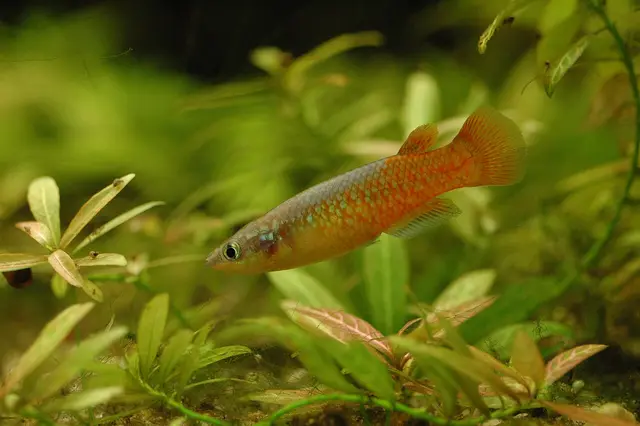
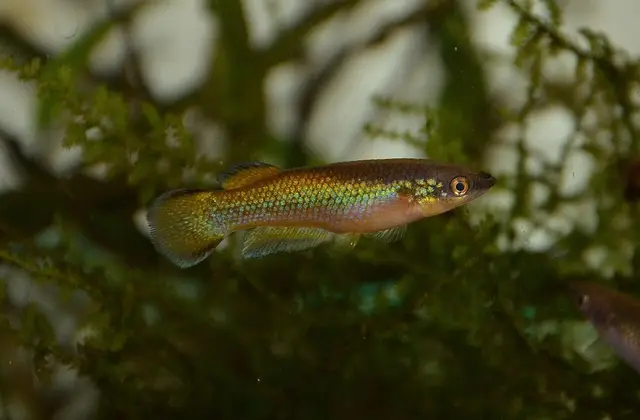
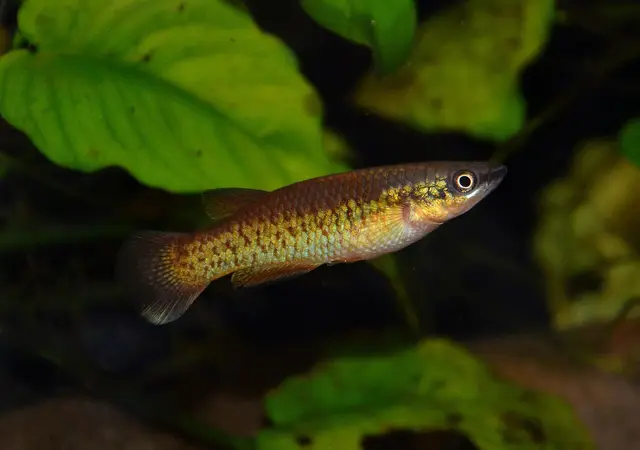
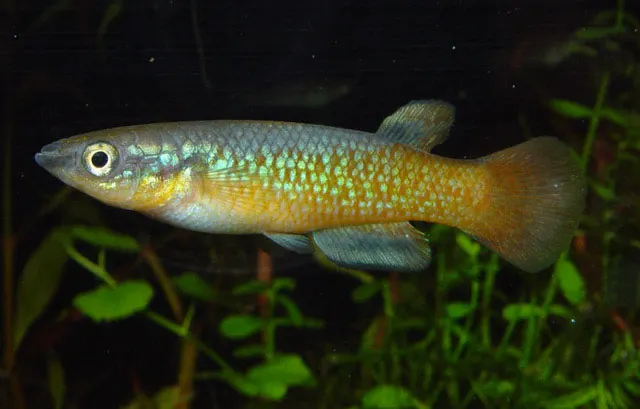
This is a slim, top-feeding killifish that reaches about 9 cm in standard length. Males grow larger than females, develop longer fins as they mature and are much more colourful. The unpaired fins carry dark bands near their bases.
Several close relatives on Madagascar look similar. Unlike Playfair's panchax, males of this species have no raised scales on the back, no red spots on the flanks and no red edging on the fins. It also has the shortest dorsal-fin base of the island's Pachypanchax species. The fish was first described in 1928 as Panchax sakaramyi, and a 2006 revision of the genus by Paul Loiselle in Zootaxa redescribed it from freshly collected specimens from the type area.
Where it lives
The type locality is the Sakaramy River, near the village of Sakaramy in the far north of Madagascar. It may once have lived more widely around the Ambohitra massif, but the wild populations now known are in a short stretch of the Sakaramy and in the upper Antongombato River. The IUCN estimated its extent of occurrence at 550 square kilometres in 2016.
Fish may survive in two crater lakes (Farihy Texier and Farihy Fantany), but those have not been sampled since the 1950s, and a possible population near Andranotohiliny is unverified. The IUCN lists both permanent rivers and streams and large permanent lakes as suitable habitat, and at least part of its range lies inside a protected area.
Pins are Wikidata “endemic to” fields. Orange dots, when present, are GBIF occurrence tiles — survey bias included.
How it lives
In the wild it favours fast, high-gradient forest streams with clear water, bedrock, cobbles, boulders and waterlogged branches. It is more abundant in the deeper, still pools than in the fast runs. Juveniles stay in the shallow margins while adults use deeper water.
Measured stream water has been near neutral (pH about 7.2 to 7.5), soft and cool, at roughly 20.5 to 22 degrees C. In captivity it eats dried, frozen and live foods, and it will take smaller fish. It spawns among live plants, moss or synthetic spawning mops, and breeding is not difficult in a well-set-up tank.
Why it is in trouble
The 2016 assessment lists three ongoing pressures: water taken from the stream for household use, other species, and accidental effects of small-scale harvesting. SeriouslyFish names the other species as introduced mosquitofish and guppies (Gambusia holbrooki and Poecilia reticulata) and adds deforestation of the Ambohitra massif. The IUCN notes a continuing decline in the area the fish occupies.
The IUCN records the population trend as decreasing. The assessment gives no population count.
What is being done
The assessment lists site management, invasive species control, harvest management and awareness work as conservation actions, and the fish occurs in at least one protected area. SeriouslyFish says captive breeding programmes are active in several countries, but no habitat management appears to be in place along the rivers themselves. The species is also fairly well established in the aquarium hobby.
Sources
Written for this catalog in our own words from the sources below, checked against them on 12 November 2026. Population figures are estimates and carry the year they were made. Status and assessment year: IUCN. 2026. The IUCN Red List of Threatened Species. Version 2026-1. iucnredlist.org.