Endangered
Pachypanchax omalonotus
Pachypanchax omalonotus
The powder-blue panchax (Pachypanchax omalonotus) is a small freshwater killifish from northwestern Madagascar, living on the island of Nosy Be and in streams of the nearby mainland. The IUCN Red List assessed it as Endangered in 2016 because its range is small and its numbers are falling.
How to recognise it
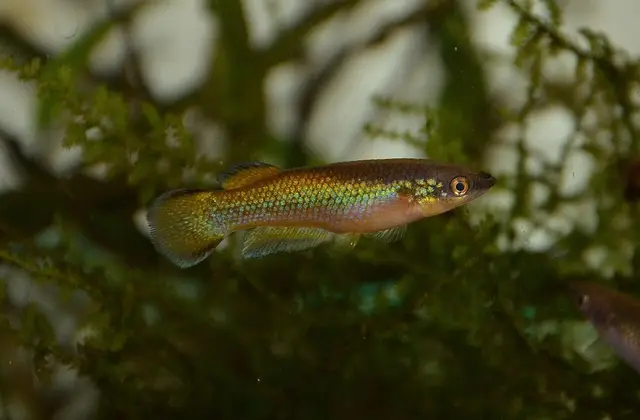
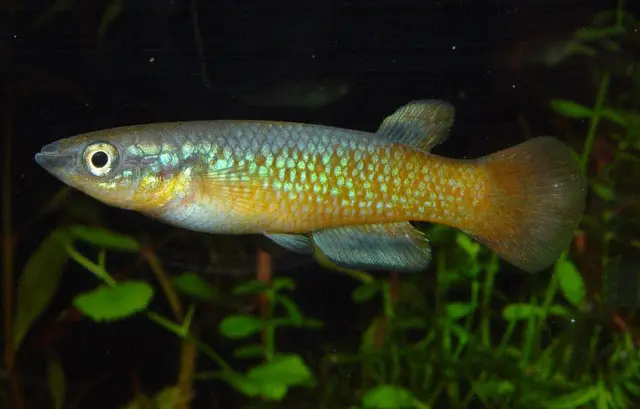
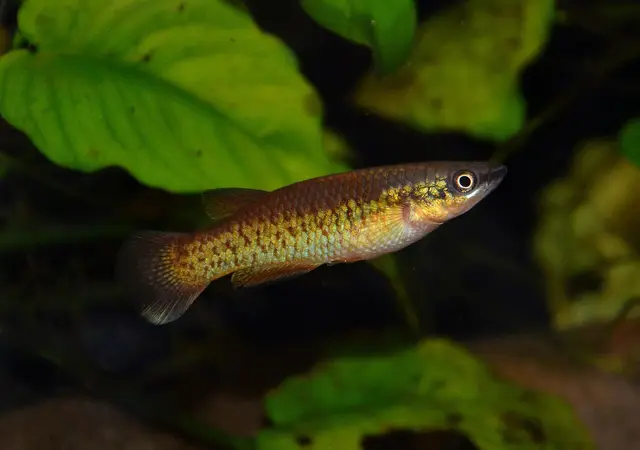
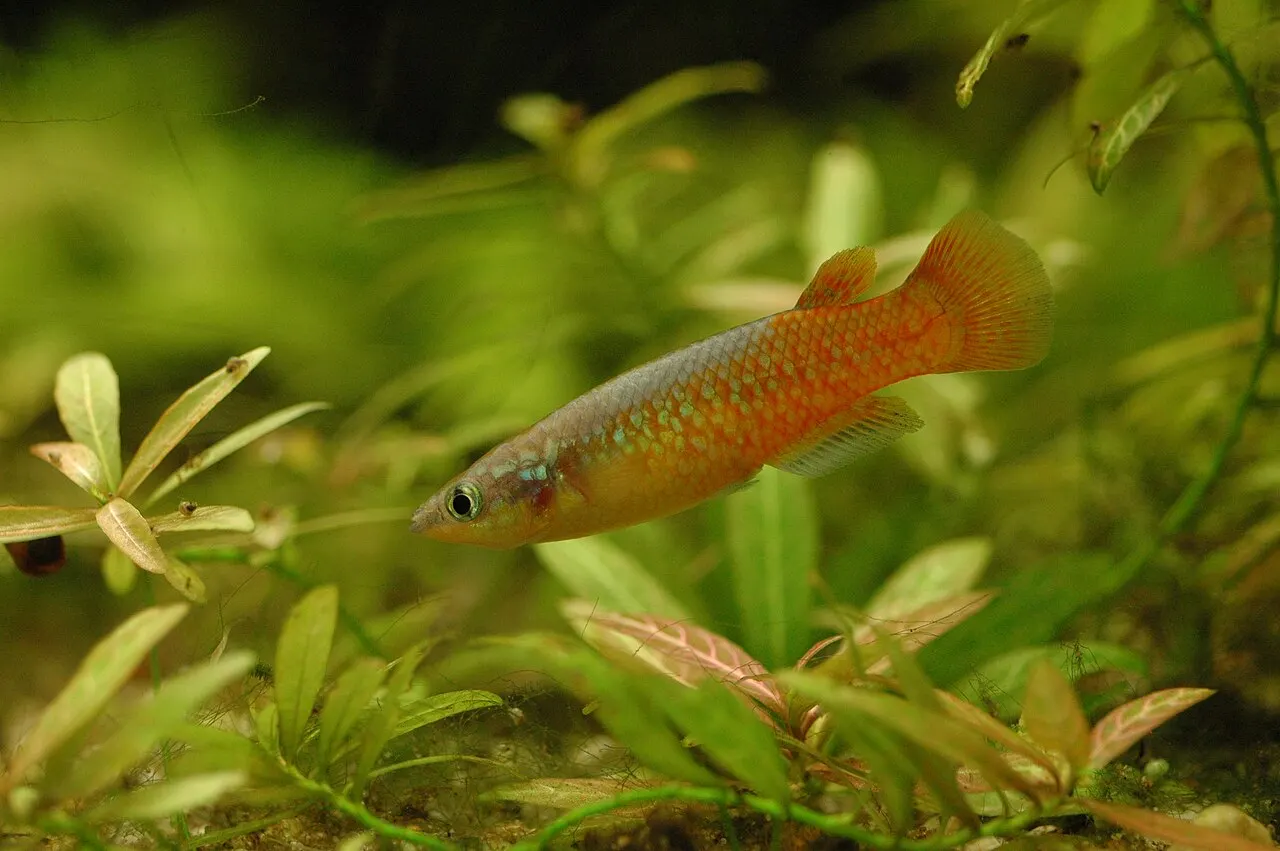
Adults reach about 9 centimetres at most, with sources giving a maximum of 90 mm standard length or 9.5 cm total length. Males grow larger, are far more colourful than females and have more extended fins. Their flanks carry metallic gold spots, and male colour varies between populations, with yellow, red and blue forms recorded. Breeding males show a narrow dark stripe from the snout back to just under the dorsal fin.
Aquarium fish sold under this name are often the similar Pachypanchax arnoulti, and hybrids are likely, so a fish labelled omalonotus is not always the real thing. The gold flank spots help tell the true species apart.
Where it lives
The species is found only in Madagascar: on Nosy Be, in the Sambirano River system on the adjacent mainland and in small streams on the Ankify peninsula. The IUCN counts five locations within a range of roughly 1,955 square kilometres.
It lives in the middle and upper parts of small streams over rock, cobble or sand, often under forest cover, and in marshy margins of floodplain lakes on the mainland. One population, in the Ramena River at about 700 metres, is reportedly larger than the lowland fish. It is provisionally placed in this species pending further study.
Pins are Wikidata “endemic to” fields. Orange dots, when present, are GBIF occurrence tiles — survey bias included.
How it lives
Insects found in the droppings of wild fish suggest it feeds at the water surface and on the bottom. It is not a seasonal killifish. In aquariums it lays its eggs among plants, moss or spawning mops. One hobby profile calls breeding straightforward in suitable conditions, though FishBase describes the species as difficult to keep.
Why it is in trouble
The 2016 assessment records a continuing decline and lists small-scale harvest for food as an ongoing threat. Its tiny range is the main weakness, since a handful of streams hold the whole species.
Numbers are not well known. No population estimate exists, and one hobby profile describes the fish as abundant within its range, so the IUCN's decline rests on its small, shrinking range rather than on a count.
What is being done
The IUCN lists site management and harvest management among the actions needed. No conservation measures were recorded as in place at the 2016 assessment.
Sources
Written for this catalog in our own words from the sources below, checked against them on 12 November 2026. Population figures are estimates and carry the year they were made. Status and assessment year: IUCN. 2026. The IUCN Red List of Threatened Species. Version 2026-1. iucnredlist.org.