Endangered
Oreochromis lepidurus
Oreochromis lepidurus
Oreochromis lepidurus is a small tilapia from the lower Congo River and nearby coastal rivers of northern Angola, with no widely used common name. The IUCN Red List rated it Endangered in 2010. It is notable for its densely scaled tail fin and its mouthbrooding females, and little else about its life is documented.
How to recognise it
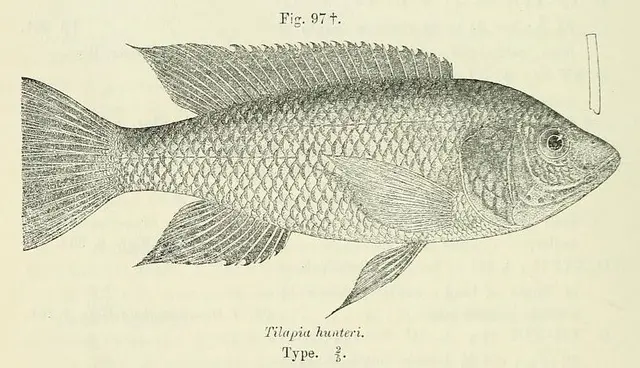
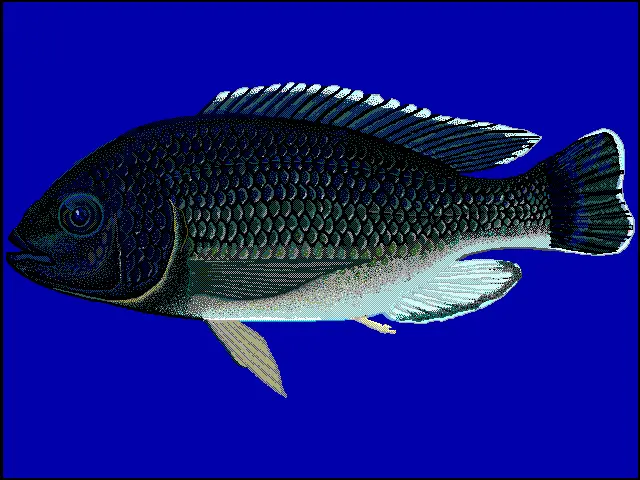
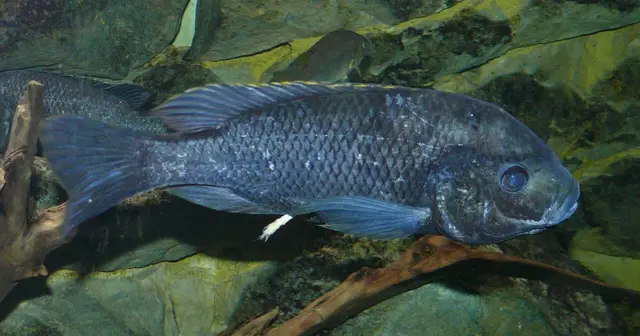
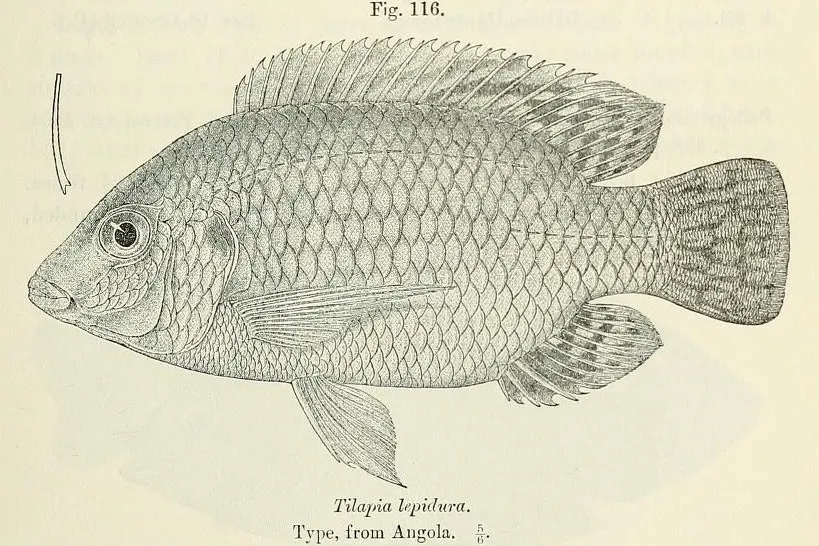
This is a short and deep cichlid, compressed from side to side, that grows to about 19 cm in total length. It carries 15 to 17 dorsal spines. Adults have a caudal fin covered densely in scales, usually marked with a net-like dark pattern, and the species name comes from the Greek for scale and tail. Mature males have a knobbed genital papilla, some of the knobs drawn out into filaments.
Boulenger described it in 1899 as Tilapia lepidura. It now sits in the genus Oreochromis.
Where it lives
FishBase records it from the lower Congo River basin in the Democratic Republic of the Congo, and it is also reported from Angola, probably in the lower Congo and in coastal rivers between the Congo and the Bengo. A US Fish and Wildlife Service screening report, citing the ichthyologist Ethelwynn Trewavas (1983), says the fish is absent from the Bengo and Kwanza rivers. Older reports from the middle Congo are questionable and probably based on misidentified fish.
The IUCN assessment lists Angola and the Democratic Republic of the Congo, and the habitats as permanent and seasonal rivers, streams and small freshwater pools and marshes. FishBase describes it as living in fresh and brackish water, and Trewavas thought it probably occurs only in brackish water in the lower Congo.
Pins are Wikidata “endemic to” fields. Orange dots, when present, are GBIF occurrence tiles — survey bias included.
How it lives
It feeds on plankton. As in many tilapias, the female is a mouthbrooder, carrying the eggs in her mouth. FishBase rates its resilience as high, with a minimum population doubling time of under 15 months. Beyond that, little field study of the species turns up.
Why it is in trouble
The Endangered rating (criteria B1ab(iii)+2ab(iii)) is based on a restricted range and a decline in the quality of its habitat. The IUCN threat list names mining and quarrying, seepage from mining, shipping lanes and dams. The assessment records the population trend as unknown, says the population is not severely fragmented, and gives no count of fish.
No introductions outside its native range are known, according to the US screening report.
What is being done
The IUCN assessment lists no conservation actions for this fish, and no protected-area status or recovery work appears in the sources. FishBase shows its CITES and CMS status as not evaluated. The species is mainly a candidate for survey work, since its true range, numbers and response to mining and damming are poorly known.
Sources
Written for this catalog in our own words from the sources below, checked against them on 12 November 2026. Population figures are estimates and carry the year they were made. Status and assessment year: IUCN. 2026. The IUCN Red List of Threatened Species. Version 2026-1. iucnredlist.org.