Critically Endangered
Oreochromis squamipinnis
Oreochromis squamipinnis
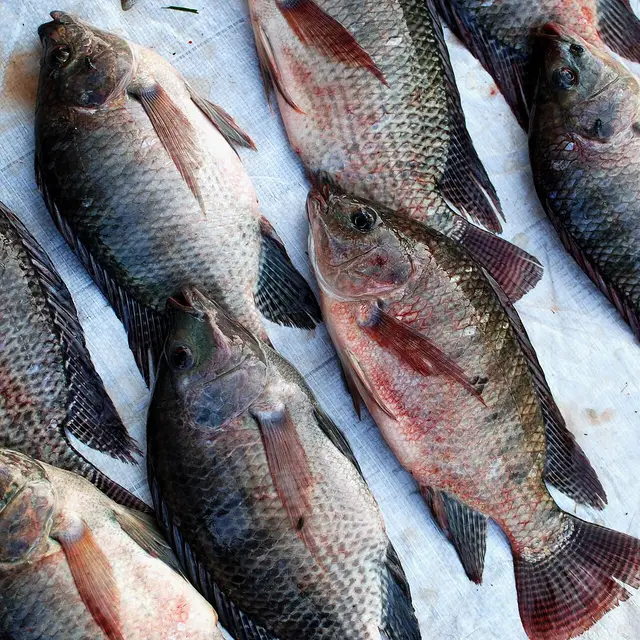
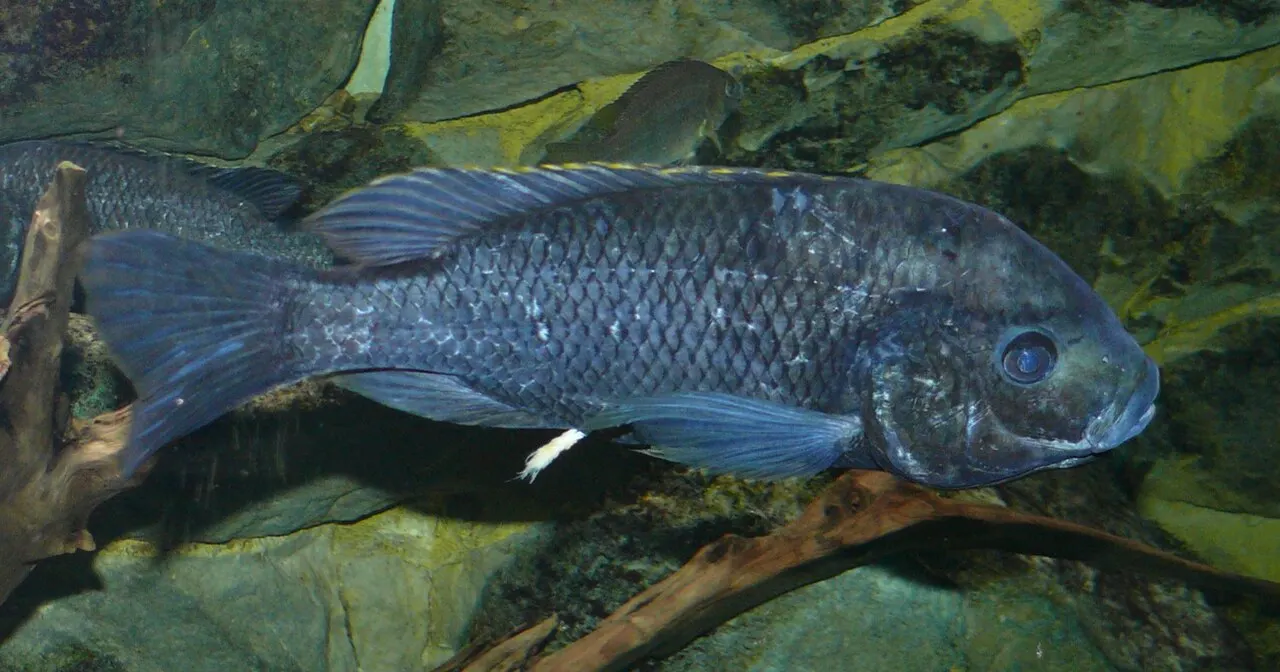
Oreochromis squamipinnis is a large, heavy-bodied cichlid of Lake Malawi, Lake Malombe and the Shire River, and one of the fish Malawians call chambo. The IUCN Red List rated it Critically Endangered in 2018, after fishing cut its numbers sharply. Breeding males carry long white tassels that females nibble during spawning.
How to recognise it
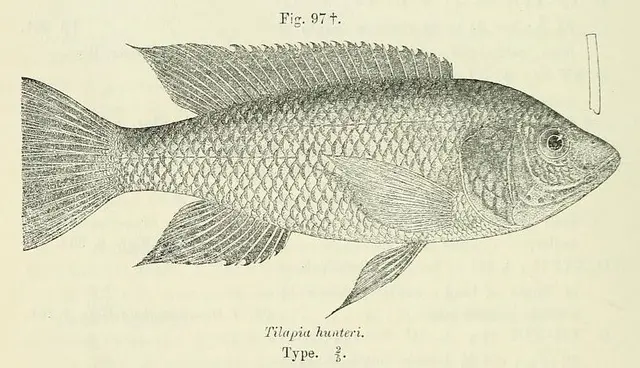
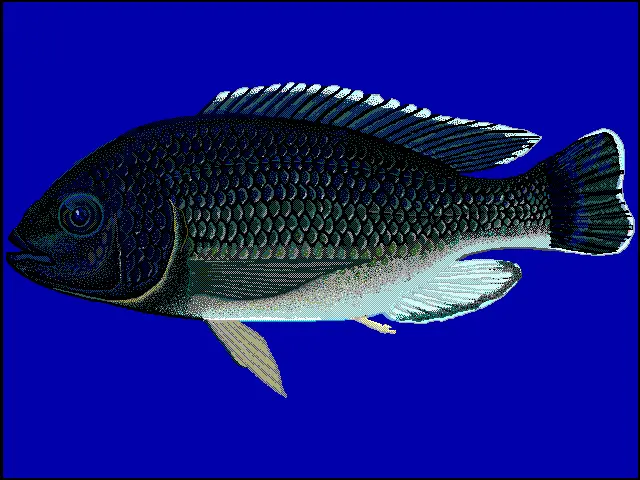
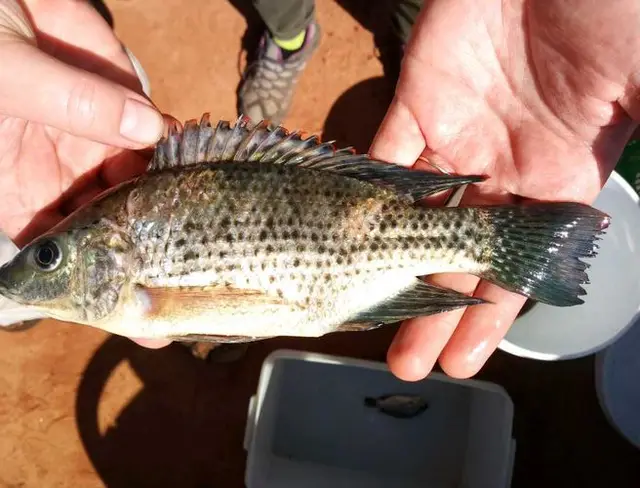
This is a large tilapia that can reach about 36 cm in standard length. FishBase gives its length at first maturity as roughly 27 cm.
Females and young fish closely resemble two relatives in the same chambo group, Oreochromis karongae and O. lidole. Ripe males are easier to pick out because they have a paler upper head. Breeding males also grow long white genital tassels that look a little like fish eggs. In one example, a male 17 cm long had tassels about 9 cm long.
Where it lives
The Red List records it from Malawi, Mozambique and Tanzania, in permanent freshwater lakes and rivers. It lives in many habitat types but is most at home in shallow water, and it is abundant in the vegetated bays of the southeast arm of Lake Malawi. FishBase also lists the upper Shire River and the crater lakes Kingiri, Ilamba and Massoko.
The Red List puts its extent of occurrence at about 30,050 square kilometres and the area it actually occupies at about 3,150 square kilometres. It occurs in Lake Malawi National Park.
Pins are Wikidata “endemic to” fields. Orange dots, when present, are GBIF occurrence tiles — survey bias included.
How it lives
It feeds mainly on phytoplankton and also takes zooplankton and detritus. Like other chambo it is a mouthbrooder. Males and females take turns forming a T-shaped courtship display, eggs are laid in batches and picked up at once by the female, and she guards the eggs and then the fry in her mouth until they reach about 15 mm.
The tassels on a breeding male resemble eggs. The female tries to pick them up, which reportedly helps get sperm to the eggs she is already holding. A scale-eating cichlid, Corematodus shiranus, reportedly mimics this species' colour and swimming style so it can approach schools and bite off scales.
Why it is in trouble
Fishing is the main driver. The Red List estimates a 94 percent reduction, calculated from a fall in catch per boat per day for chambo in the southern arms of Lake Malawi between 2006 and 2016 (70 kg down to 4.5 kg). It lists small-scale and large-scale harvesting as threats, plus industrial aquaculture, which brings a risk of hybridisation. The decline is still going on, and one of the three chambo species, Oreochromis lidole, is now possibly extinct.
Lake Malombe shows how fast it can happen. FAO figures show combined catches of the three chambo species falling from about 9,300 tonnes in 1982 to 50 to 200 tonnes a year from 1993. FAO's 1993 analysis blamed heavy fishing of young fish with small-mesh beach seines and purse seines, which took about 70 percent of the Oreochromis catch. Falling water levels on the Upper Shire River were noted, but their effect on fish was not investigated. The fishery then turned to small haplochromine cichlids called kambuzi, and that catch has not recovered either.
What is being done
Listed conservation actions are harvest management, training, and awareness and communications. The population trend is recorded as decreasing, so these measures have not yet turned things around.
On Lake Malombe, where the chambo has almost disappeared, an FAO review says the few remaining seine nets are based just outside Liwonde National Park and seem to benefit from the protection the park gives the fish. Many chambo seine owners there left the fishery or moved to Lake Malawi as catches fell.
Sources
Written for this catalog in our own words from the sources below, checked against them on 12 November 2026. Population figures are estimates and carry the year they were made. Status and assessment year: IUCN. 2026. The IUCN Red List of Threatened Species. Version 2026-1. iucnredlist.org.