Critically Endangered
Oreochromis karongae
Oreochromis karongae
Oreochromis karongae, one of the fish Malawians call chambo, is a large cichlid from Lake Malawi, Lake Malombe and the upper and middle Shire River. It is prized as food and has been heavily overfished. The IUCN Red List lists it as Critically Endangered (assessed 2018).
How to recognise it
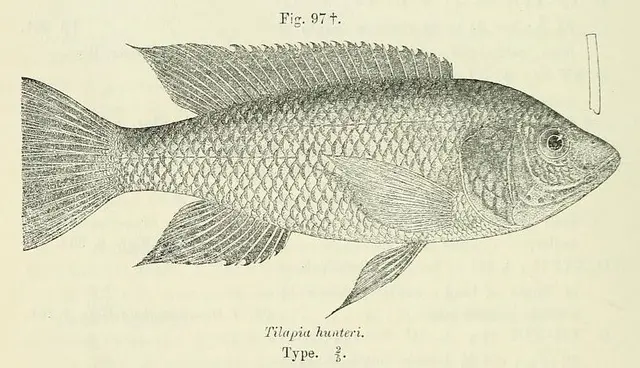
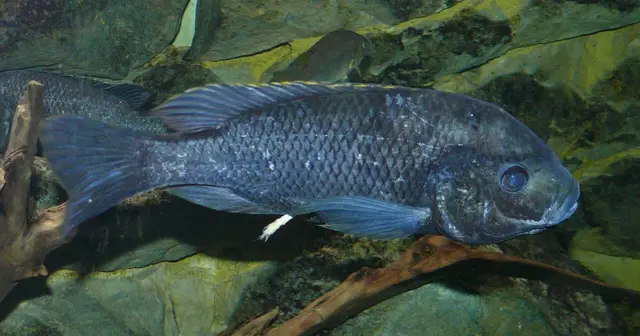
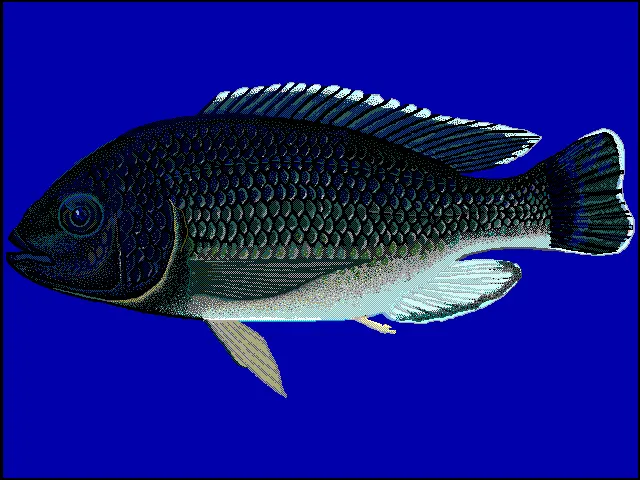
It can reach 42 cm in total length. Breeding males are black with white edges on the fins, and are very similar to breeding males of the related chambo Oreochromis lidole. Females are more yellowish brown than females of O. lidole or O. squamipinnis.
Breeding males carry long tassels at the genital opening that look somewhat like fish eggs. The female tries to pick these up with her mouth, which helps fertilise the eggs she is already holding. A taxonomic review reportedly suggested that a close relative, O. saka, is the same species, though FishBase still lists both.
Where it lives
The Red List records Malawi, Mozambique and Tanzania, and lists lakes and rivers as habitat. It estimates the extent of occurrence at about 30,050 square kilometres and the area of occupancy at 3,150. For the chambo group, fry stay in shallow water among reeds in pools and lagoons, and juveniles of 60 to 200 mm live near the shore where adults feed.
Pins are Wikidata “endemic to” fields. Orange dots, when present, are GBIF occurrence tiles — survey bias included.
How it lives
It feeds mainly on phytoplankton, including diatoms. Chambo in general mature late, produce few eggs (typically fewer than 1,000 per female a year) and give long parental care, so stocks recover slowly.
A scale-eating cichlid, Corematodus shiranus, mimics chambo in colour and swimming style so it can approach schools and bite off scales or fins.
Why it is in trouble
Overfishing is the main cause. The Red List estimates a reduction of 94 percent in the past, with harvest as the basis, and says the causes have not ceased. It also lists industrial aquaculture as a threat and hybridisation as a stress.
A WorldFish Center restoration plan describes the chambo fishery in Lake Malombe as collapsed, with catches falling from over 4,000 tonnes a year in the 1970s to about 100 tonnes in 1994. In the south-east arm of Lake Malawi, landings fell from around 4,000 tonnes to about 600 tonnes in 1999. Those figures cover the chambo group (O. karongae, O. lidole and O. squamipinnis), not this species alone. The plan adds that dragging seine nets along the bottom has destroyed chambo nests, and clearing of aquatic plants for resort beaches has degraded nursery shallows.
What is being done
The Red List lists harvest management, training, and awareness work among its conservation actions, and notes an area-based regional management plan and some protected areas, covering 1 to 10 percent of the population. It records no recovery plan and no systematic monitoring scheme.
Options studied for rebuilding chambo stocks include restocking with hatchery juveniles, brushpark habitats, fish sanctuaries and cage culture. The same plan warned that reducing fishing effort alone was unlikely to rebuild the fishery quickly, and noted that the low egg numbers of this species make large-scale cage farming difficult.
Sources
Written for this catalog in our own words from the sources below, checked against them on 12 November 2026. Population figures are estimates and carry the year they were made. Status and assessment year: IUCN. 2026. The IUCN Red List of Threatened Species. Version 2026-1. iucnredlist.org.