Endangered
Jipe tilapia
Oreochromis jipe
The Jipe tilapia (Oreochromis jipe) is a large cichlid found only in the Pangani River system of Kenya and Tanzania, from Lake Jipe downstream. The IUCN Red List rated it Endangered in 2023. Fishing, silt, farm water use and introduced tilapias all press on a species that local fisheries depend on.
How to recognise it
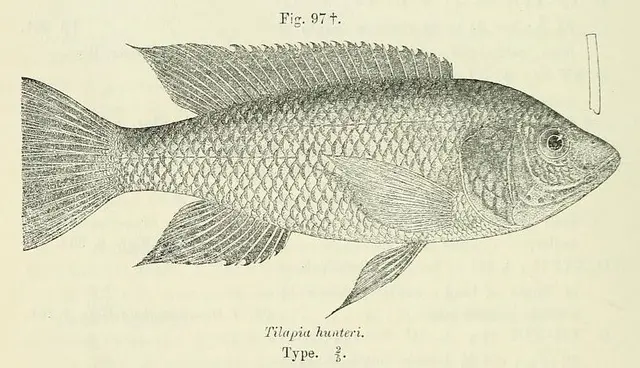
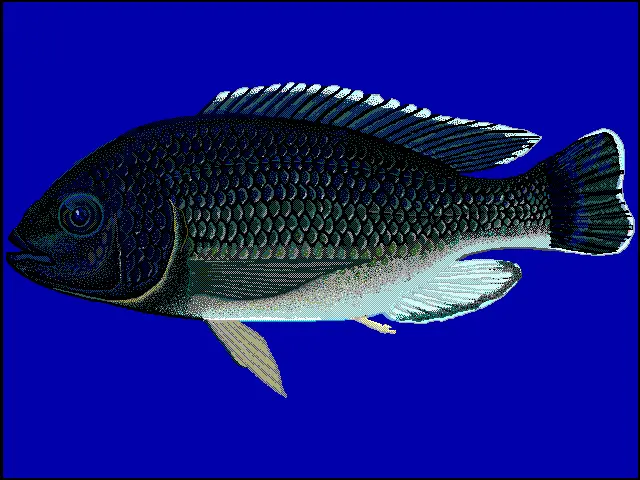
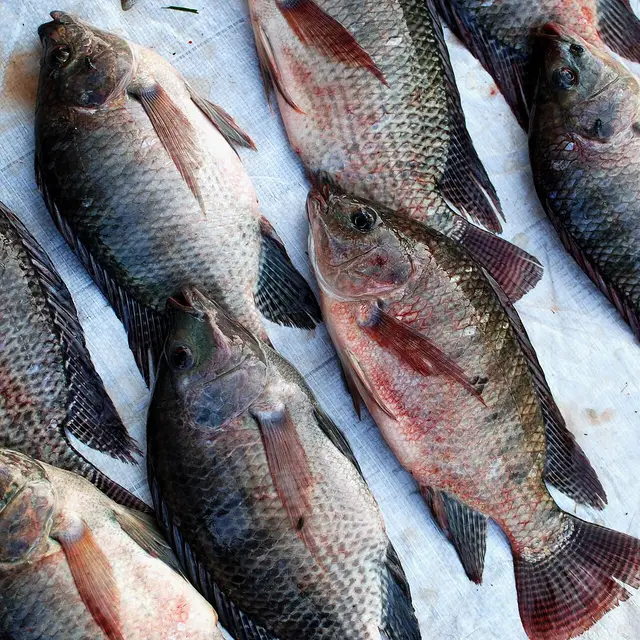
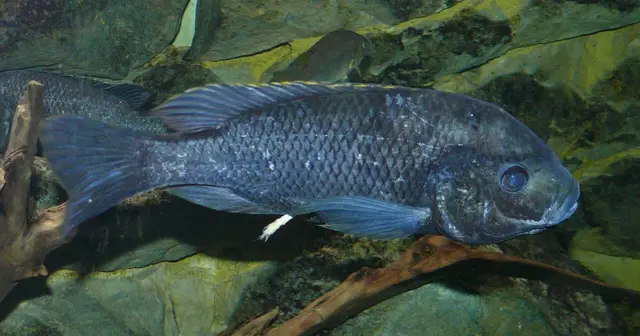
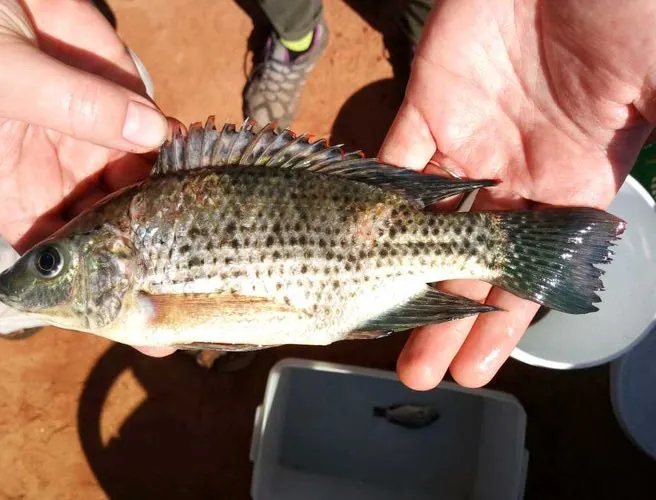
This is a big, slender-bodied tilapia that can reach about 50 cm in standard length, with a small head and small mouth. The tail fin carries distinct vertical dark stripes.
Breeding males have a pale blue head with dark spots and dark fins speckled with pale spots, edged in orange on the dorsal and tail fins. Females and non-territorial males are plainer and paler.
Where it lives
The natural range is the Pangani system, from Lake Jipe on the Kenya and Tanzania border down to the Pangani Falls dam. It lives in both lakes and rivers. Fish from the Pangani and Ruva rivers differ somewhat in appearance from those in Lake Jipe, and they have sometimes been treated as a separate species, the Pangani tilapia (O. pangani). The IUCN has merged that name into Oreochromis jipe, so the 2023 Endangered assessment covers them all.
Stocks have also been placed in ponds and dams elsewhere in Tanzania, including near Tanga, in the Usambara Mountains and around Dodoma. The IUCN estimates the extent of occurrence at about 3,829 square km and counts one location.
Pins are Wikidata “endemic to” fields. Orange dots, when present, are GBIF occurrence tiles — survey bias included.
How it lives
In lakes the Jipe tilapia mainly grazes the film of algae and other growth on submerged surfaces, and it also eats material from the bottom. Females carry the eggs and young in their mouths. Breeding pits dug by males have one central hollow ringed by two or three rows of smaller pits.
Why it is in trouble
Lake Jipe is shallow and has shrunk badly. A 2024 study in Lakes and Reservoirs reported that it fell from about 109 square km to about 27 square km, blamed largely on agriculture, and that fish stocks, this tilapia in particular, have dropped sharply. The study also named overfishing, illegal gear and fishing in protected breeding areas.
The IUCN also lists soil erosion and silt, nutrient pollution, water taken for irrigation, invasive species and small-scale harvest, and records the population as decreasing. Nile tilapia and blue-spotted tilapia have been introduced into the Pangani basin. A 2019 study in Hydrobiologia found hybrids between each of them and the Jipe tilapia. Hybrids were uncommon next to purebred fish, but the study called it the first evidence of such hybridisation in Tanzania.
What is being done
The species occurs in at least one protected area, but the IUCN records no recovery plan, no monitoring scheme and no harvest management plan, and no fish held in captivity. In November 2021 Kenyan fisheries staff set up a five-person enforcement team to patrol Lake Jipe, began desilting canals that feed the lake, and planned to restock it with fingerlings. The 2019 hybridisation study advised careful evaluation before any further introductions of tilapias that readily hybridise.
Sources
Written for this catalog in our own words from the sources below, checked against them on 12 November 2026. Population figures are estimates and carry the year they were made. Status and assessment year: IUCN. 2026. The IUCN Red List of Threatened Species. Version 2026-1. iucnredlist.org.