Critically Endangered
Ochlockonee moccasinshell
Medionidus simpsonianus
The Ochlockonee moccasinshell (Medionidus simpsonianus) is a small freshwater mussel known only from the Ochlockonee River system of Georgia and Florida. It went unrecorded alive for 19 years until surveyors found living animals again in 2014. The IUCN Red List lists it as Critically Endangered, from an assessment made in 2000.
How to recognise it
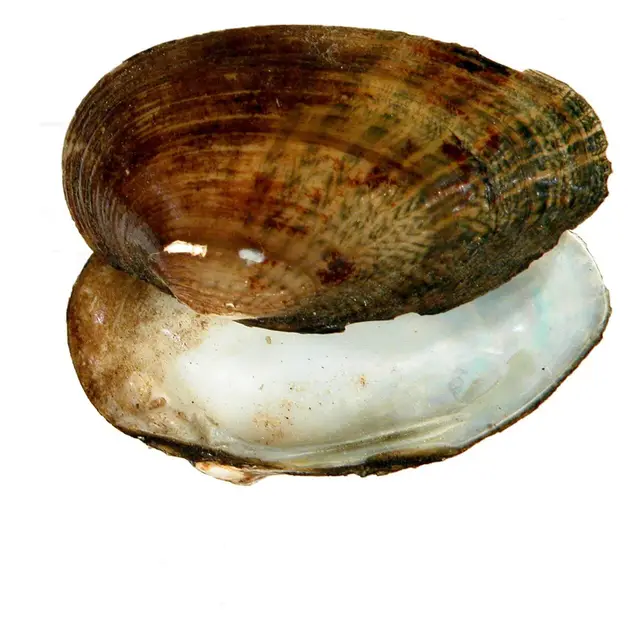
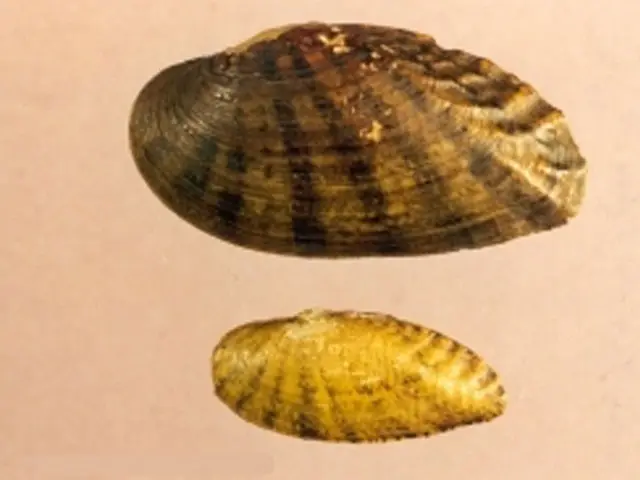
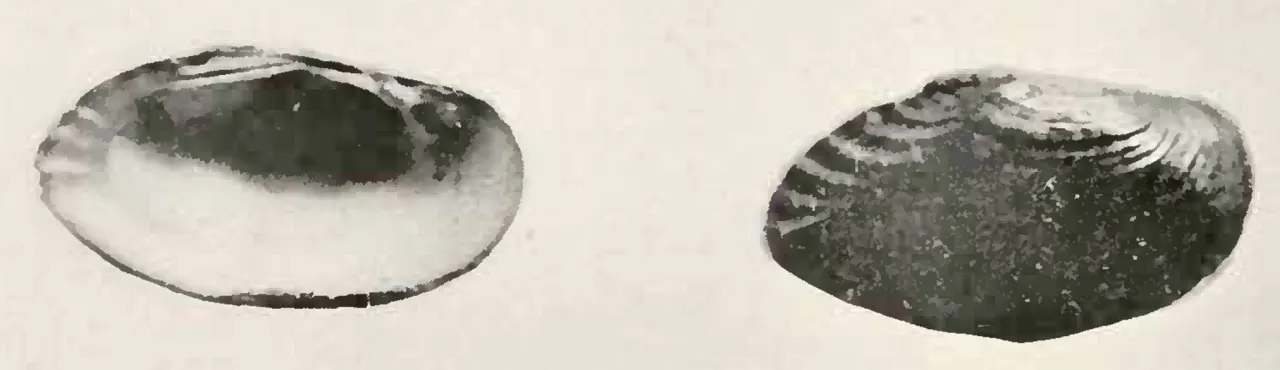
This is a small mussel, generally under 55 millimeters long according to the US Fish and Wildlife Service. Bryant Walker's 1905 description gave a specimen 36 millimeters long, 19 millimeters high and 13 millimeters wide. The shell is thin, slightly inflated and elliptical. The outside is dark yellow with dark green rays, and the inside is bluish-white mother-of-pearl.
Walker named the species in the journal The Nautilus and honored the naturalist Charles Torrey Simpson in its name. He considered it closest to Medionidus penicillatus.
Where it lives
It is endemic to the Ochlockonee River system in Georgia and Florida. The original specimens were labeled as coming from Calvary, Georgia, and the Fish and Wildlife Service places the type locality on the Ochlockonee River in Grady County. Historically it was known from the main river and the Little River, and museum collections from sites above what is now Talquin Reservoir sometimes held dozens of animals.
The Red List describes its habitat as large creeks to medium-sized rivers, in sand with some gravel and a moderate current.
Pins are Wikidata “endemic to” fields. Orange dots, when present, are GBIF occurrence tiles — survey bias included.
How it lives
Very little is known about its life cycle. Freshwater mussels depend on fish to carry their larvae, and the Fish and Wildlife Service suggests a darter is the likely host, based on related species such as the Gulf moccasinshell. No host has been confirmed, and no study of its reproduction exists.
In the 2014 survey, most animals were in stable sand where the current eases, such as the back side of river bends or downstream of barriers that deflect flow. The best site, with 7 animals, had two partly buried logs across the flow that created a calm refuge and steadied the sediment. The surveyors noted that such logs might also offer habitat for host fish.
Why it is in trouble
When the US Fish and Wildlife Service listed it as endangered, effective April 15, 1998, only three live animals had been collected since 1974, none of them juveniles, which the service read as a sign of poor reproduction. A status survey of eight historic sites in 1991 to 1993 found live animals at just two, one mussel each. The service named reservoir construction, channel work, erosion and sediment as the main causes of decline, and said part of the river's mussel fauna was flooded and lost at the upper end of Talquin Reservoir.
The Red List record gives criteria A1ce but no population numbers, threats or trend. The assessment dates from 2000, so it predates the 2014 rediscovery.
What is being done
The species is listed as endangered under the US Endangered Species Act. In 2014, surveyors snorkeled 55 sites in the lower Ochlockonee River below Jackson Bluff Dam and reported 22 live animals at 9 of them. A paper in the journal Southeastern Naturalist called these the first seen in 19 years, since the last live animal was collected in 1995. The find extended the known range by nearly 100 river kilometers.
The paper called for more survey work and for research on how the species reproduces. Threats in that stretch looked relatively low, but dam effects such as altered flow, temperature and oxygen remain concerns.
Sources
Written for this catalog in our own words from the sources below, checked against them on 12 November 2026. Population figures are estimates and carry the year they were made. Status and assessment year: IUCN. 2026. The IUCN Red List of Threatened Species. Version 2026-1. iucnredlist.org.