Critically Endangered
Gulf moccasinshell
Medionidus penicillatus
The gulf moccasinshell (Medionidus penicillatus) is a small freshwater mussel from the Apalachicola river system and nearby creeks of Alabama, Florida and Georgia. It lives in sandy stream beds and appears to rely on darters to raise its young. The IUCN Red List rated it Critically Endangered in 2000, and it has vanished from much of its old range.
How to recognise it
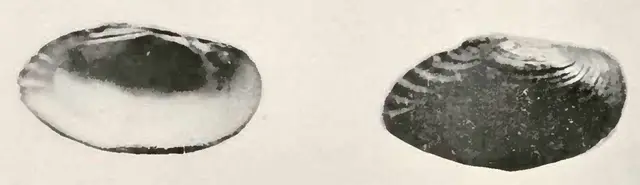
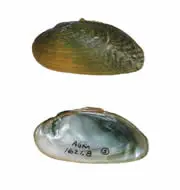
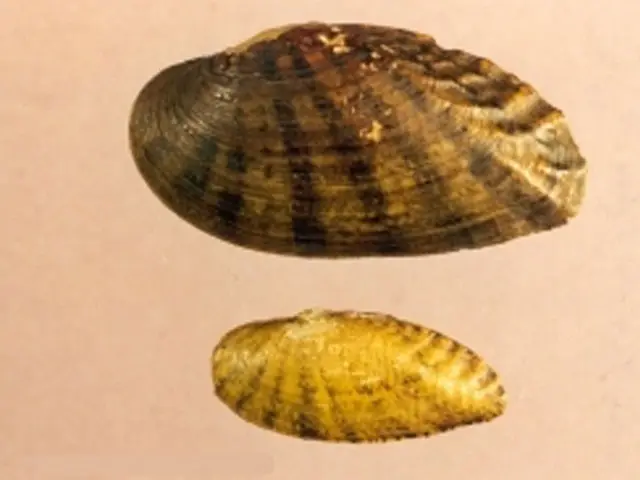
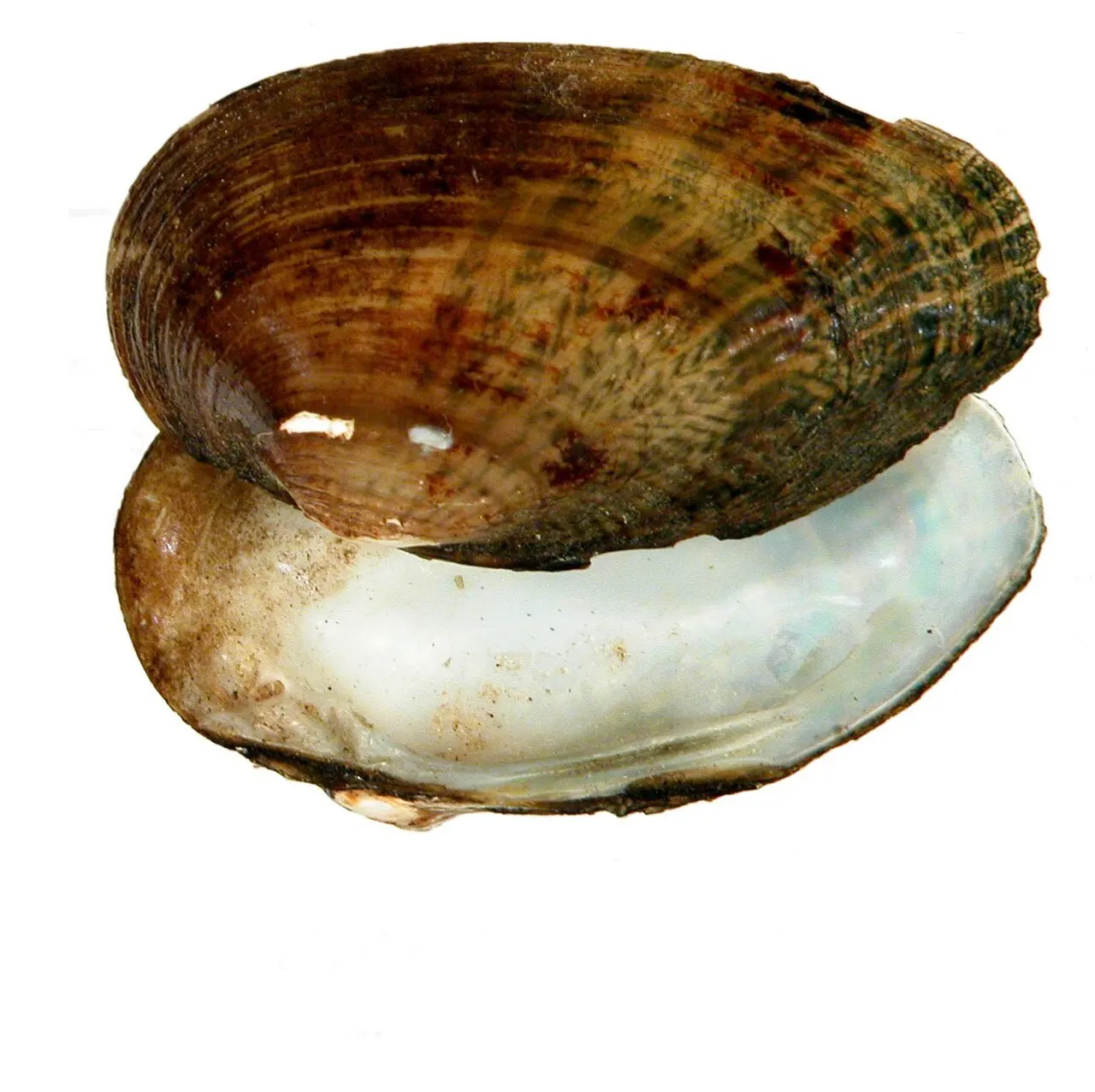
It's a small mussel, reaching about 55 mm (2.2 in) in length. The shell is thin, elongated and somewhat inflated, yellowish to greenish brown, with fine green rays that are often broken. Behind a rounded ridge on each valve there is a series of low, thin, radiating ridges that most small mussels living alongside it lack. Inside, the shell lining is smoky purple or greenish and slightly iridescent toward the rear.
Mussels are hard to tell apart from the outside, and Florida's natural-areas inventory advises that an expert should confirm any identification. Populations in the Choctawhatchee River system were once assigned to this species but have since been moved to a different one, Medionidus acutissimus.
Where it lives
The gulf moccasinshell is found in everything from small creeks to rivers, usually where the current is moderate to slow and the bed is sand, sometimes mixed with mud or gravel. It occasionally turns up on rocky shoals.
Its range centres on the Apalachicola, Chattahoochee and Flint basin. In Florida it survives in just two drainages: Econfina Creek, and the Apalachicola system, where nearly all records come from the Chipola River, which runs up into Alabama. The species also extends upstream in the Flint River system in Alabama and Georgia. It was formerly known from the Chattahoochee and Yellow rivers in Alabama and may now be gone from both. It is reportedly down about 80 percent from its known former distribution, with fewer than 20 occurrences and low numbers at most of them.
Pins are Wikidata “endemic to” fields. Orange dots, when present, are GBIF occurrence tiles — survey bias included.
How it lives
Like other freshwater mussels, it starts life as a larva called a glochidium, which must latch onto a fish to develop. The gulf moccasinshell is probably a host-fish specialist that mainly uses darters. According to the 2007 federal rule, it lures them by waving its dark mantle flaps against swollen white gills. In laboratory trials cited there, every blackbanded darter and brown darter exposed to the larvae carried them through to juvenile mussels. Other fish, including the eastern mosquitofish, also worked as hosts, though less efficiently.
Why it is in trouble
Mussels depend on clean water, stable stream beds and the fish that carry their young, so damage to any of the three hurts them. The 2007 federal rule, which covers this species and six other mussels, points to dams and water withdrawals that change river flow, and to unstable channels linked to sand and gravel mining, dredging and runoff from developed land. Florida's inventory adds habitat degradation and the introduced Asian clam, and says the status of several populations is uncertain.
What is being done
The species was listed as endangered under the U.S. Endangered Species Act in a final rule published on 16 March 1998. In a rule published on 15 November 2007, the Fish and Wildlife Service designated critical habitat for it and six other mussels in northeast Gulf of Mexico drainages. For the gulf moccasinshell this covers six river and creek units across Alabama, Florida and Georgia.
Florida's inventory calls for buying or protecting land along Econfina Creek and the Apalachicola and Chipola floodplains, keeping flows high enough, treating wastewater, and monitoring both the mussels and their darter hosts.
Sources
Written for this catalog in our own words from the sources below, checked against them on 12 November 2026. Population figures are estimates and carry the year they were made. Status and assessment year: IUCN. 2026. The IUCN Red List of Threatened Species. Version 2026-1. iucnredlist.org.