Endangered
Nilgiris Barb
Hypselobarbus dubius
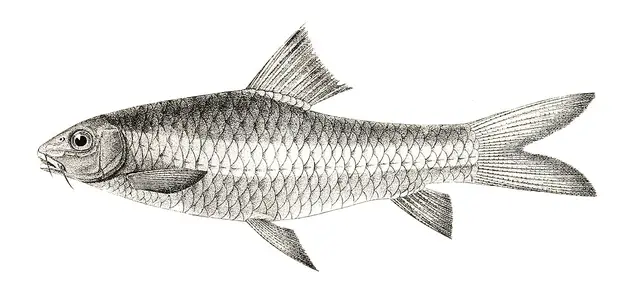
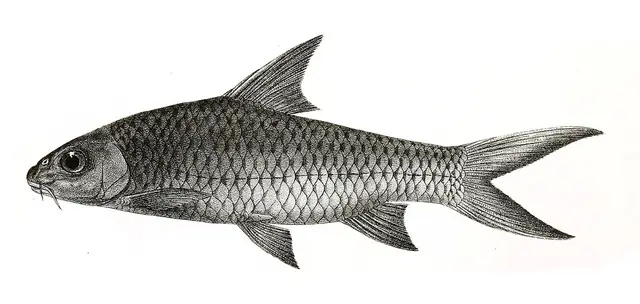
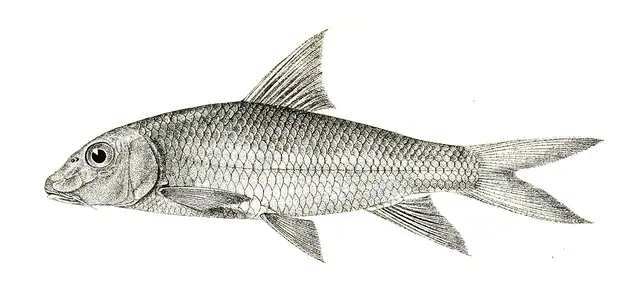
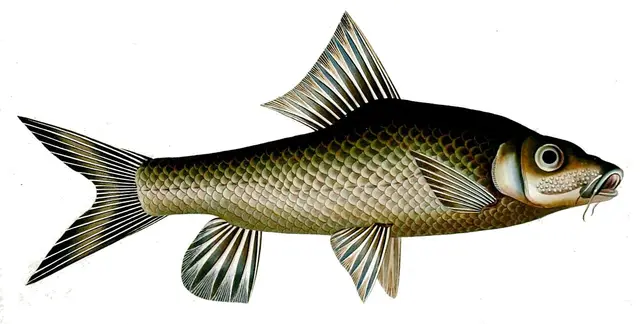
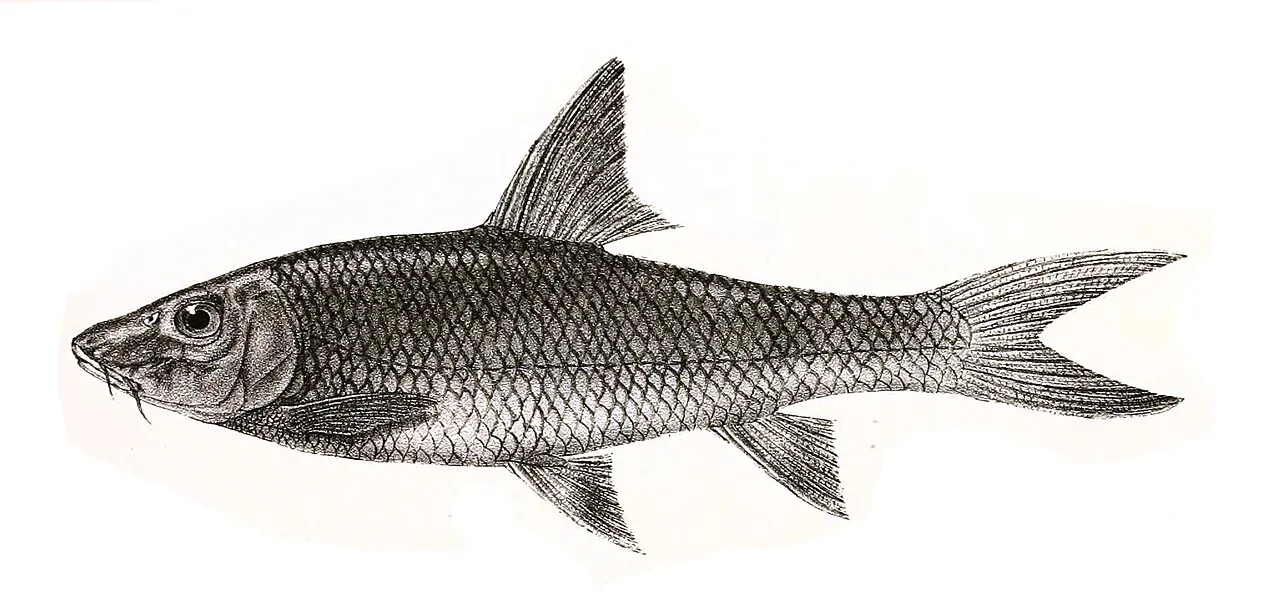
The Nilgiris barb (Hypselobarbus dubius), sometimes called the cock fish, is a freshwater carp relative of the Western Ghats in southern India that grows to about 25 cm. The IUCN Red List rated it Endangered in 2011, after heavy fishing, pollution and habitat damage cut its numbers.
How to recognise it
It is a cyprinid, a member of the carp and minnow family, and reaches a maximum of about 25 cm in total length. It lives in open water near the bottom and above it, a way of life biologists call benthopelagic. Francis Day described it in 1867 as Puntius dubius, and it has since been placed in several other genera, including Barbus and Gonoproktopterus.
Where it lives
It is found only in India, in the deeper stretches of large streams and rivers below the Western Ghats. The IUCN lists Tamil Nadu, Kerala, Karnataka and Maharashtra, at elevations of roughly 100 to 400 m. Its extent of occurrence is put at 15,000 to 20,000 square km, but the area it actually occupies is only about 100 square km.
Pins are Wikidata “endemic to” fields. Orange dots, when present, are GBIF occurrence tiles — survey bias included.
How it lives
The barb is an omnivore. Its food includes plant matter that falls into the water from land, seeds, insects, midge larvae and small bottom-dwelling snails. It moves upstream during floods and spawns in the upper reaches of streams, so it depends on rivers that run freely enough to let it travel.
Why it is in trouble
It has long been a food fish. An FAO review of Indian reservoir fisheries describes the Amaravathy Reservoir in Tamil Nadu, where it made up 55 percent of the catch in the mid-1960s, fell to 0.15 percent in the 1970s and then disappeared from landings. The review blames failed recruitment of young fish. At nearby Bhavanisagar Reservoir it still made up 5 to 10 percent of the catch.
The IUCN lists subsistence fishing, sewage, and herbicide and pesticide runoff among the threats, and estimated a past decline of about 30 percent, based on direct observation and loss of habitat quality.
What is being done
Not much, as far as the record shows. The IUCN reports that around half of the population lives in protected areas, but it also records no recovery plan, no monitoring scheme, no harvest management plan and no captive population. Captive breeding and harvest management are listed as conservation actions the species needs.
Sources
Written for this catalog in our own words from the sources below, checked against them on 12 November 2026. Population figures are estimates and carry the year they were made. Status and assessment year: IUCN. 2026. The IUCN Red List of Threatened Species. Version 2026-1. iucnredlist.org.