Critically Endangered
Northland mudfish
Neochanna heleios
The Northland mudfish (Neochanna heleios) is a small, cigar-shaped freshwater fish found only in peat and gumland wetlands within about 25 km of Lake Omapere in New Zealand's Far North. The IUCN rated it Critically Endangered in 2014. It survives dry spells buried in damp mud, and it won New Zealand's 2026 Fish of the Year vote.
How to recognise it
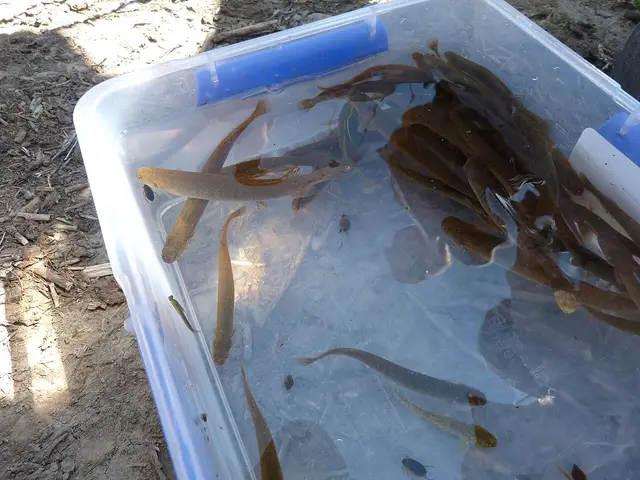
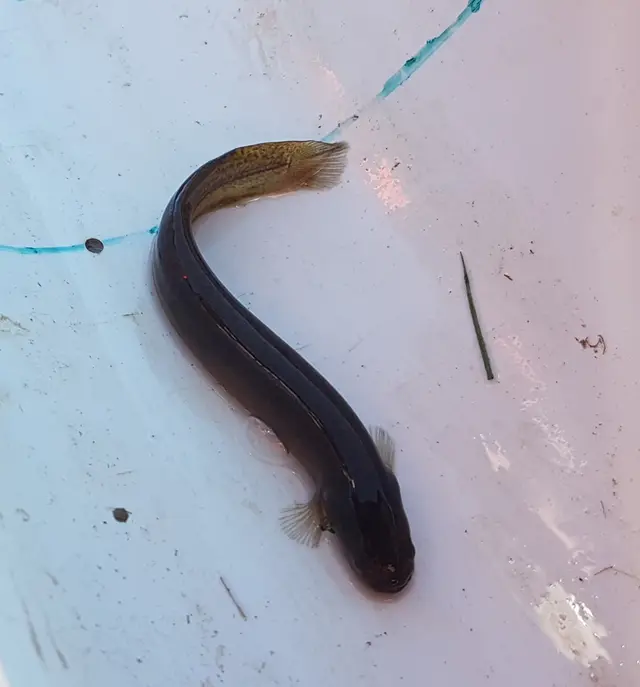
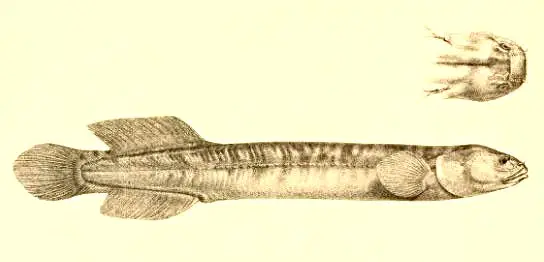
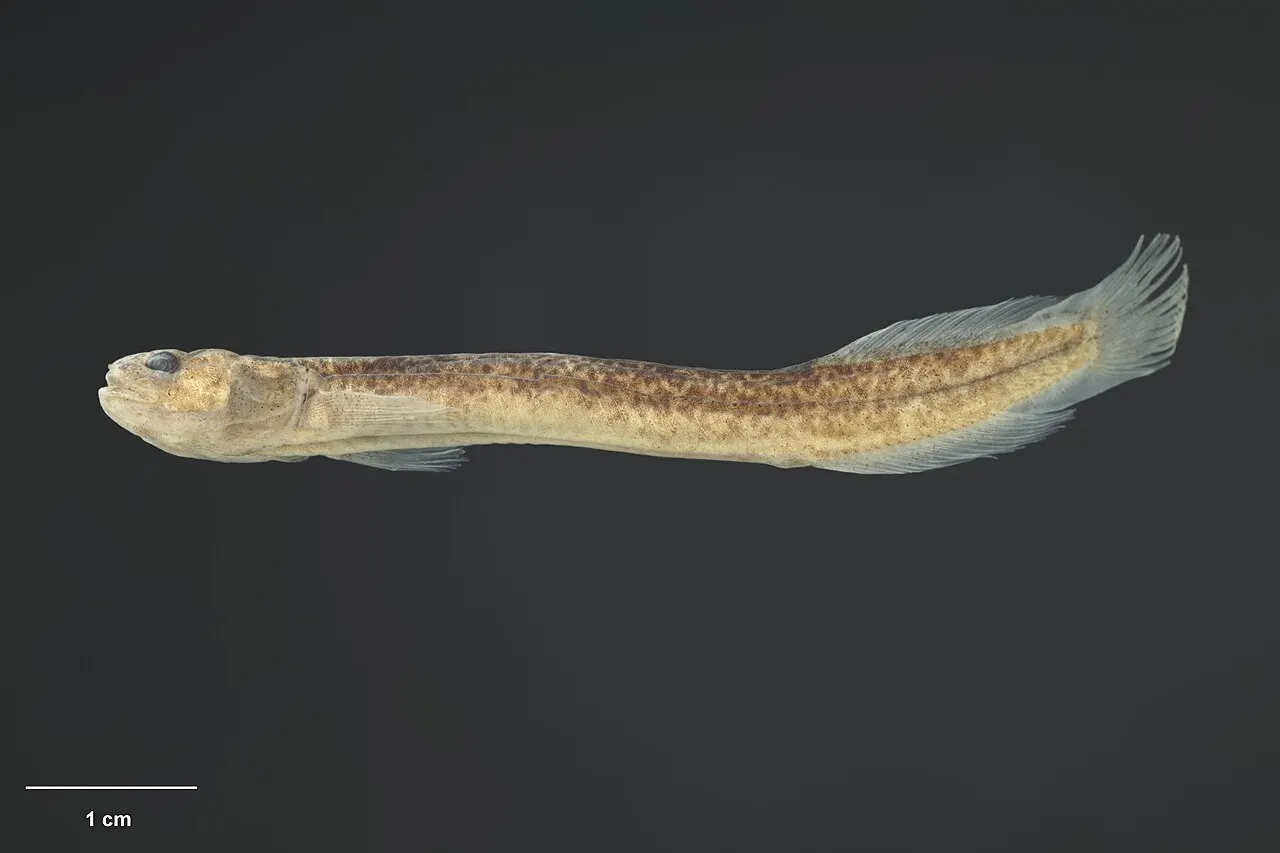
It is stocky and cigar-shaped, a little like a small eel, with soft, scaleless skin, small fleshy fins and a rounded tail. The body is brownish-black with fine dark spots and hints of burgundy around the gills and belly, which gives it the alternative name burgundy mudfish.
Adults are typically around 10 cm and reach up to about 13 cm, though published sizes vary a little. It was described as a species only in 2001, by Ling and Gleeson. The name heleios means marsh dwelling.
Where it lives
Its whole range is a patch of central Northland within about 25 km of Lake Omapere, near Kaikohe. The IUCN knew it from about 30 localities in 2014 and estimated that it occupies only about 9.5 square km, within a wider range of roughly 850 square km, perhaps 2 percent of its historic range. Key populations are at the Ngawha geothermal wetland and the Wiroa Conservation Area near Kerikeri Airport. It can also turn up in wetlands, waterways and drains in or near plantation forestry.
Its habitat is low-fertility wetland, mainly gumland and peat bog, with still or very slow water that is often tea-coloured. Gumland formed beneath former kauri forest, where acidic leaf litter built a hard silica layer that holds winter water. Black mudfish share part of the same region but use different habitats.
Pins are Wikidata “endemic to” fields. Orange dots, when present, are GBIF occurrence tiles — survey bias included.
How it lives
Adults are mostly nocturnal, feed on invertebrates, and are hard to spot among wetland vegetation. Spawning is in autumn. Newly hatched larvae can be seen in daylight. The fish does not migrate.
When a wetland dries out, mudfish shelter in damp mud, leaf litter, roots or under logs, slow their metabolism and take oxygen through the skin. This is called aestivation. It lets the fish wait for water to return, and it becomes active as soon as it does.
Why it is in trouble
The 2014 IUCN assessment rated it Critically Endangered under criterion B2ab(ii,iii), which applies to a very small area of occupancy with a shrinking, patchy habitat. It records a decreasing population. New Zealand's own threat classification is less severe, listing it as Nationally Vulnerable, and one aim of the current survey project is to estimate its threat status accurately.
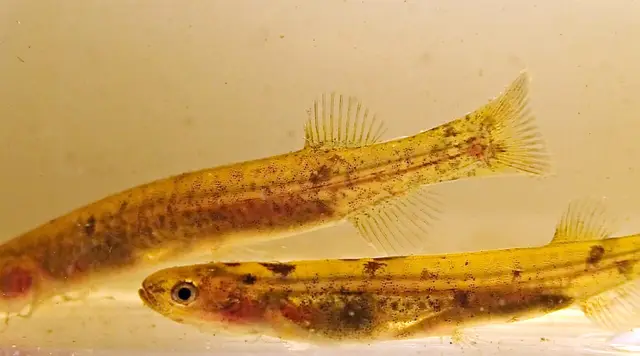
Drainage and modified water levels have left mudfish in small wetland remnants. The IUCN also cites nutrient enrichment, and two major human-caused fires at key sites between 2006 and 2011 destroyed critical habitat. Water abstraction, trampling by stock, deer and goats, silt, nutrient runoff and aquatic weeds degrade what is left. Introduced fish, notably mosquitofish (Gambusia affinis), compete with and prey on it. Culverts and fords with steep drops can block upstream movement.
What is being done
The Department of Conservation has fenced some wetlands on private land and protected some key sites through changes in land tenure, according to the IUCN. Of about 28 subpopulations identified by then, only 5 were on conservation land, though those held around 65 percent of the species' occupied area.
A three-year project began in June 2025, led by the Mountains to Sea Conservation Trust with the Department of Conservation, Northland Regional Council and local hapu. Many sites had not been surveyed in 10 to 20 years. The first year aims to survey all known habitat and improve the population estimate, then manage priority sites with fencing, planting, weed control and restoring water flow.
Public attention has grown too. In 2026 the mudfish took out the Fish of the Year competition after a late surge, with a record 5,896 votes cast, becoming the first freshwater fish and the smallest to win.
Sources
Written for this catalog in our own words from the sources below, checked against them on 12 November 2026. Population figures are estimates and carry the year they were made. Status and assessment year: IUCN. 2026. The IUCN Red List of Threatened Species. Version 2026-1. iucnredlist.org.
- IUCN Red List assessment, Neochanna heleios (2014), via the Red List API
- Mountains to Sea Conservation Trust, searching for one of the rarest animals in the North Island (2025)
- New Zealand Forest Owners Association, Northland mudfish
- Department of Conservation blog, meet the Northland mudfish (April 2026)
- Northland mudfish (encyclopedia article)