Endangered
Black mudfish
Neochanna diversus
The black mudfish, or waikaka, is a small, scaleless fish of peat swamps in the northern North Island of New Zealand. The IUCN Red List assessed it as Endangered in 2014, with a decreasing trend. Its swamps have been drained, and in dry summers it survives by sheltering out of water.
How to recognise it
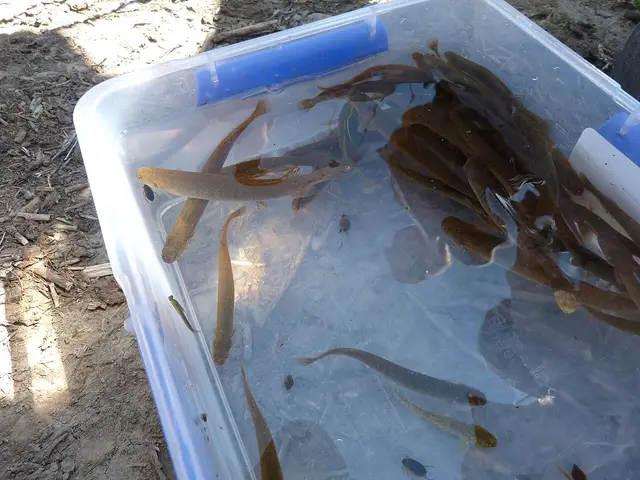
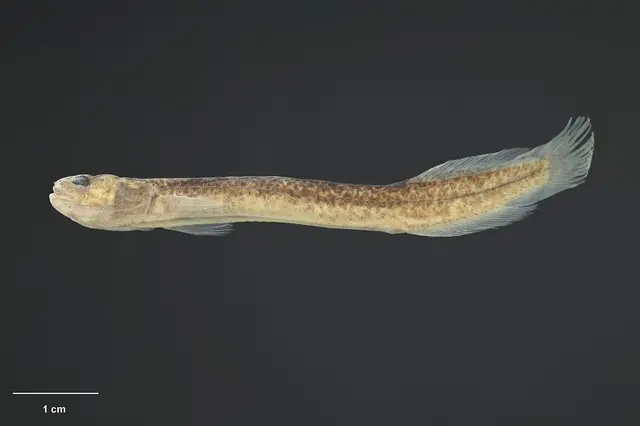
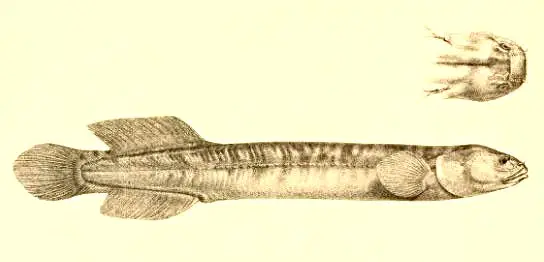
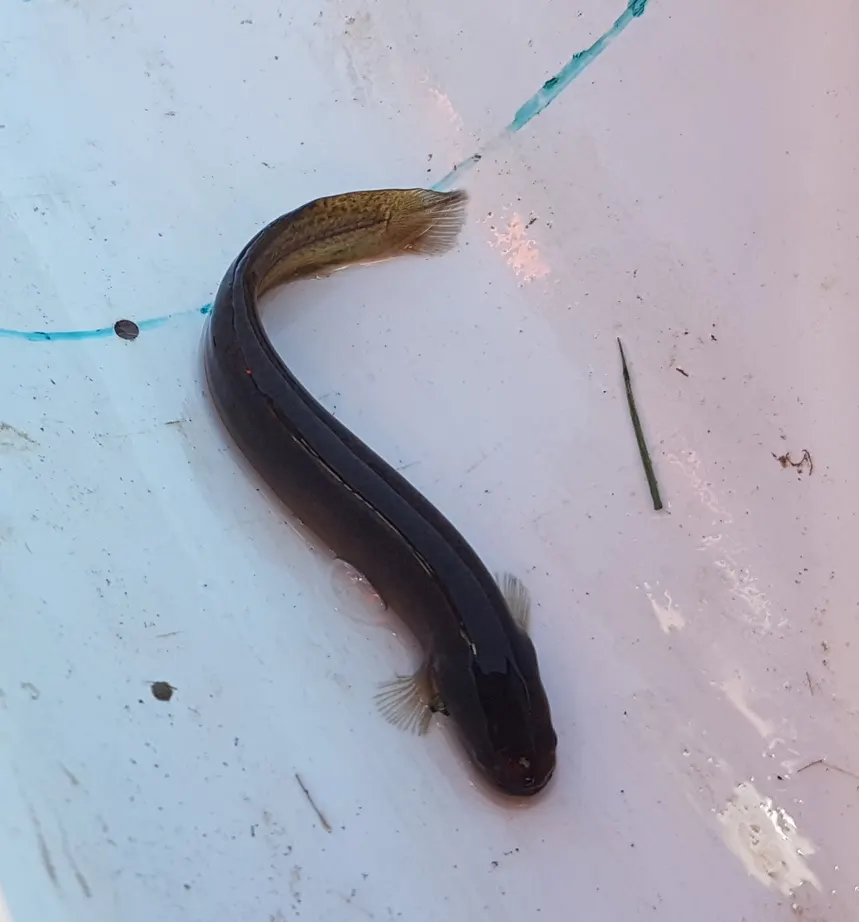
It's a blackish-grey, eel-shaped fish with thick, leathery, mucus-coated skin and no scales. The pelvic fins are very small or missing. The Department of Conservation guide gives a maximum of around 16 cm total length and a probable lifespan of up to ten years, while another source gives up to 12 cm.
Gerald Stokell is reported to have described it in 1949, from a specimen collected at Kaitaia. It belongs to the galaxiid family, which also includes the whitebait species, and differs from the brown mudfish in details of jaw teeth, mouth length and snout shape.
Where it lives
It lives only in the northern half of the North Island, from Kaitaia south to the Mokau River. Its home is peat swamp and slow, still or gently flowing water, mostly infertile, acidic peat bogs dominated by reeds such as Baumea and Schoenus. It prefers clear water to muddy water and is not usually found in richer raupo swamps.
The IUCN puts its extent of occurrence at about 10,665 square kilometres, but the area it actually occupies at about 261 square kilometres.
Pins are Wikidata “endemic to” fields. Orange dots, when present, are GBIF occurrence tiles — survey bias included.
How it lives
Many of its wetlands dry out each summer. The fish burrows into damp mud or settles under dense vegetation, logs or litter and aestivates, a summer version of hibernation, for months. Studies show it cuts its metabolic rate by about 60 percent, yet it stays alert and becomes active at once if returned to water.
Adults are nocturnal and eat small crustaceans, earthworms and insect larvae, and pick trapped insects from the water surface. Newly hatched fry of mudfish are only 5 to 7 mm long and feed by day on tiny zooplankton. Mudfish become mature during the summer dry spell so they can spawn as soon as enough water returns, which gives young fish the longest possible time to grow before their first dry summer.
Why it is in trouble
Wetland loss is the root problem. In the Waikato, at least 75 percent of wetlands have been drained, and the fish is now mostly confined to large protected areas such as the Whangamarino wetland and the Kopuatai Peat Dome, with a few remnant populations in farm drains. One estimate puts national wetland loss at 85 to 90 percent.
The IUCN assessment lists water taken from rivers and groundwater, erosion and sediment, nutrient runoff and, to a lesser degree, more frequent fires. An introduced species is also named, and mosquitofish are reported as a threat. Drainage has slowed, and New Zealand's 2018 threat classification lists the fish as At Risk, Declining.
What is being done
The Department of Conservation and regional councils are reported to have worked to protect sites and reintroduce the fish. The 2014 IUCN assessment recorded no species recovery plan. Keeping native fish in captivity needs a permit from the Department of Conservation.
Sources
Written for this catalog in our own words from the sources below, checked against them on 12 November 2026. Population figures are estimates and carry the year they were made. Status and assessment year: IUCN. 2026. The IUCN Red List of Threatened Species. Version 2026-1. iucnredlist.org.