Endangered
Brown mudfish
Neochanna apoda
The brown mudfish (Neochanna apoda) is a small, eel-like fish found only in New Zealand, in swamps and wetland pools on the lower North Island and the West Coast of the South Island. It can survive out of water through summer droughts. The IUCN listed it as Endangered in 2014, with its population decreasing.
How to recognise it
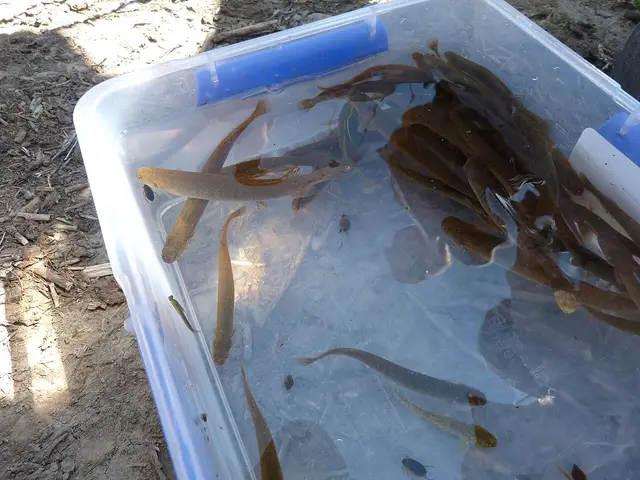
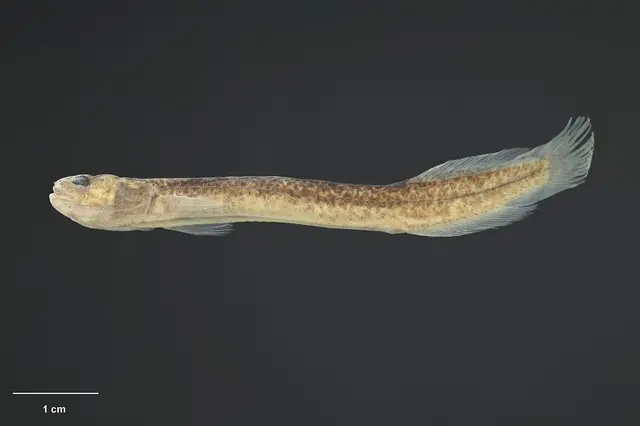
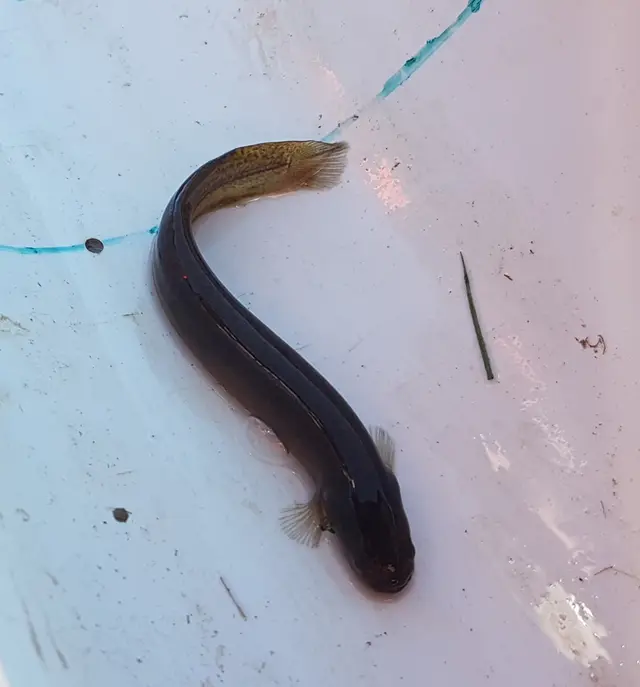
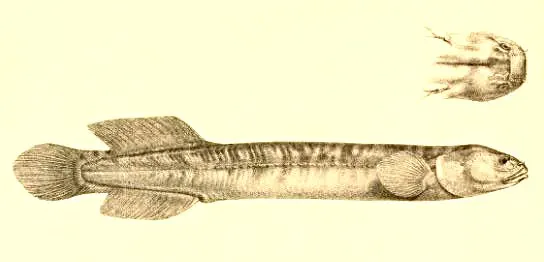
This is a small, cigar-shaped fish with a stocky, eel-like body, a blunt head, small eyes and soft, scaleless skin. The colour is a sandy grey-brown with darker speckles and blotches along the sides. The fins are small and fleshy, and the dorsal and anal fins have such long bases that they almost meet the rounded tail fin.
Most adults are 100 to 130 mm long, though the NIWA fish atlas gives a maximum of about 150 mm. Fish have been recorded living at least seven years. Albert Günther described the species in 1867.
Where it lives
It is endemic to New Zealand. On the North Island it occurs in lowland Taranaki, Manawatu, the Kapiti Coast and Wairarapa, and on the South Island along the West Coast, from Whanganui Inlet down to Okarito. Its range does not overlap with that of any other mudfish species.
The IUCN lists elevations from sea level to about 200 m and estimates an extent of occurrence of about 5,400 square kilometres, with an area of occupancy of only about 150 square kilometres. Habitats include swamp forest, peaty pakihi bogs, raupo swamps, dune swamps, lake margins, slow drains and even boggy paddocks. Populations are generally small and isolated.
Pins are Wikidata “endemic to” fields. Orange dots, when present, are GBIF occurrence tiles — survey bias included.
How it lives
Mudfish are best known for aestivation, the summer equivalent of hibernation. When a wetland dries out, the fish shelter in damp mud, under logs and litter or in root holes, breathing air and staying mostly inactive until autumn floods refill the water. A Department of Conservation guide notes that early settlers were surprised to find live fish while digging vegetables. Not every brown mudfish aestivates, because some populations live in permanent water.
Brown mudfish mature during the summer dry spell, so they can spawn as soon as enough water returns in autumn. That gives the young the longest possible time to grow before their first summer. Adults are nocturnal and eat small invertebrates, and the tiny hatchlings can be seen by day.
Why it is in trouble
Wetland loss is the main story. A New Zealand rare species profile lists drainage, irrigation and land development, the destruction of streamside vegetation, and competition and predation by introduced fish. It adds siltation, nutrient enrichment, grazing by livestock, goats and deer, culverts and fords that block movement, and water abstraction. A Department of Conservation guide says New Zealand has lost more than 90 percent of its wetlands over two centuries, leaving mudfish in a few refuges.
The IUCN assessment scores abstraction of surface water and ground water, and housing and urban areas, as ongoing threats across most of the range, each causing slow but significant declines. The listing rests on the small area the fish occupies and its shrinking habitat. The category has risen over time, from Lower Risk (near threatened) in 1996 to Vulnerable in 2009 and Endangered in 2014. New Zealand's Department of Conservation classed it as At Risk: Declining.
What is being done
The IUCN records conservation sites identified over part of its range, but lists no other actions in place and no specific conservation measures as needed.
Sources
Written for this catalog in our own words from the sources below, checked against them on 12 November 2026. Population figures are estimates and carry the year they were made. Status and assessment year: IUCN. 2026. The IUCN Red List of Threatened Species. Version 2026-1. iucnredlist.org.