Endangered
Müller's Bornean gibbon
Hylobates muelleri
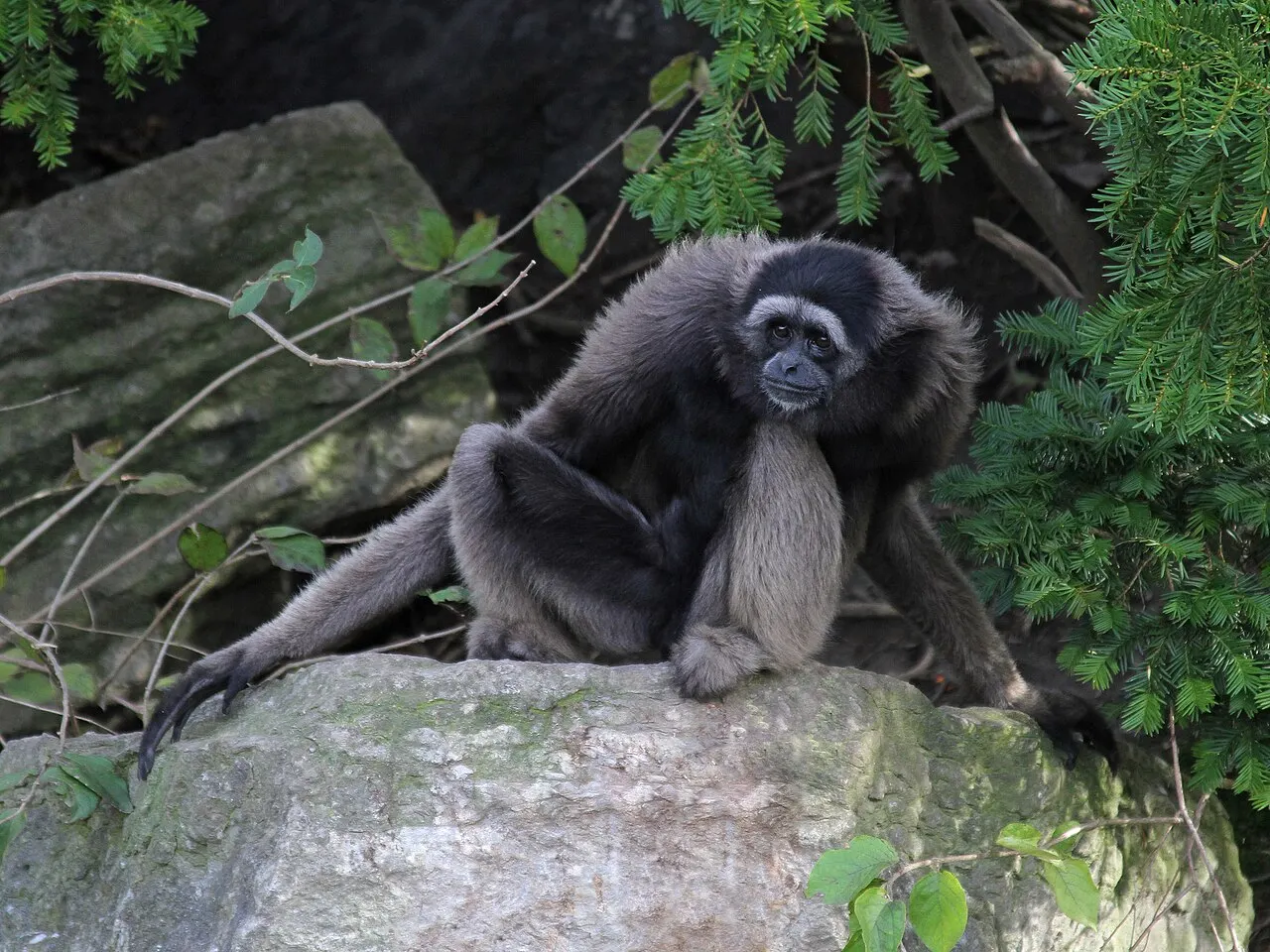
Müller's Bornean gibbon (Hylobates muelleri), also called the southern grey gibbon, is a small ape of the rainforests of southeastern Borneo, in Indonesian Kalimantan. The IUCN assessed it as Endangered in 2020. Families announce their territory with loud songs, and forest loss and capture for the pet trade are driving the species down.
How to recognise it
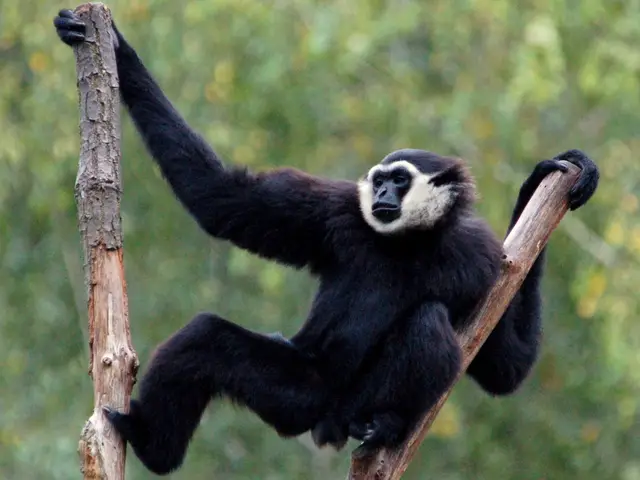
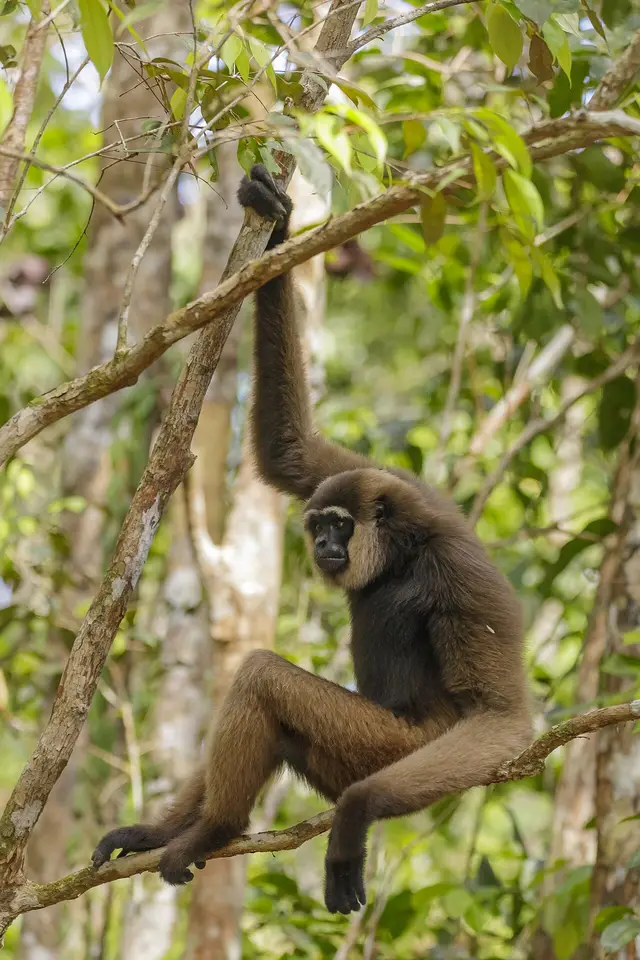
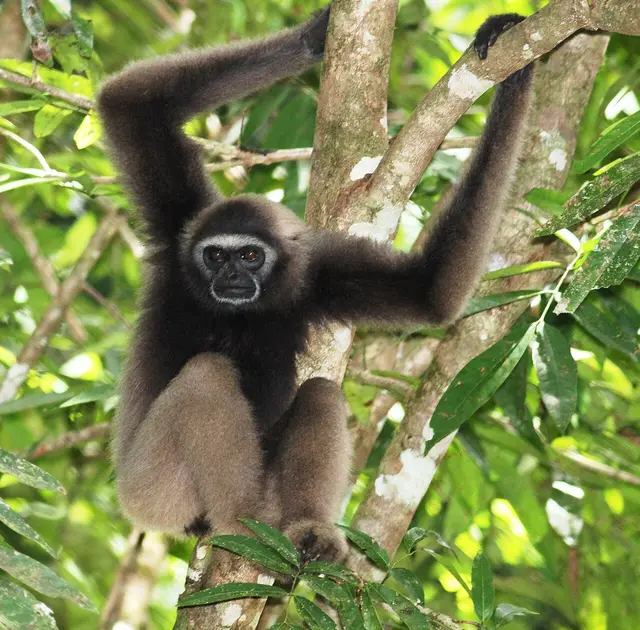
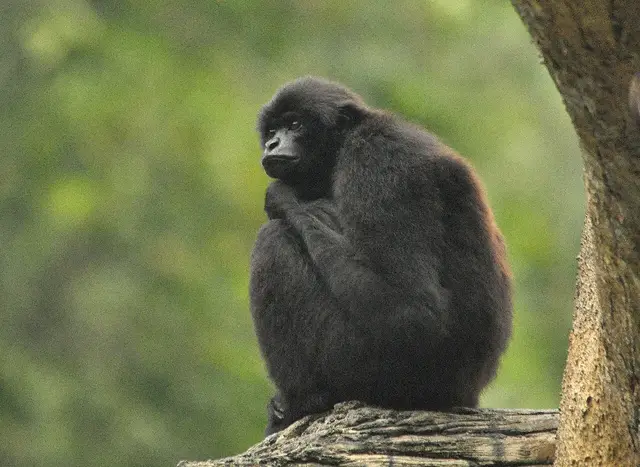
Unlike many gibbons, males and females look alike. The fur is grey or brown, a ring of paler fur frames the face, and some animals wear a darker cap. Adults weigh about 4 to 8 kilograms, which makes this one of the smaller gibbons.
It has the long arms of its family and travels through the canopy by swinging hand over hand, a style known as brachiation.
Where it lives
The species is found only on Borneo, in the southeast of the Indonesian part of the island. Its range lies south of the Mahakam River and east of the Barito River. It was long treated as one species with the western grey gibbon and the eastern grey gibbon, but recent work, followed by the IUCN, treats all three as separate.
The Red List gives its habitat as lowland and montane moist forest, with records from sea level up to about 1,700 metres. It has been recorded in the Juq Kehje Swen forest in East Kalimantan, where orangutans and long-tailed macaques also live.
Pins are Wikidata “endemic to” fields. Orange dots, when present, are GBIF occurrence tiles — survey bias included.
How it lives
These gibbons live in monogamous family groups and are active by day. Fruit makes up most of the diet, with leaves, flowers and insects eaten when fruit is scarce. Each group defends its territory with long, loud singing, and the calls can carry up to 2 kilometres.
Reportedly a female bears a single infant every two to three years, after a gestation of about seven months. They may also help the forest regrow, since they spread the seeds of the fruit they eat.
Why it is in trouble
The IUCN's 2020 assessment lists clearing of forest for agro-industry and small-holder plantations, small-holder farming, shifting agriculture, and intentional capture or hunting of the animals themselves. It records food and the pet trade as uses. Young gibbons are taken for pets, and conservation groups report that this often means killing the mother.
No total population estimate exists. The Red List expects a decline of about 50 percent over three generations (45 years), driven by loss of habitat quality and exploitation, and records the trend as decreasing.
What is being done
The species is listed on CITES Appendix I, which restricts international commercial trade, and it occurs in at least one protected area. The IUCN lists site protection and management, harvest management, and education and awareness among the actions that apply.
The assessment also records that there is no species recovery plan, no systematic monitoring scheme and no captive breeding programme in place.
Sources
Written for this catalog in our own words from the sources below, checked against them on 12 November 2026. Population figures are estimates and carry the year they were made. Status and assessment year: IUCN. 2026. The IUCN Red List of Threatened Species. Version 2026-1. iucnredlist.org.