Critically Endangered
Longjawed galaxias
Galaxias prognathus
The longjawed galaxias (Galaxias prognathus), also called the upland longjaw galaxias, is a small, scaleless freshwater fish from cool rivers and streams on the eastern side of New Zealand's South Island. The IUCN Red List rated it Critically Endangered in 2014, with a decreasing population.
How to recognise it
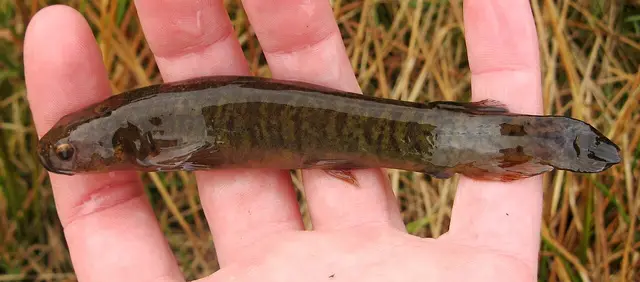
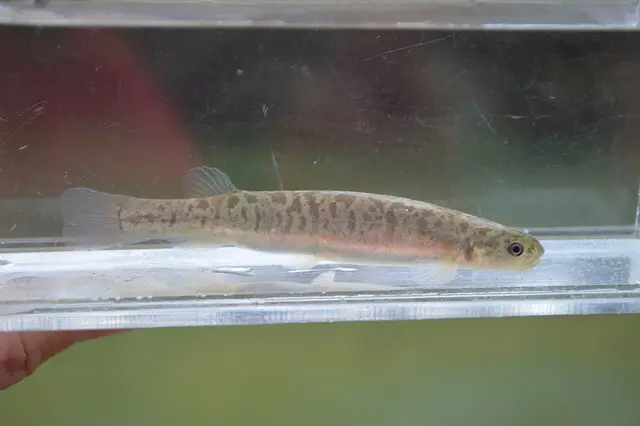
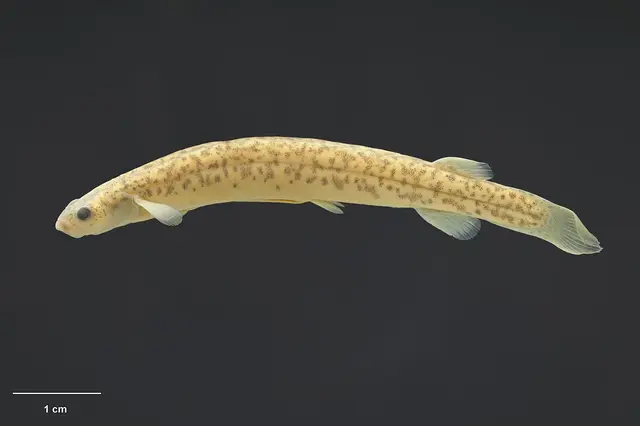
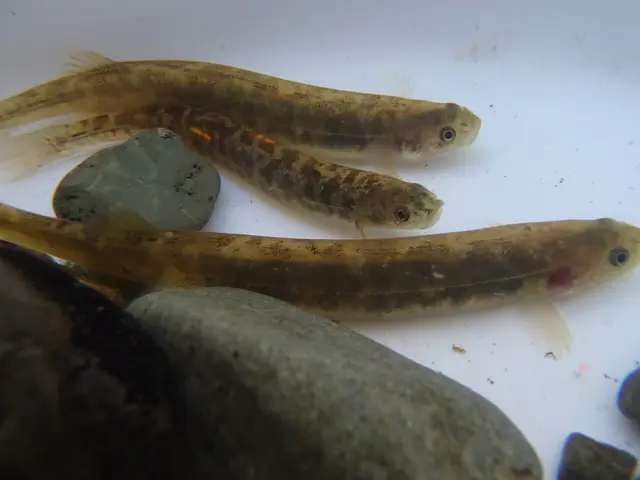
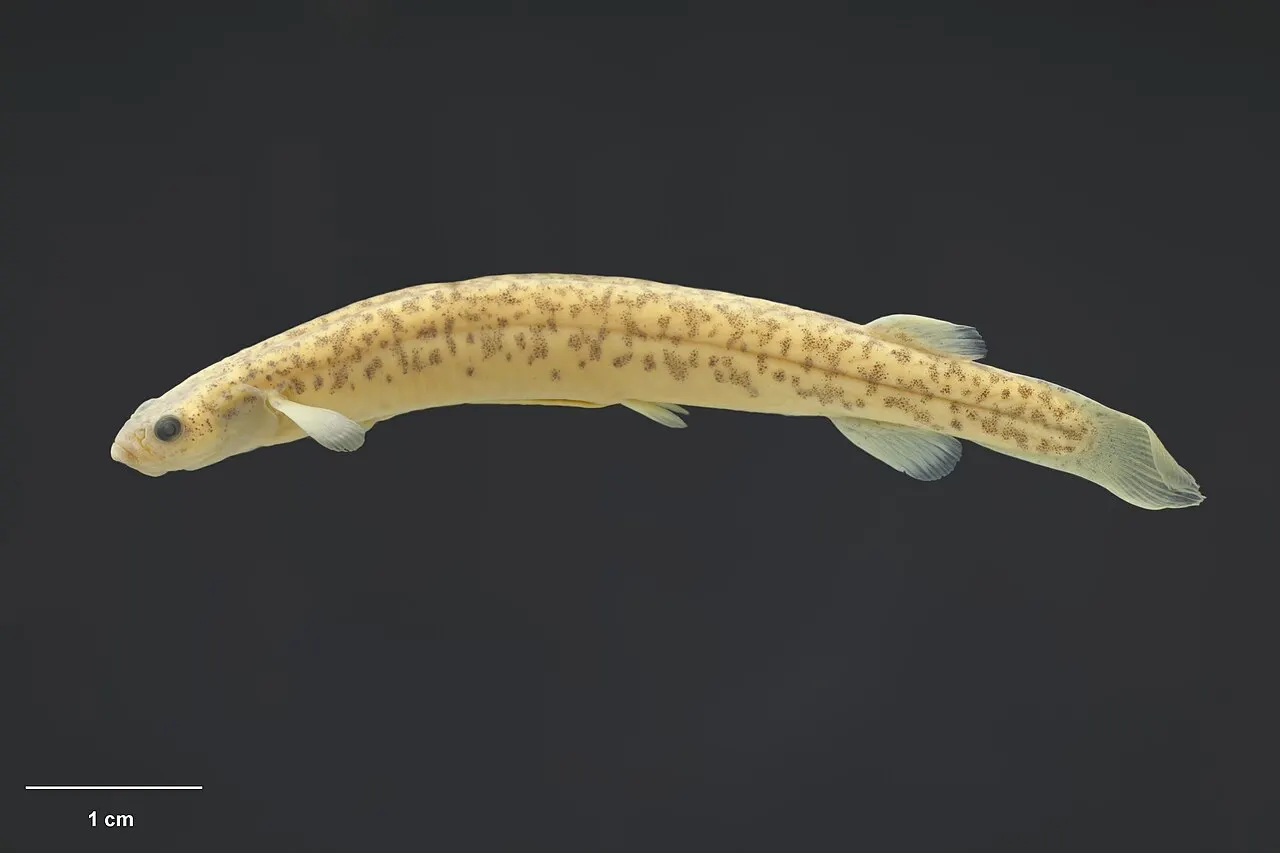
It's a slender, elongated fish that rarely passes 80 mm in length, named for a lower jaw that sticks out past the upper one. Like other galaxiids it has no scales, and its dorsal and anal fins sit about two thirds of the way along the body. Colour is usually a creamy grey marked with bold greenish-grey blotches and spots.
A related species, the lowland longjaw galaxias (Galaxias cobitinis), can be told apart by counting pelvic fin rays: this species has 7, the lowland longjaw has 5.
Where it lives
The species is found in rivers and streams at mid to high altitudes that drain to the east coast of the South Island. The IUCN lists New Zealand as the only country, with an estimated extent of occurrence of about 1,626 km² and an area of occupancy of about 5.7 km², and a lower elevation limit of 450 m. It favours cool spring-fed mountain streams, many above post-glacial lakes. Fork Stream in the Waitaki system holds one of the country's largest known populations.
A population once existed in the Maruia River, the only one known west of the Southern Alps. A 2025 University of Otago thesis by Adam Kitchen, using electrofishing and environmental DNA, found no evidence of the target galaxiids anywhere in that catchment. It treats the Maruia population as a previously unrecognised loss.
Pins are Wikidata “endemic to” fields. Orange dots, when present, are GBIF occurrence tiles — survey bias included.
How it lives
Although it occupies fast streams, this fish is usually found in quiet water along the margins. It feeds at night on aquatic insects, mostly mayflies, and prefers soft-bodied prey over snails or cased caddisfly larvae. Spawning takes place from March to May and again from October to November. The whole life cycle is spent in fresh water, with no sea phase.
Why it is in trouble
The IUCN estimated about 5,000 individuals in 2014 and recorded the trend as decreasing. Introduced trout compete with the fish for habitat and food and also eat it. The IUCN lists a named introduced species as the main ongoing threat, affecting most of the population. It also lists farm water abstraction, small-holder grazing and farming, soil erosion and sediment, nutrient loads and small dams as lower impacts, each affecting under half of the population. Renewable energy development is listed as a past impact.
The 5,000 figure is an estimate, and the fish occupies only a few square kilometres of stream.
What is being done
The IUCN assessment records no conservation actions in place and lists site and area protection as the action needed. At Fork Stream, a local rūnanga runs a native fish protection project in a valley that holds one of the largest populations. For non-migratory galaxiids as a group, DOC reports some success restoring key populations by removing invasive species and installing barriers against re-invasion.
Sources
Written for this catalog in our own words from the sources below, checked against them on 12 November 2026. Population figures are estimates and carry the year they were made. Status and assessment year: IUCN. 2026. The IUCN Red List of Threatened Species. Version 2026-1. iucnredlist.org.
- IUCN Red List assessment, Galaxias prognathus (2014)
- NIWA freshwater fish atlas, upland longjaw galaxias
- Te Mana o Ngai Tahu linked page, upland long-jaw galaxias
- University of Otago thesis (Kitchen, 2025), historical galaxiids in the Maruia River
- DOC, non-migratory galaxiids
- Longjawed galaxias (encyclopedia article)