Endangered
White-footed sportive lemur
Lepilemur leucopus
The white-footed sportive lemur, Lepilemur leucopus, is a small nocturnal leaf-eater from the spiny dry forests of southern Madagascar. The IUCN Red List assessed it as Endangered in 2020. Its range is small and broken up, and its habitat is cleared for pasture and charcoal.
How to recognise it
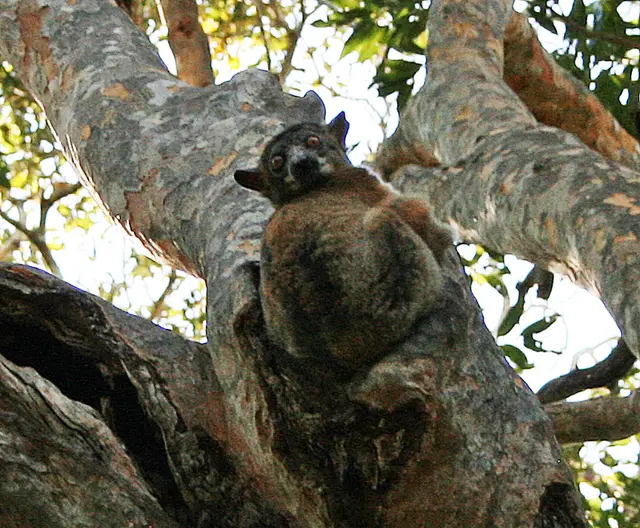
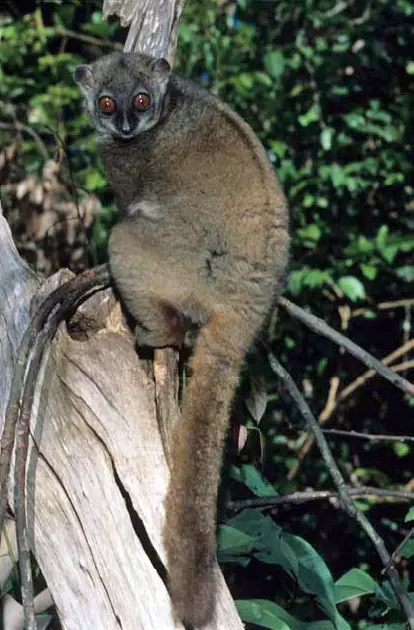
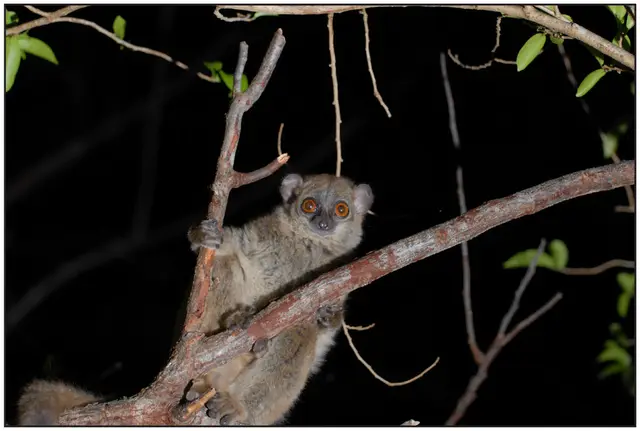
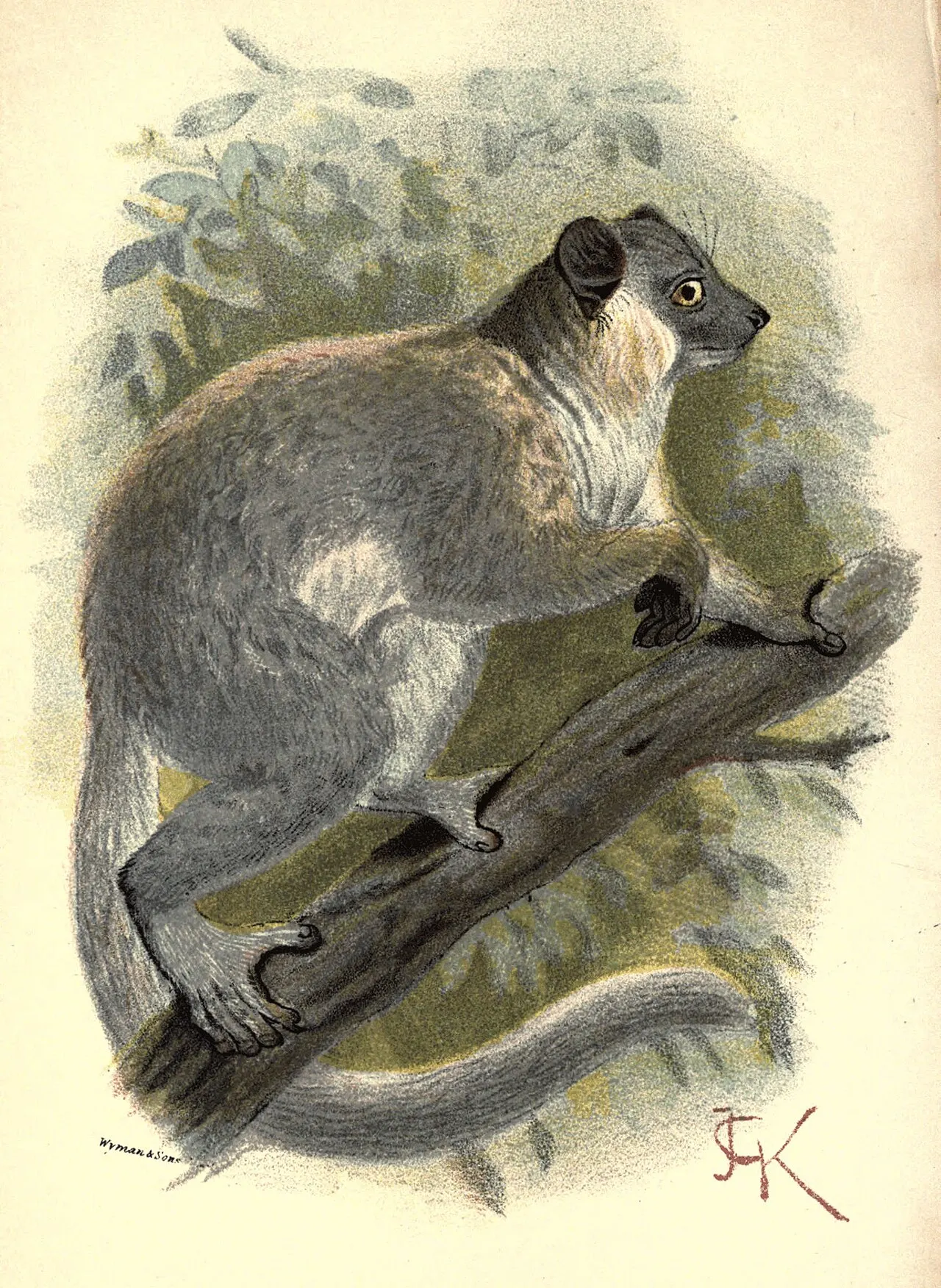
It has a grey back, a pale grey to white belly and a light brown tail, and goes by two other names, white-footed weasel lemur and dry-bush weasel lemur. An adult weighs about 540 g and measures 24 to 26 cm from head to rump, with a tail of 21 to 26 cm. Large orange eyes with a reflective layer help it see in the dark.
Where it lives
The species is endemic to southern Madagascar. Its range is described as running from the Mandrare River to Andohahela National Park, and the IUCN estimates the extent of occurrence at about 2,315 square kilometres, all below 300 m. Spiny Didiereaceae forest and bush make up most of its habitat, with some gallery forest along rivers. Taxonomic revisions among sportive lemurs have blurred exactly where its range ends.
Andohahela National Park and Berenty Private Reserve protect populations. At Berenty, densities of several hundred animals per square kilometre have reportedly been estimated.
Pins are Wikidata “endemic to” fields. Orange dots, when present, are GBIF occurrence tiles — survey bias included.
How it lives
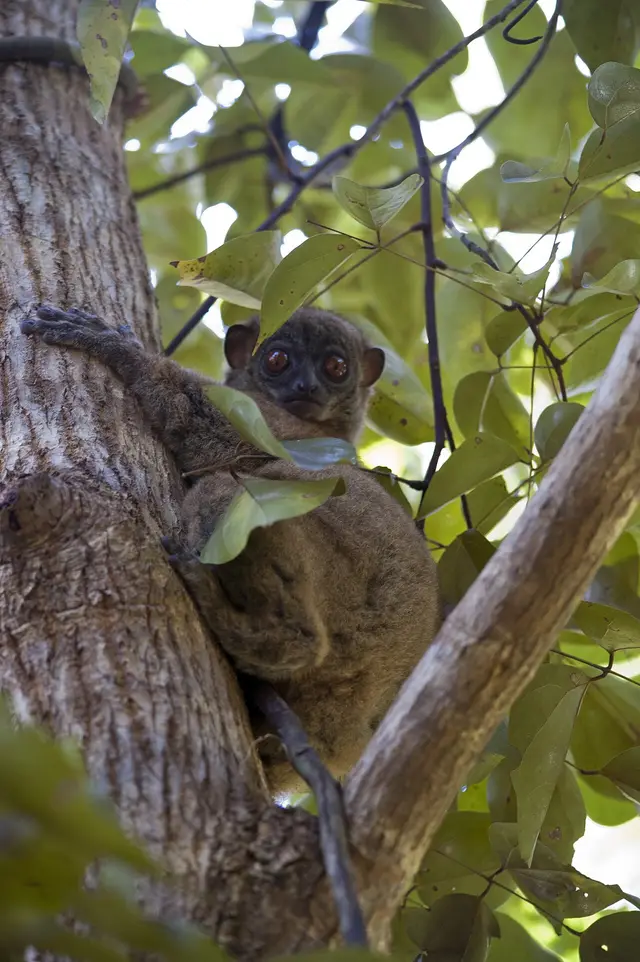
It spends the day hidden in tree holes, leafy nests or tangles of branches, and comes out at night. It clings upright to trunks and leaps between them, covering up to about 4 m in a bound. Leaves are the main food. In the dry season near Berenty it may depend on the leaves and flowers of Alluaudia trees, and like some other lemurs it re-eats its droppings to squeeze more from tough plant matter.
A male holds a territory that overlaps those of one or more females, and he calls loudly at intruders. Mating reportedly takes place from roughly May to August, in the dry months, and a single infant is typically born between November and January after about five months of gestation.
Why it is in trouble
The IUCN calls the population severely fragmented and still declining, with the area and extent of its habitat also shrinking. The listed pressure is small-scale farming and grazing. Fires lit each year to renew pasture, overgrazing and tree cutting for charcoal are reportedly the main causes of the forest loss. The IUCN rated it Endangered in 2014 as well. An earlier 2008 assessment had called it Data Deficient.
The species is on CITES Appendix I, the strictest tier of international trade control, and the IUCN records it as covered by international legislation and trade controls.
What is being done
The IUCN says conservation sites have been identified across its whole range and that it occurs in at least one protected area. Site management is the action listed.
Sources
Written for this catalog in our own words from the sources below, checked against them on 12 November 2026. Population figures are estimates and carry the year they were made. Status and assessment year: IUCN. 2026. The IUCN Red List of Threatened Species. Version 2026-1. iucnredlist.org.