Critically Endangered
Hawks' sportive lemur
Lepilemur tymerlachsoni
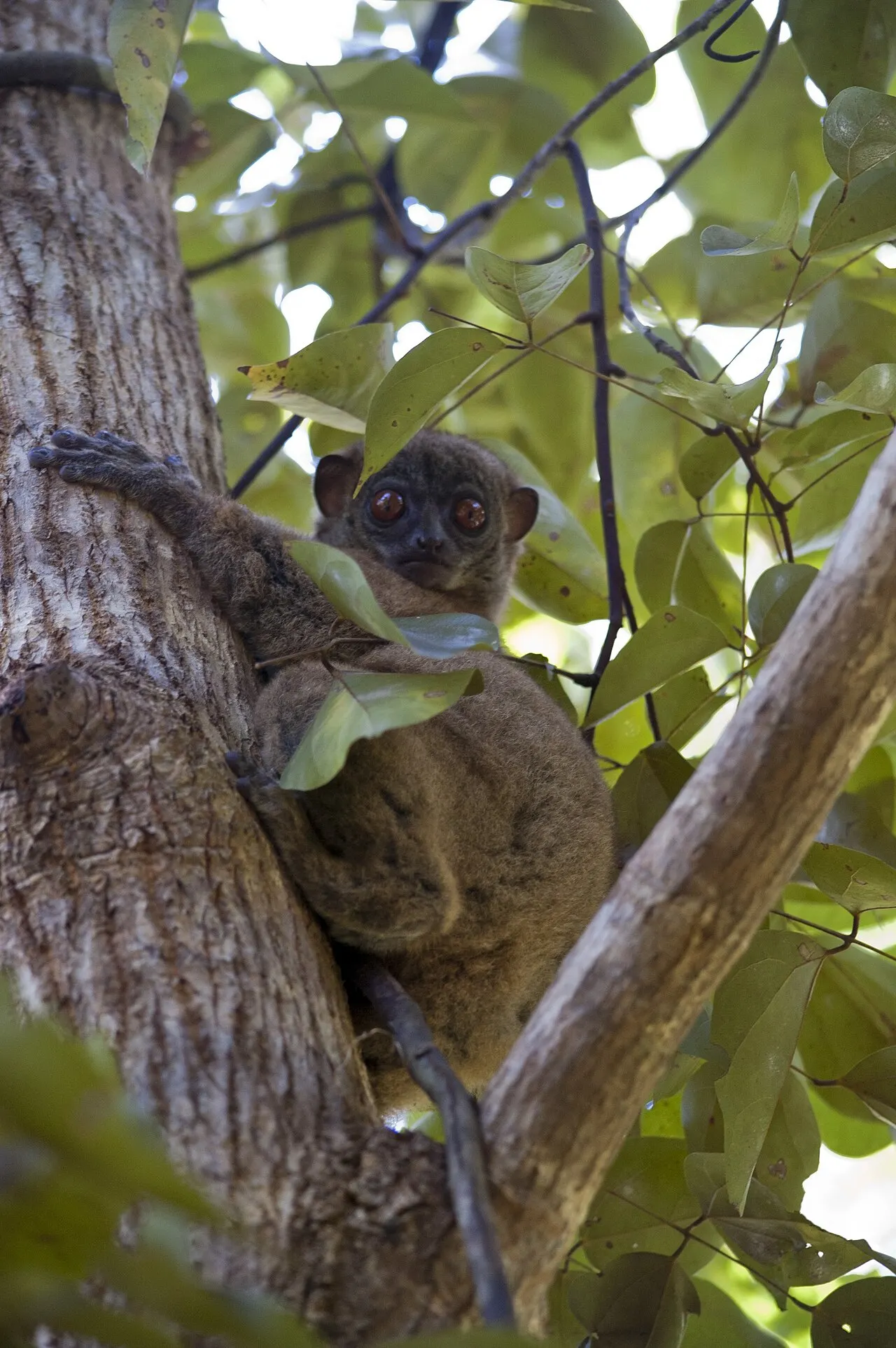
Hawks' sportive lemur (Lepilemur tymerlachsoni), also called the Nosy Be sportive lemur, is a nocturnal leaf-eater found only on Nosy Be, an island off north-western Madagascar. The IUCN Red List rated it Critically Endangered in 2020, after steep losses of the forest it depends on.
How to recognise it
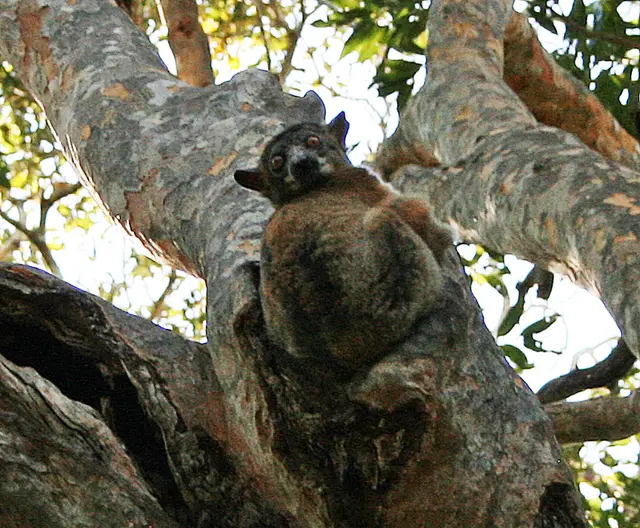
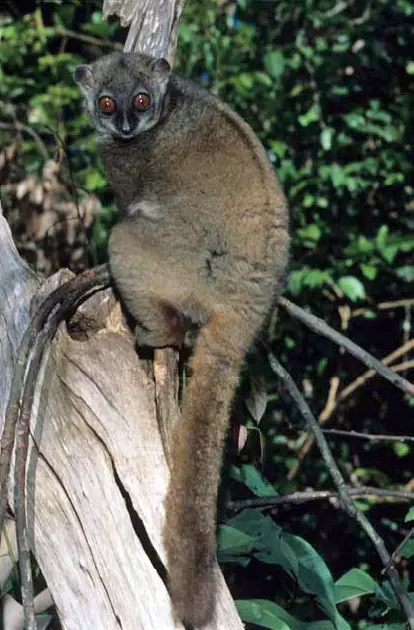
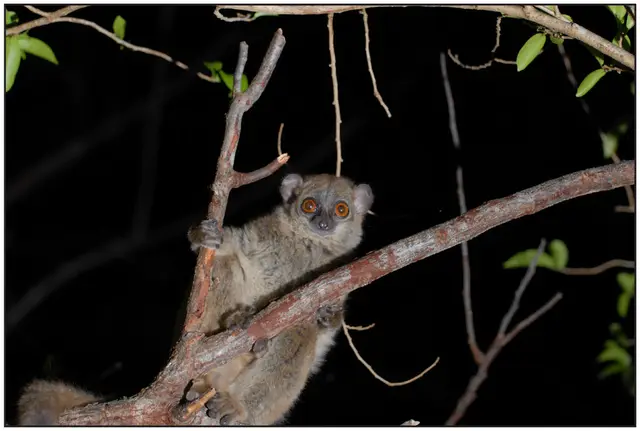
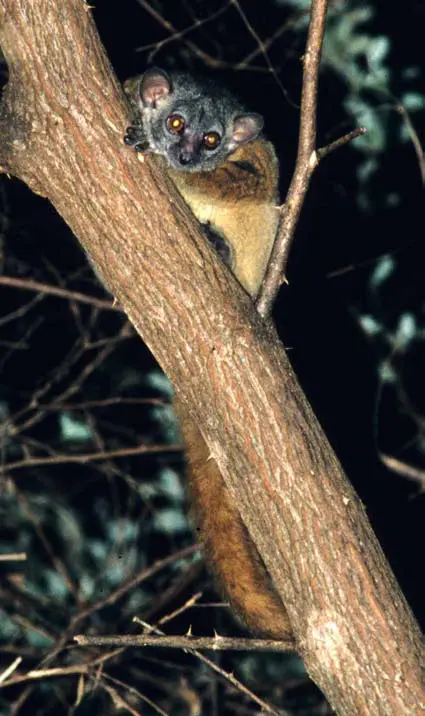
It is a fairly large sportive lemur, about 50 to 68 cm from nose to tail tip, with the tail making up 22 to 27 cm of that. The coat is light brownish-gray, with a lighter reddish-brown upper back and a pale grayish-white belly. A dark brown to black stripe runs from the head down to the lower back, and the face is gray.
Scientists described it in 2006. The species name honours the Hawk family, which is why English names use Hawks'.
Where it lives
The lemur is known only from Lokobe National Park on the south-eastern side of Nosy Be, plus nearby degraded forest. The park covers about 15 square km and has been protected since 1927. The IUCN gives the species' extent of occurrence as 72 square km, at 12 to 35 m above sea level, in a single location.
Its habitat is moist lowland forest. Counts in Lokobe National Park have averaged about 63 animals per square km, though that figure has no date attached.
Pins are Wikidata “endemic to” fields. Orange dots, when present, are GBIF occurrence tiles — survey bias included.
How it lives
It is solitary and active at night. It eats mostly leaves, with some fruit and bark. By day it rests in tree holes in dense primary forest. In more open deciduous forest it uses tangles of vegetation instead, and a study in Lokobe found it spending more time in those tangles. Births fall between August and November, usually a single young.
Why it is in trouble
The IUCN estimates a past population reduction of about 80 percent, an ongoing reduction of about 80 percent, and a projected future reduction of about 90 percent, all linked to loss and decline of its habitat. Generation length is put at 5 years. Forest has been cleared for shifting agriculture, farmland and timber. The lemur needs hidden, undisturbed rest sites, so even partial clearing hurts it.
People also hunt it, and captured animals have reportedly been sold to tourists. The IUCN lists targeted use as ongoing but could not rate its scale.
What is being done
Lokobe is the protected area where the species is known to occur. Researchers working with park staff tested wooden nest boxes as artificial tree holes in case lost sleeping sites need replacing, and the results led managers to consider captive management if it is ever needed. Monitoring and awareness work are under way. The species is also on CITES Appendix I, which bars international commercial trade.
Sources
Written for this catalog in our own words from the sources below, checked against them on 12 November 2026. Population figures are estimates and carry the year they were made. Status and assessment year: IUCN. 2026. The IUCN Red List of Threatened Species. Version 2026-1. iucnredlist.org.