Critically Endangered
Lake Wanam rainbowfish
Glossolepis wanamensis
The Lake Wanam rainbowfish (Glossolepis wanamensis) is a small fish known only from one lake near Lae in Papua New Guinea. The IUCN rated it Critically Endangered in 2020. Introduced fishes have all but emptied the lake of it, but aquarium keepers hold captive stock.
How to recognise it
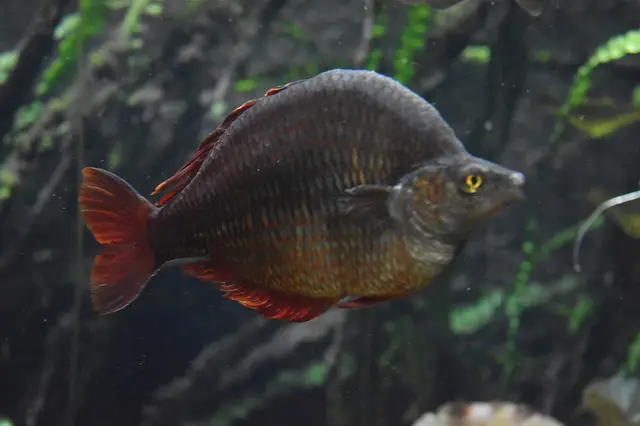
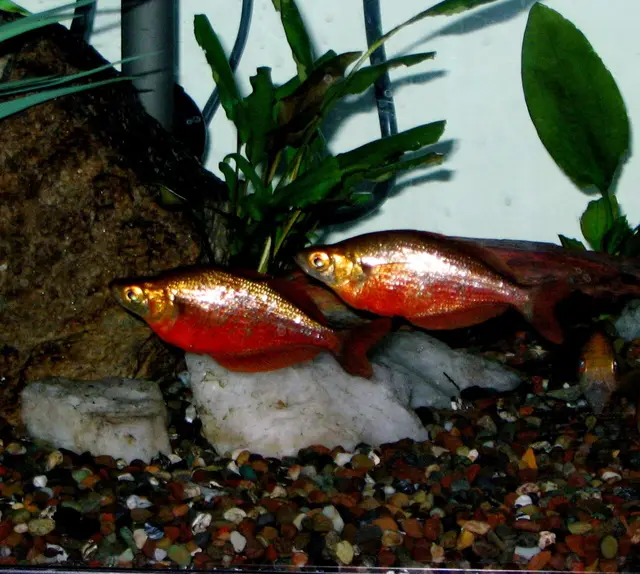
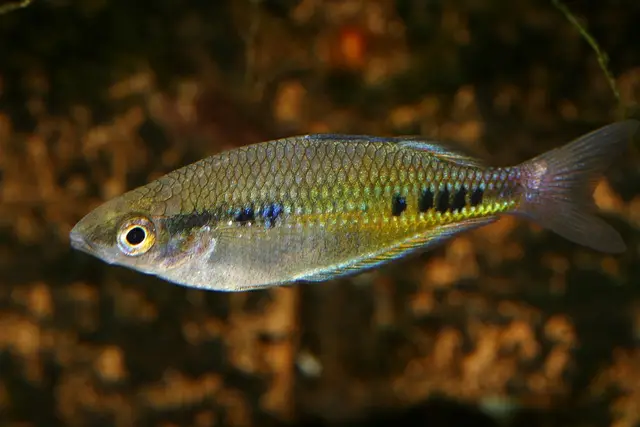
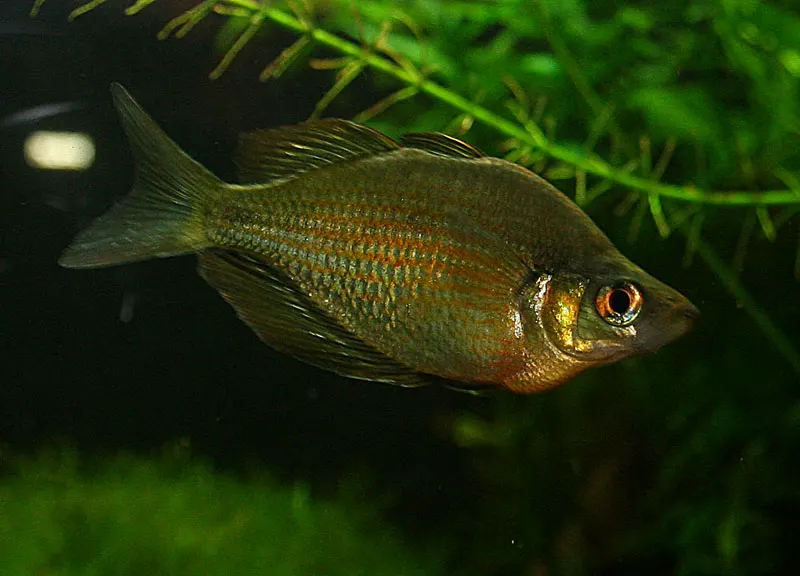
Adults reach about 9 to 10 centimetres in standard length, depending on the source. Males are larger, brighter and deeper-bodied than females, with long first dorsal and anal fins. Keepers say regular live or frozen food brings out the best colour in the fish.
It was described in 1979 by Gerald Allen and Patricia Kailola. The genus name comes from Greek words for tongue and scale.
Where it lives
Its whole range is Lake Wanam, a roughly circular lake about 24 kilometres west of Lae. The Red List counts a single location, with an estimated area of occupancy of just 4 square kilometres, at about 45 metres elevation. FishBase gives about 150 metres instead, and one hobby source puts the lake's maximum depth at 20 metres, so these details vary by source.
Hobbyist accounts describe a shallow, clear lake in a valley ringed by hills, with large beds of water lilies and other plants along the edges, where the fish gather. It is an omnivore that lays eggs, which stick to plants and other surfaces.
Pins are Wikidata “endemic to” fields. Orange dots, when present, are GBIF occurrence tiles — survey bias included.
Why it is in trouble
The Red List names introduced tilapia, carp and gambusia as threats, each affecting the whole population, with competition and direct mortality as the stresses. A large rise in the human population around the lake is also blamed in hobbyist accounts. The Red List says the population is still declining, but gives its overall trend as unknown and offers no population count.
Descriptions of the wild population are blunt but vague. Encyclopedia and hobby sources say the fish has virtually disappeared from the lake, and no published count is available to check that.
What is being done
The Red List lists no conservation actions in place and only calls for research on population trends. The species does have a safety net in aquariums. Captive breeding is established, and the aquarium collector Heiko Bleher is reported to have coordinated a management project on the lake after noticing falling numbers. Fish in the hobby come mostly from breeders, often in Germany.
It has been argued that most hobby stock has been crossed with the related Glossolepis multisquamata, so not every aquarium fish may be a pure descendant of the lake population. That would matter if captive fish were ever used to restock the lake, a step no source describes as planned.
Sources
Written for this catalog in our own words from the sources below, checked against them on 12 November 2026. Population figures are estimates and carry the year they were made. Status and assessment year: IUCN. 2026. The IUCN Red List of Threatened Species. Version 2026-1. iucnredlist.org.