Critically Endangered
Glossolepis dorityi
Glossolepis dorityi
The Grime rainbowfish (Glossolepis dorityi) is a small schooling fish from a few lakes in the Grime River system of Papua, Indonesia. The IUCN Red List (2020) rates it Critically Endangered and possibly extinct in the wild. Its last wild record is reportedly from 2008, though captive-bred fish are kept by hobbyists.
How to recognise it
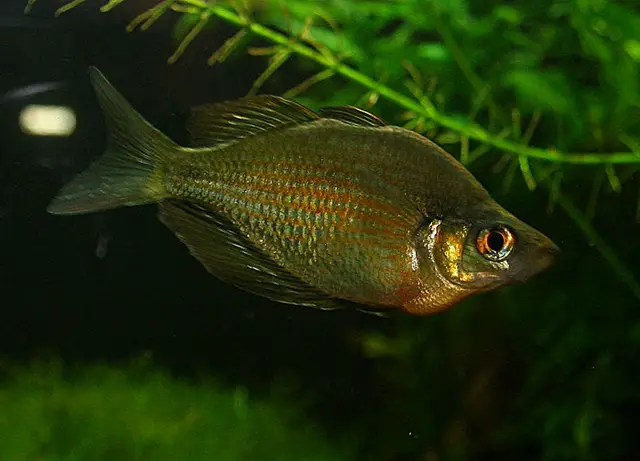
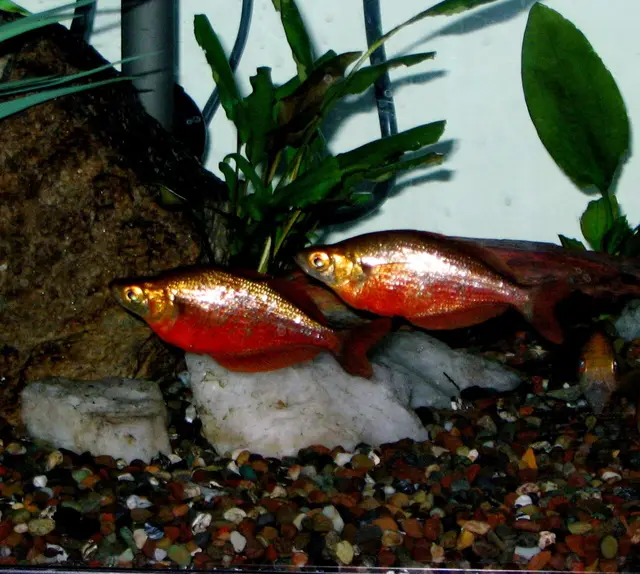
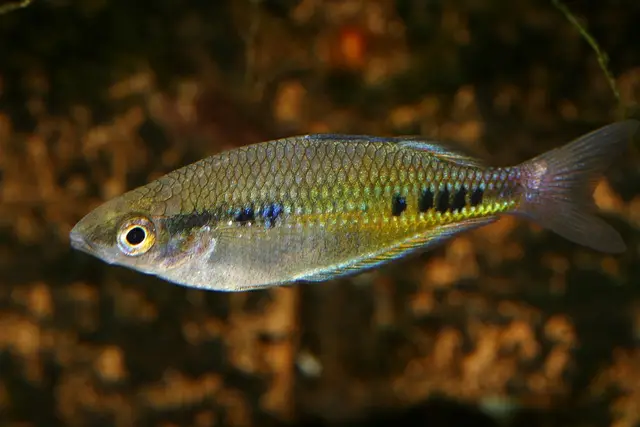
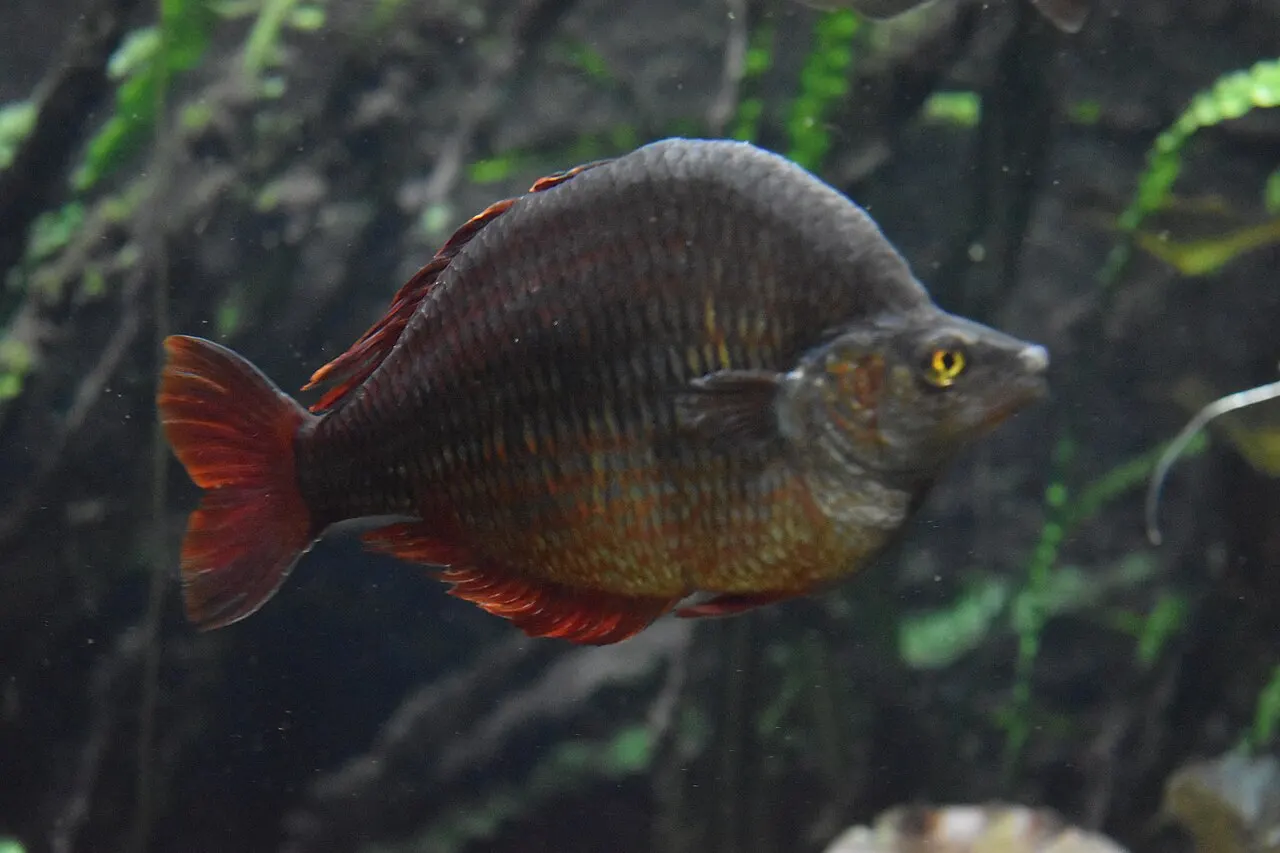
Males are the showy ones. They are greenish with silvery reflections on the back and head, with orange or bronze stripes on the upper body and red-orange stripes lower down. The stripes are strongest during courtship. Males also have deeper bodies and longer rear dorsal and anal fin rays, and reach about 10 to 11.5 centimetres.
Females are smaller, usually under 8 centimetres, and lack the orange stripes.
Where it lives
Gerald Allen described the species in 2001, and it belongs to the rainbowfish family, Melanotaeniidae. It is known only from the Grime River region of northern West Papua, about 50 kilometres west of Lake Sentani. The type locality is Lake Nenggwambu, also called Lake Kali Biru: a small, round, floodplain lake of roughly 4 to 5 hectares, with water clear enough that the depth was estimated at 10 to 15 metres or more. It has a strong outlet stream and no obvious inlet, and is surrounded by secondary forest. Fish gathered around dense water plants near the outlet.
A second population lived in a nearby lake, called Jaigum in some accounts and Tum in others. A fish expert searching there in 2009 could no longer find it.
Pins are Wikidata “endemic to” fields. Orange dots, when present, are GBIF occurrence tiles — survey bias included.
How it lives
Grime rainbowfish are schooling fish. Adults reportedly eat plants and insects. They breed in pairs, and the young are reportedly left to fend for themselves after hatching, at about 4 millimetres long.
Why it is in trouble
Everything depends on very small, easily damaged lakes. The IUCN assessment gives an area of occupancy of 4 across 2 locations, calls the population severely fragmented and still declining, and lists housing and urban development, unspecified species and industrial aquaculture among the threats.
Visitors to Lake Nenggwambu in the years after 2000 found introduced fish, including the predatory snakehead Channa striata and common carp. Carp and tilapia, released as food fish, are blamed for the decline of the lakes. The formerly clear water had turned muddy and dark brown, the Ottelia water plants had vanished, and the rainbowfish carried heavy anchor worm infestations.
What is being done
Collectors brought fish out of the lakes in 1999 and 2000, with further collections in 2008, and aquarists have kept captive populations from both lakes since. Hobbyist reports describe them as stable. The IUCN lists captive breeding and reintroduction as conservation actions, and population size, distribution and trends as research needs.
Sources
Written for this catalog in our own words from the sources below, checked against them on 12 November 2026. Population figures are estimates and carry the year they were made. Status and assessment year: IUCN. 2026. The IUCN Red List of Threatened Species. Version 2026-1. iucnredlist.org.