Endangered
Deccan Labeo
Labeo potail
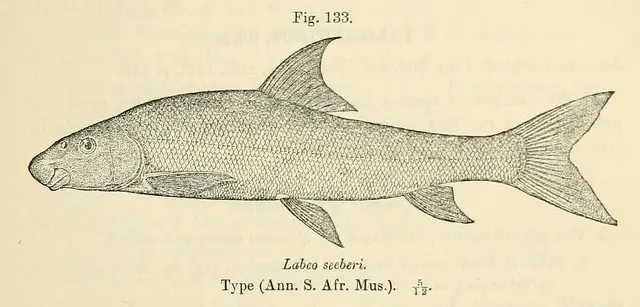
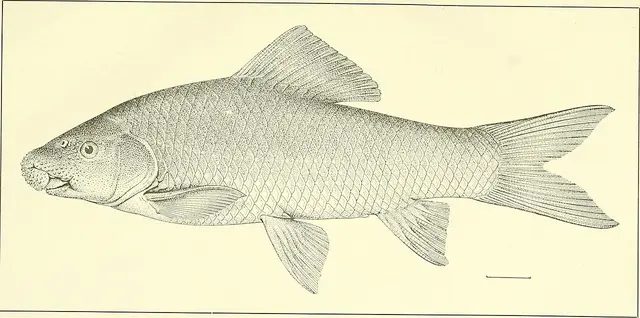
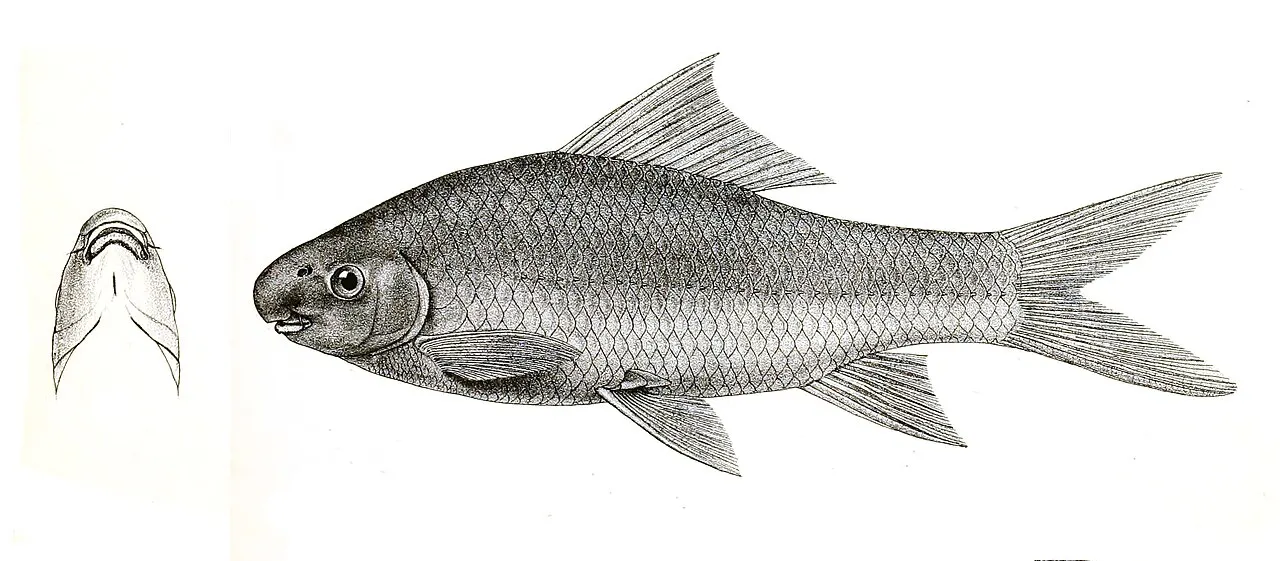
Labeo potail is a freshwater carp of the Western Ghats region of India, a thick-lipped labeo of the upper reaches of rivers and streams, reaching about 30 cm. The IUCN Red List rated it Endangered in 2011 after steep, ongoing declines tied to pollution and fishing.
What kind of fish it is
It belongs to Labeo, a genus of more than a hundred freshwater species across the tropics and subtropics of Africa and Asia. The name comes from the Latin for a person with large lips, and labeos have thick, fleshy lips with hard edges. William Henry Sykes described this one in 1839, as Cyprinus potail.
FishBase gives a maximum length of 30 cm and classes it as a freshwater fish that lives both in open water and near the bottom (benthopelagic). Its colour, diet and breeding are poorly documented.
Where it lives
The species is native to peninsular India. It is recorded from Maharashtra, Karnataka and Kerala in the Western Ghats, and the IUCN assessment also lists Andhra Pradesh. FishBase places it in the Deccan and the Cauvery river system.
It lives in permanent rivers and streams, at elevations of roughly 400 to 700 m according to the assessment. A survey of the Krishna River in Sangli district, Maharashtra, carried out between 2013 and 2017 and published in 2021 in the Journal of Threatened Taxa, recorded 73 fish species. It classed Labeo potail as rare there and collected it near Palus and Sangli.
Pins are Wikidata “endemic to” fields. Orange dots, when present, are GBIF occurrence tiles — survey bias included.
Why it is in trouble
The 2011 assessment, under criteria A2acde+3cde+4acde, gave a population reduction of 50 to 60 percent, applied to past, ongoing and future change, with a decreasing trend. The listed threats are sewage and other pollution, small-scale harvesting for food, and competition from other species. Its range is also still shrinking.
The Krishna survey points the same way. It described rapid declines linked to domestic waste, factory effluent discharged along riverbanks, fishing pressure and competition from carps that were moved into the river from elsewhere.
What is being done
Very little is in place. At assessment time the species was not known to occur in any protected area, had no recovery plan or monitoring scheme, and was not covered by harvest management or international trade controls. Conservation sites had been identified over part of its range. The assessment calls for harvest management and protection of resources and habitat.
Sources
Written for this catalog in our own words from the sources below, checked against them on 12 November 2026. Population figures are estimates and carry the year they were made. Status and assessment year: IUCN. 2026. The IUCN Red List of Threatened Species. Version 2026-1. iucnredlist.org.