Endangered
Green Labeo
Labeo fisheri
The green labeo (Labeo fisheri), also called the mountain labeo, is an olive-green carp relative found only in Sri Lanka, in the Mahaweli River basin. The IUCN Red List assessed it as Endangered in 2019 and records a decreasing population. Dams on the Mahaweli are the biggest single pressure.
How to recognise it
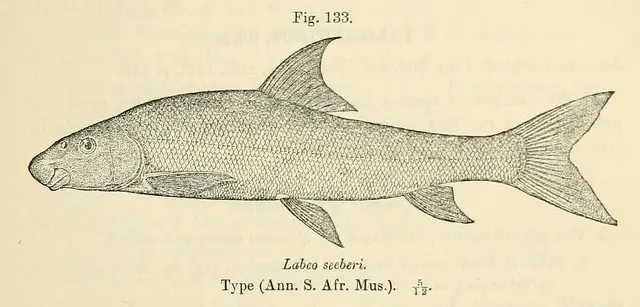
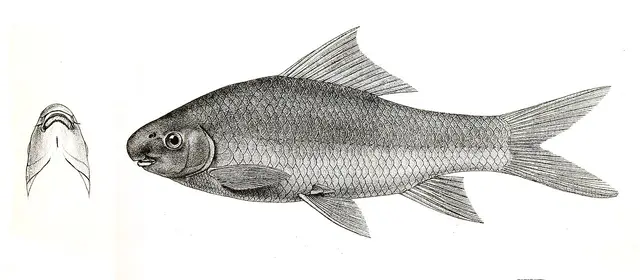
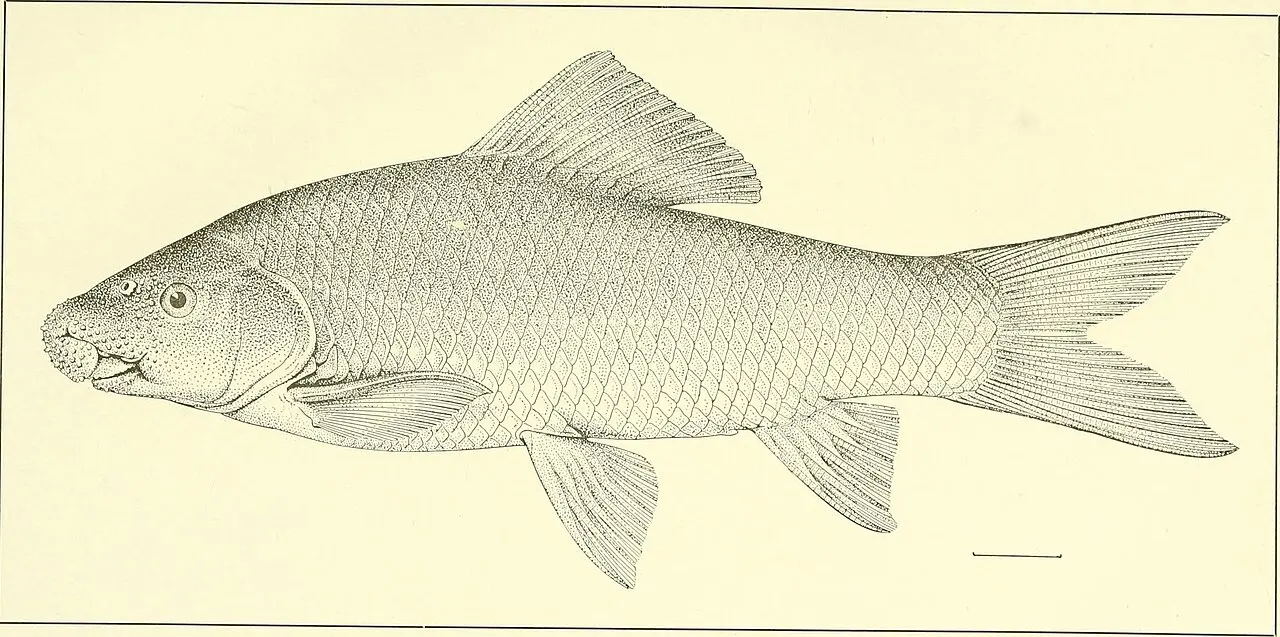
Adults are olive green above with a pale belly and noticeably darker fins. Young fish are yellowish brown, and some adults have a black spot near the tail. The species reportedly reaches about 36 cm. A study of seven fish netted in a reservoir in 2017 measured an average total length of about 25 cm and an average weight of about 198 g, with the heaviest at 333 g.
It was described in 1917 by David Starr Jordan and Edwin Chapin Starks.
Where it lives
The green labeo is endemic to Sri Lanka and is found in streams of the upper Mahaweli basin. The Red List counts four locations between about 80 and 750 metres above sea level, with an extent of occurrence of roughly 3,100 square kilometres and an area of occupancy of about 232 square kilometres.
Historically, adults used deep rapids among boulders and rock crevices, while juveniles and subadults stayed in shallower water with moderate flow. In 2017 researchers found it somewhere new, in the still, deep water of Victoria Reservoir, where fish were caught in gill nets at about 10 metres deep. Before that study, the most recent records near the reservoir dated from 1991.
Pins are Wikidata “endemic to” fields. Orange dots, when present, are GBIF occurrence tiles — survey bias included.
How it lives
It grazes on algae. The fish examined from Victoria Reservoir had eaten only phytoplankton, mainly diatoms and cyanobacteria. Adults are reported to swim upstream to spawn, which leaves them exposed to capture. No detailed breeding information has been published in the sources available.
Why it is in trouble
The Red List scores dams as the highest impact threat, affecting its whole range. Hydropower projects on the Mahaweli since the 1980s have altered the river and likely fragmented the population. Also rated as ongoing pressures across most of the range are sedimentation, housing, farming, pesticides and small-scale fishing, since the fish is eaten locally.
The 2017 reservoir survey also pointed to fishing gear that is not species-specific, pollution, and competition from introduced tilapia for food and space. The Red List gives a population estimate of roughly 17,900 to 68,300 fish and a decreasing trend. The basis for the estimate is not stated.
What is being done
A monitoring scheme exists and the species occurs in at least one protected area, but there is no recovery plan, no harvest management plan and no captive population. Listed actions include habitat protection, captive breeding and awareness work. The 2022 reservoir study called for community-based conservation, protection of catchments and water quality, environmental assessment of new mini hydro projects, and ex situ breeding and reintroduction.
Sources
Written for this catalog in our own words from the sources below, checked against them on 12 November 2026. Population figures are estimates and carry the year they were made. Status and assessment year: IUCN. 2026. The IUCN Red List of Threatened Species. Version 2026-1. iucnredlist.org.