Critically Endangered
Hainan black crested gibbon
Nomascus hainanus
The Hainan black crested gibbon (Nomascus hainanus) lives only in one patch of rainforest on Hainan Island, China, and is among the rarest mammals on Earth. The IUCN Red List assessed it as Critically Endangered in 2020. By late 2024 about 42 animals in seven groups were reported, up from about 10 in 1984.
How to recognise it
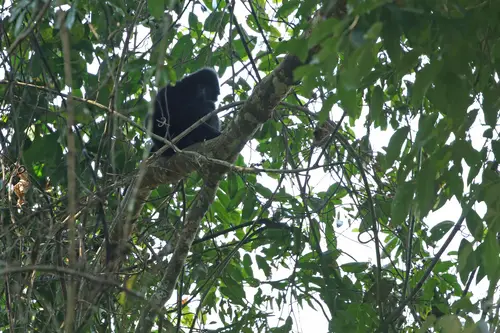
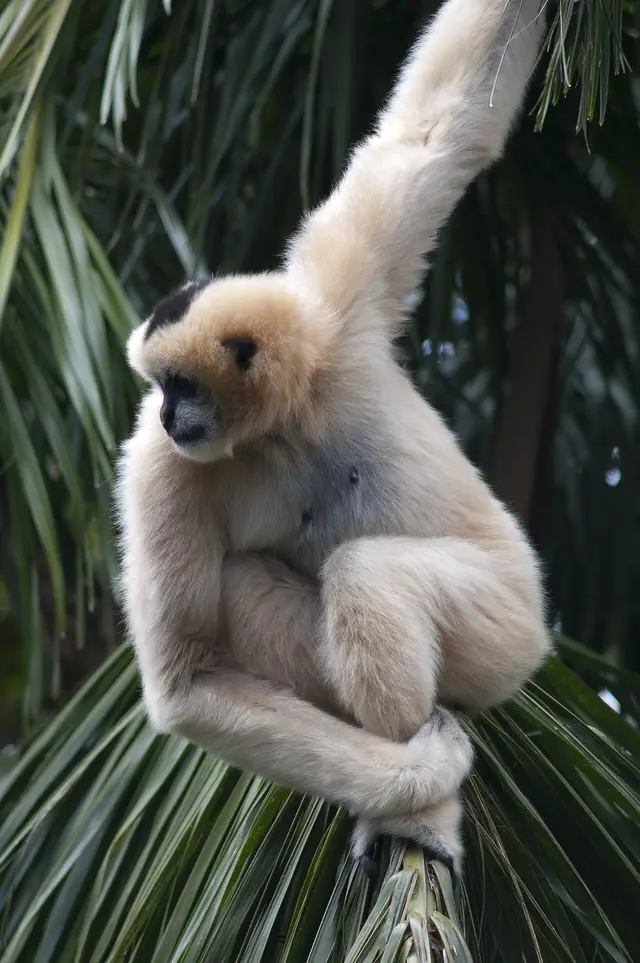
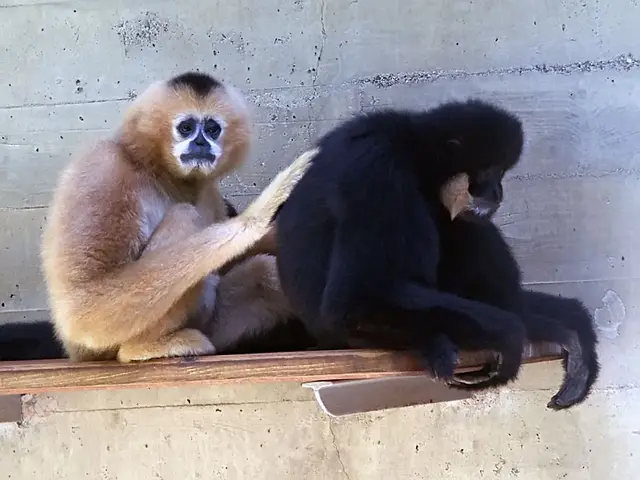
Like other gibbons it is slim, long-armed and tailless, and it travels through the canopy by swinging hand over hand. The sexes look different. Males are mostly black, sometimes with pale cheeks, while females are golden or buff with dark patches, including a dark streak on the head.
Pairs reportedly sing duets that help bind the pair.
Where it lives
The entire species is confined to the Bawangling area of Hainan Tropical Rainforest National Park, on Hainan Island. The IUCN gives its habitat as moist lowland and montane forest, between about 650 and 1,200 m above sea level, and counts it as a single location.
It was not always so restricted. One account puts the island's gibbons at more than 2,000 in the 1950s, and government records from the 17th century are said to describe a range covering about half of China, although some of those records may refer to a different, extinct gibbon.
Pins are Wikidata “endemic to” fields. Orange dots, when present, are GBIF occurrence tiles — survey bias included.
How it lives
Hainan gibbons eat mostly ripe, sugar-rich fruit, especially figs, and reportedly add leaves and insects. Groups are small, typically one breeding male, one or two adult females and their young. Females mature at around 7 to 8 years and give birth about every two to three years, and infants depend on their mothers until weaning at roughly 2 years. Not every mature female in the wild appears to breed, and the reason is unclear.
Why it is in trouble
The decline was driven by habitat loss and hunting. From the 1960s lowland forest was cleared for rubber and logging, pushing gibbons into higher, less suitable forest, and hunting between 1960 and 1980 reportedly killed about 100 of them, partly for bones used in traditional medicine. By 1984 only about 10 animals in two groups remained.
The IUCN lists small-holder and industrial farming, hunting, accidental harm and human activity as threats. A 2025 study of infant survival in Frontiers in Conservation Science recorded four deaths between 2010 and 2024, named slippery branches, raptors and human disturbance as probable risks, and listed a genetic bottleneck and extreme weather as factors needing further study. With so few animals in one place, an ecologist quoted by China Daily warned that even a fallen tree could wipe out the species.
What is being done
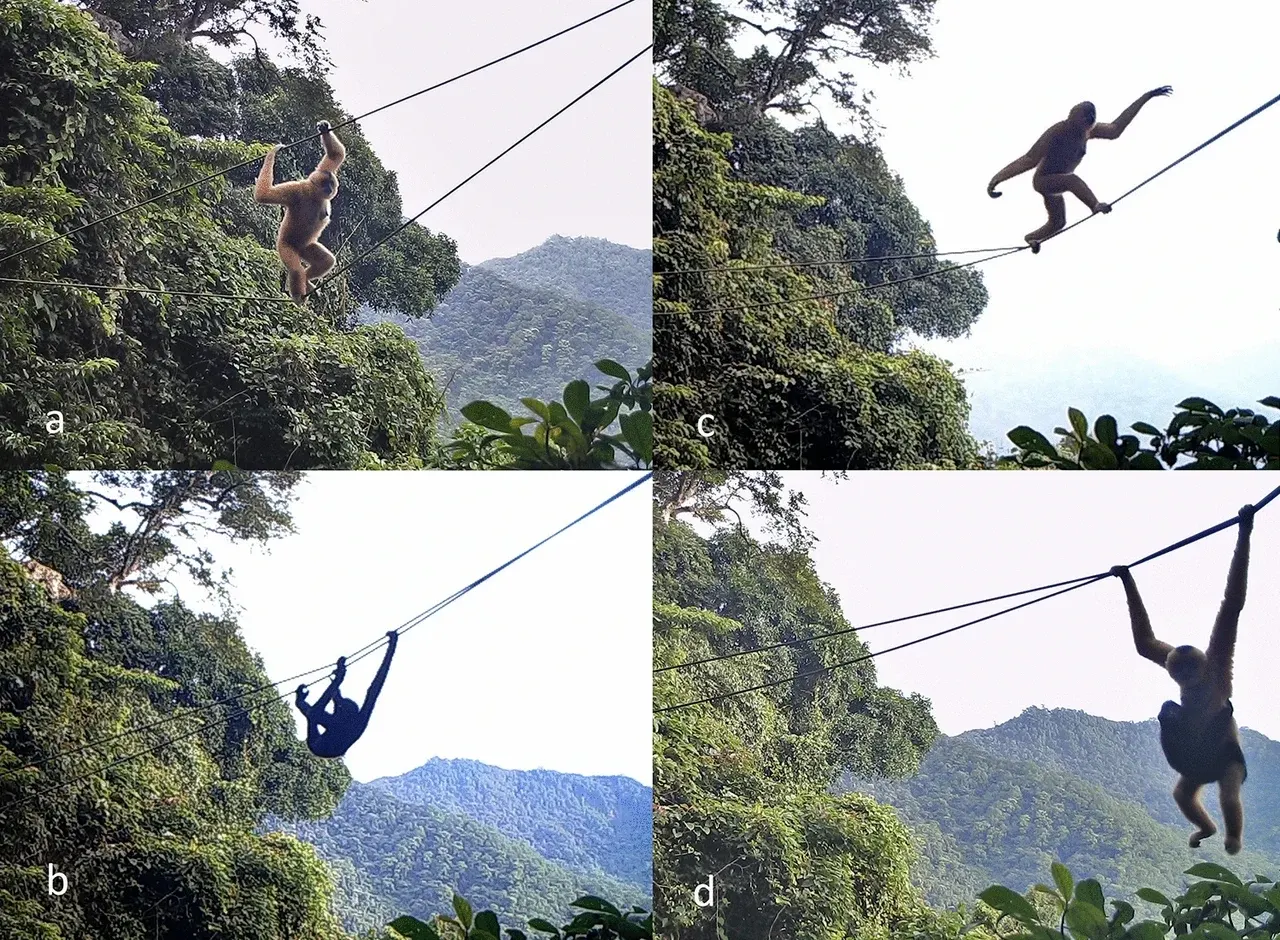
Four decades of anti-poaching enforcement and habitat restoration have allowed a slow recovery. New groups have formed in 2011, 2014, 2020, 2022 and 2024. China Daily reported in December 2024 that the population had grown from 29 animals in four groups in 2018 to 42 in seven groups. Typhoon landslides had split the habitat, and park staff strung artificial ropes across the gaps, which the gibbons now use. Planting of food trees is the next step.
No Hainan gibbons are in captivity, and earlier captive breeding attempts have failed. The species is on CITES Appendix I, and the IUCN records a systematic monitoring scheme.
Sources
Written for this catalog in our own words from the sources below, checked against them on 12 November 2026. Population figures are estimates and carry the year they were made. Status and assessment year: IUCN. 2026. The IUCN Red List of Threatened Species. Version 2026-1. iucnredlist.org.