Endangered
Galaxias divergens
Galaxias divergens
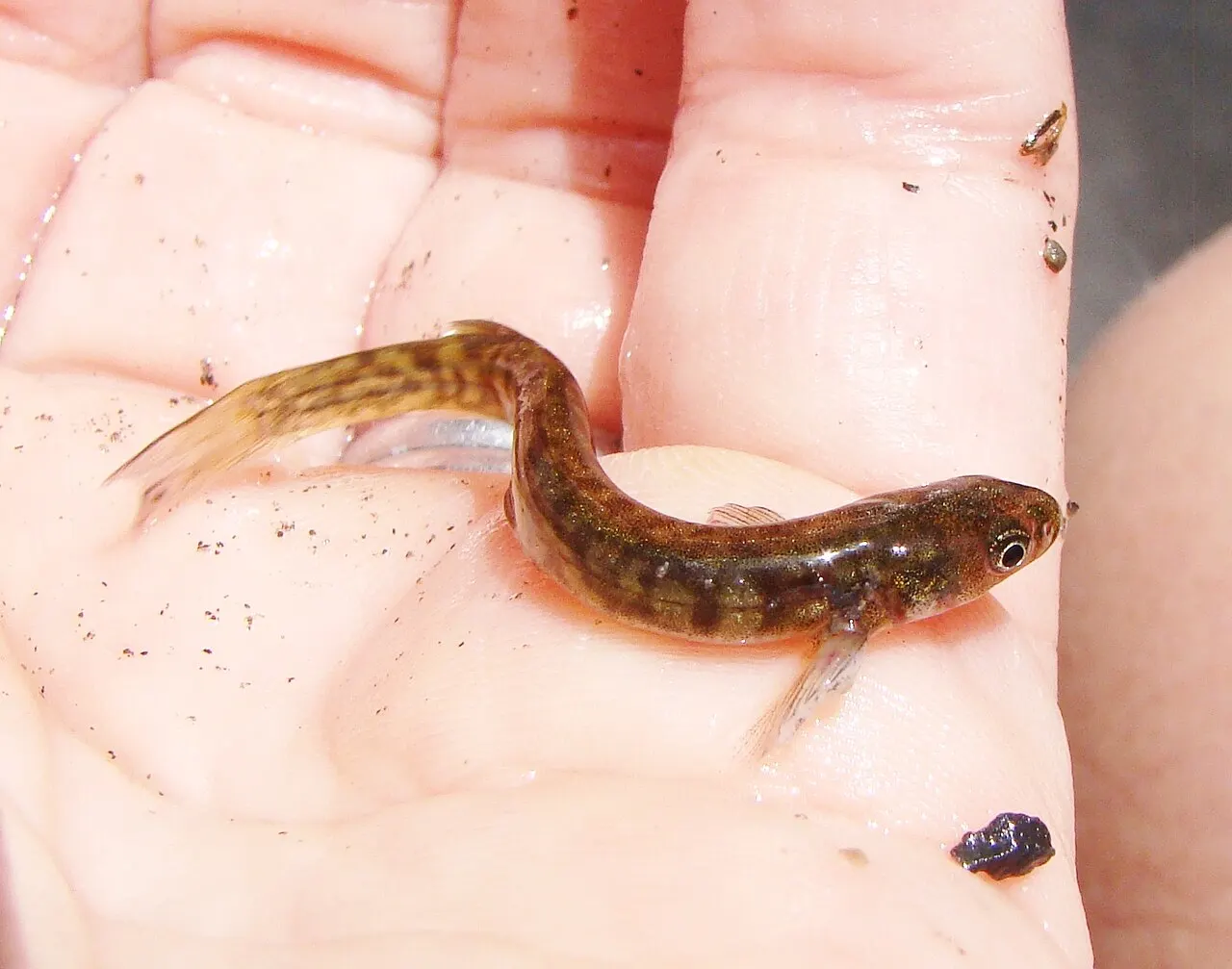
The dwarf galaxias is a small, scaleless freshwater fish found only in New Zealand, in rivers of the North Island and the north and west of the South Island. It reportedly grows to about 9 cm and never goes to sea. The IUCN Red List assessed it as Endangered in 2014.
How to recognise it
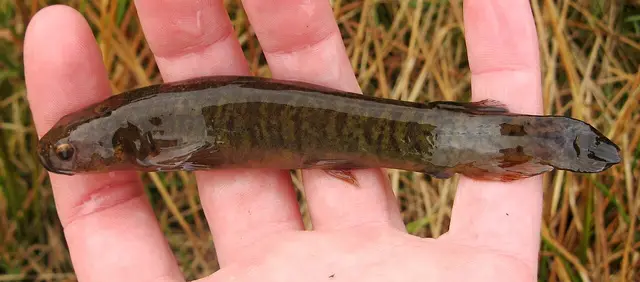
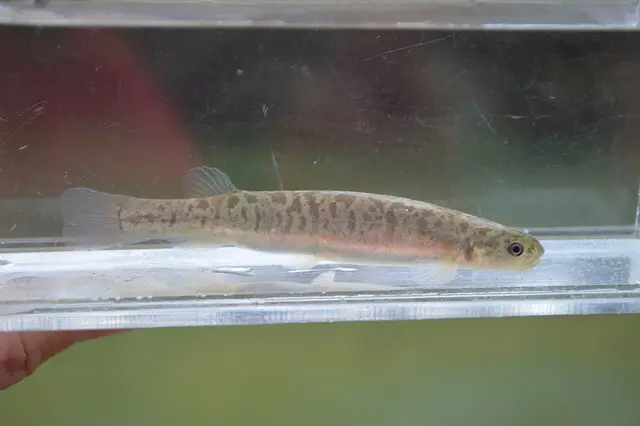
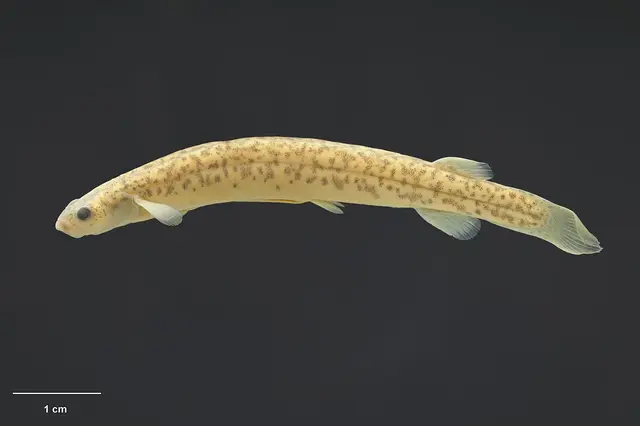
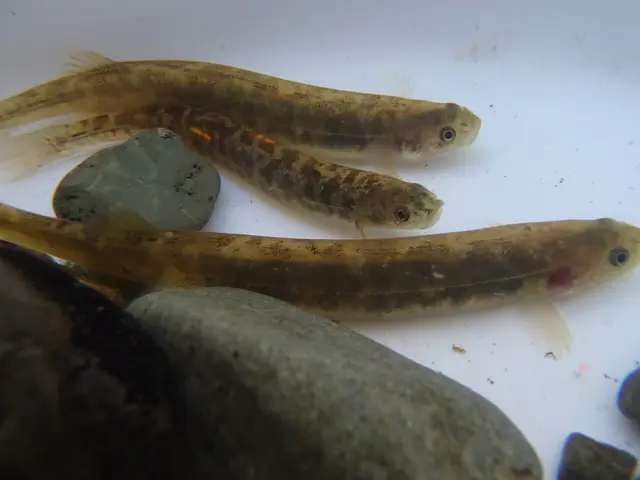
It's a slender fish with a small head and a blunt snout. The body ranges from amber to olive green with dark brown blotches on the back and sides, and the underside is silvery. It has no scales, and instead a thick, leathery, mucus-covered skin. The dorsal and anal fins sit about two thirds of the way along the body, and it has six pelvic fin rays where most galaxiids have five. Gerald Stokell described it in 1959, and adults reportedly reach about 9 cm.
Where it lives
Populations are patchy. In the North Island they include the Waihou River near Putaruru, a few sites in the Rangitaiki River near Galatea, and the Wellington region. In the South Island, the fish lives in Marlborough and Nelson and down the West Coast as far as the Hokitika River. IUCN estimates its area of occupancy at only about 18.5 square kilometres, within a wider extent of about 6,600 square kilometres, from sea level to 1,130 m.
It uses shallow, riffly edges of larger rivers and gravel or cobble riffles in smaller streams, mostly in foothill catchments. Shade from streamside plants and logs or boulders in the water matter to it.
Pins are Wikidata “endemic to” fields. Orange dots, when present, are GBIF occurrence tiles — survey bias included.
How it lives
Unlike the whitebait galaxiids, this species is non-diadromous, so it has no sea phase and spends its whole life in fresh water. It feeds mainly on aquatic insect larvae, especially mayflies and midges. It reportedly spawns in two seasons, from March to May and again from October to November.
Why it is in trouble
IUCN gives the trend as decreasing and lists ongoing threats from introduced species and from small-scale farming and grazing. New Zealand's rare species guidance adds loss of streamside vegetation, siltation and nutrient enrichment, bank erosion by livestock, goats and deer, culverts and fords that block upstream movement, and water taken from rivers. Introduced fish compete with it and prey on it.
What is being done
The 2014 assessment records no conservation actions in place. The New Zealand Forest Owners Association lists the fish as At Risk, Declining under the national system. Guidance for forest owners calls for keeping wide streamside plantings, fencing livestock out of stream edges, providing fish passage at barriers, managing water takes and preventing new fish and weed introductions. The Department of Conservation says that, for non-migratory galaxiids in general, it has restored some key populations by removing invasive fish and building barriers against reinvasion.
Sources
Written for this catalog in our own words from the sources below, checked against them on 12 November 2026. Population figures are estimates and carry the year they were made. Status and assessment year: IUCN. 2026. The IUCN Red List of Threatened Species. Version 2026-1. iucnredlist.org.