Endangered
Crowned lemur
Eulemur coronatus
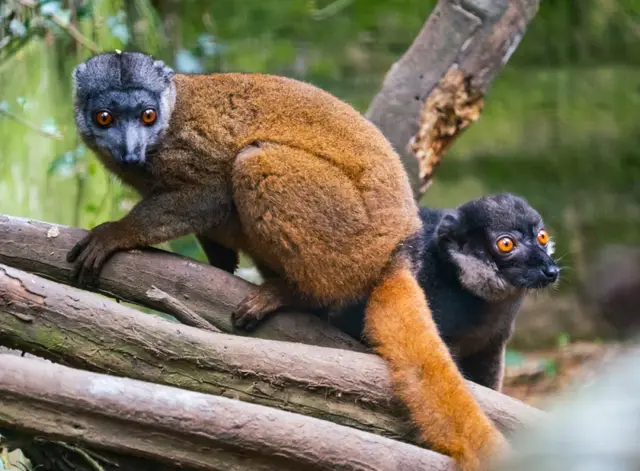
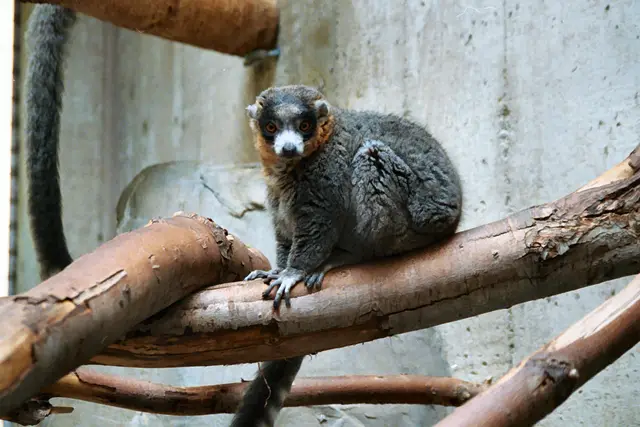
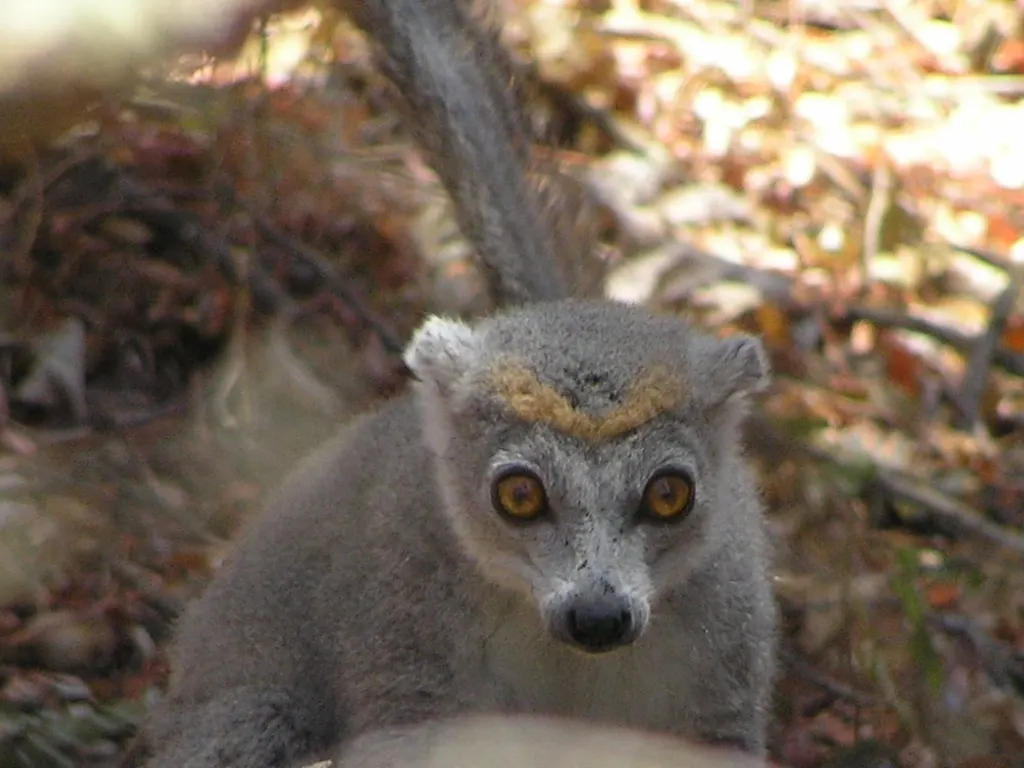
The crowned lemur (Eulemur coronatus) is a small, mostly daytime lemur found only in northern Madagascar. Females are grey with an orange crown, males reddish brown with black and orange. The Red List has rated it Endangered since 2020, expecting a steep decline from forest loss and hunting.
How to recognise it
The crowned lemur is a compact lemur, with a head and body of about 34 cm and a tail of roughly 45 cm. Reported weights vary by source, from about 1.1 to 1.3 kg in one account to around 2 kg in two others. The sexes look different. Females have a grey body topped with an orange crown, while males are darker reddish brown with a crown of black and orange.
Where it lives
It is endemic to Madagascar and lives only in the far north, from the Cap d'Ambre peninsula south to the Mahavavy River and east to the area north of Sambava. It uses dry deciduous forest and mid-altitude rainforest from sea level to about 1,400 m. The Red List estimates its extent of occurrence at about 12,950 square kilometres, and records that this range is still shrinking and the forest is severely fragmented.
Most animals live in Ankarana Special Reserve, with smaller numbers in Montagne d'Ambre National Park and the Andrafiamena forest. A 2001 field summary reported that where it shares forest with Sanford's brown lemur, the latter often displaces it from food.
Pins are Wikidata “endemic to” fields. Orange dots, when present, are GBIF occurrence tiles — survey bias included.
How it lives
Crowned lemurs are mostly active by day, though some feeding happens at night. They eat mainly fruit, plus young leaves, flowers, pollen and insects. In the dry season they visit waterholes, some of them deep inside caves. At Ankarana they cross the razor-sharp limestone pinnacles known as tsingy, the only lemurs there known to do so. They are reportedly among the only seed dispersers for at least 20 plant species.
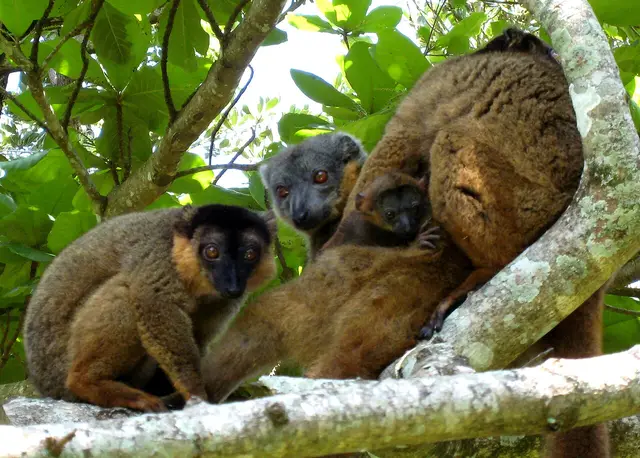
Groups usually number five or six, sometimes up to 15. Females dominate males, which is unusual in this genus. Mating peaks in May and June, and births come in September and October. Young are mature at about 20 months, and wild animals can live up to about 20 years.
Why it is in trouble
The 2020 assessment projects a population reduction of about 50 percent over the next three generations (generation length 8.4 years), driven by loss of habitat quality and by exploitation. The Red List names shifting agriculture and mining as pressures, along with hunting for food and capture as pets. Other accounts add charcoal production and illegal logging. A 2004 estimate put the whole population between 1,000 and 10,000 animals, an old and very broad figure.
Illegal hunting has been reported inside protected areas too, including Ankarana and Montagne d'Ambre.
What is being done
The species is listed on CITES Appendix I, which bars international commercial trade. Conservation sites have been identified across its whole range, it occurs in several protected areas, and some animals are held in captivity. The assessment lists harvest management, site management, education and awareness work among the conservation actions, and agroforestry, which grows crops among trees, is put forward as a way to reduce forest clearing.
Sources
Written for this catalog in our own words from the sources below, checked against them on 12 November 2026. Population figures are estimates and carry the year they were made. Status and assessment year: IUCN. 2026. The IUCN Red List of Threatened Species. Version 2026-1. iucnredlist.org.