Critically Endangered
Gray-headed lemur
Eulemur cinereiceps
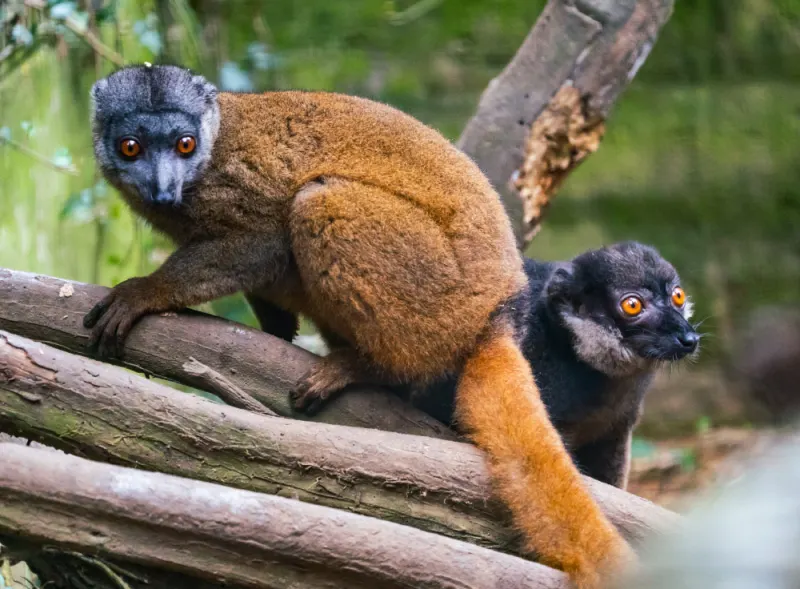
The gray-headed lemur (Eulemur cinereiceps) is a medium-sized lemur from a narrow strip of rainforest in south-eastern Madagascar. It was assessed as Critically Endangered by the IUCN Red List in 2020, after a decline estimated at around 80 percent. Males are known for a fluffy white collar.
How to recognise it
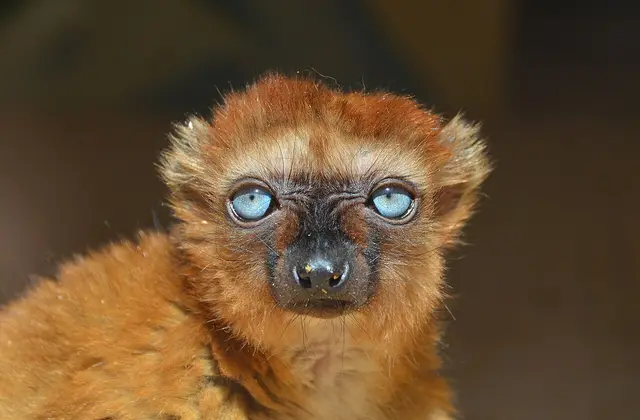
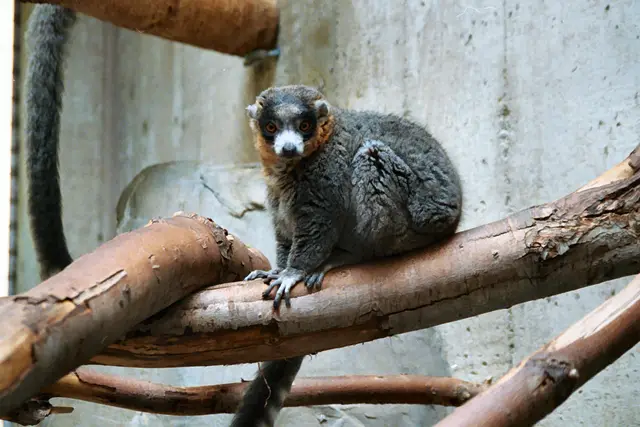
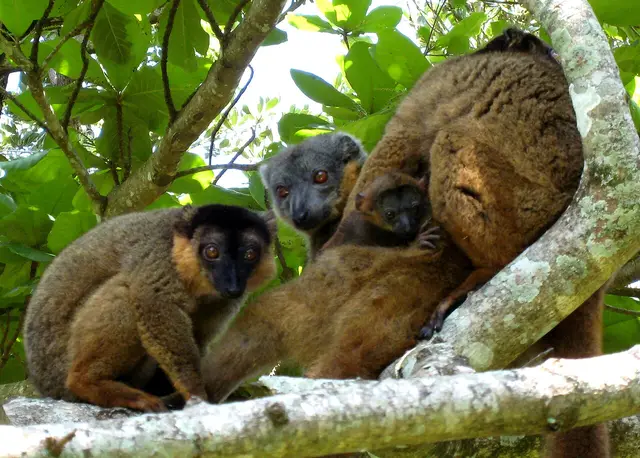
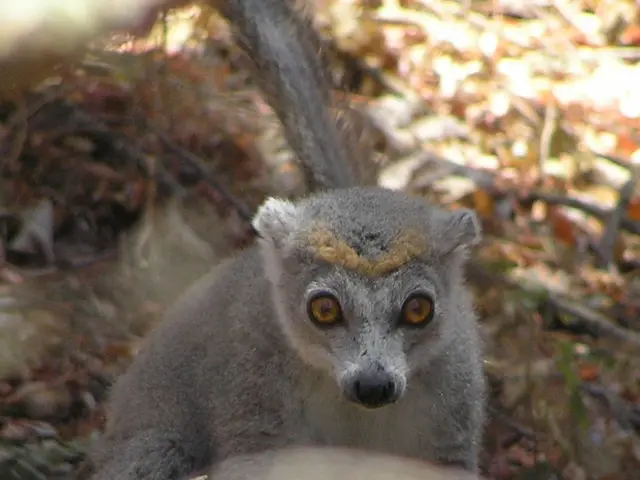
Adults weigh about 2 to 2.5 kg, with a body 40 to 45 cm long and a tail of 50 to 55 cm. Both sexes have gray head hair, a black face and orange eyes. Males are gray with a buff underside and a fluffy white collar under the chin. Females are reddish brown with a less distinct beard, and are easily confused with the collared brown lemur.
The species was long known as the white-collared lemur (Eulemur albocollaris). A 2008 revision reportedly found that name to be a junior synonym, so the older name cinereiceps and the common name gray-headed lemur came back into use. Some conservation groups still call it the white-collared lemur.
Where it lives
It is found only in south-eastern Madagascar, in lowland and montane rainforest from the Manampatrana River south to the Mananara River, from sea level to about 900 m. The Red List gives an extent of occurrence of about 7,300 square kilometres, but the forest actually left inside that range is far smaller. A satellite-based estimate for 2005 put it at around 700 square kilometres.
The Red List considers the population severely fragmented, and the range is still shrinking.
Pins are Wikidata “endemic to” fields. Orange dots, when present, are GBIF occurrence tiles — survey bias included.
How it lives
Gray-headed lemurs eat mostly fruit, with flowers, leaves, nectar, mushrooms and insects as supplements. They live in the upper forest layers and forest edges, leaping between trees. They are cathemeral, meaning they are active at irregular times through both day and night.
Groups are loose and change in size, usually 4 to 17 animals according to one account, and up to about 20 according to another. Details of breeding come partly from related species, so births are best described as probably falling between September and November.
Why it is in trouble
The Red List assessment of 2020 gives an ongoing reduction of about 80 percent over three generations (24 years, with a generation of eight years), driven by habitat loss and exploitation. Slash-and-burn farming and small-scale agriculture are clearing the forest, and lemurs are hunted and trapped, with trapping reported to be heavy when strawberry guava is fruiting.
Weather is another blow. A cyclone in 1997 is believed to have cut the population along the coastal edge of the range by about half. One conservation group adds that about half of the remaining animals have hybridised with red-fronted lemurs, and that protected areas cover under 5 percent of the remaining habitat.
What is being done
The species is listed in CITES Appendix I, which controls international trade. It occurs in at least one protected area, and the Red List says conservation sites have been identified across the whole range. Actions called for include community education, alternative livelihoods, habitat restoration and tighter control of hunting.
Some animals are kept for breeding in zoos. The New England Primate Conservancy reports that only one zoo holds a breeding group, Linton Zoo in the United Kingdom.
Sources
Written for this catalog in our own words from the sources below, checked against them on 12 November 2026. Population figures are estimates and carry the year they were made. Status and assessment year: IUCN. 2026. The IUCN Red List of Threatened Species. Version 2026-1. iucnredlist.org.