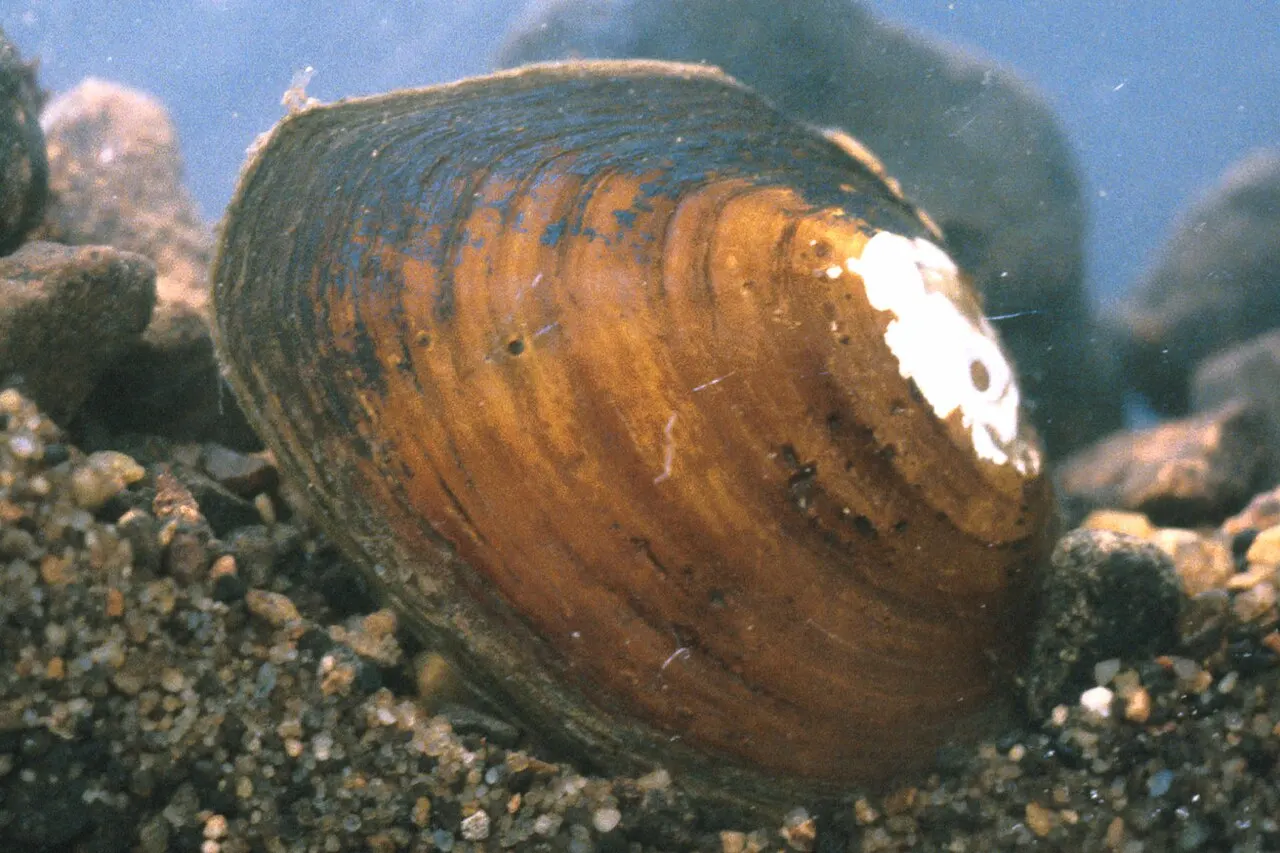
Critically Endangered
Cumberland pigtoe
Pleurobema gibberum
The Cumberland pigtoe is a small, heavy freshwater mussel found only in the Caney Fork River system of middle Tennessee. The IUCN Red List has rated it Critically Endangered since its 1996 assessment. It is also federally listed as Endangered in the United States, and its populations are small, scattered and mostly thin.
How to recognise it
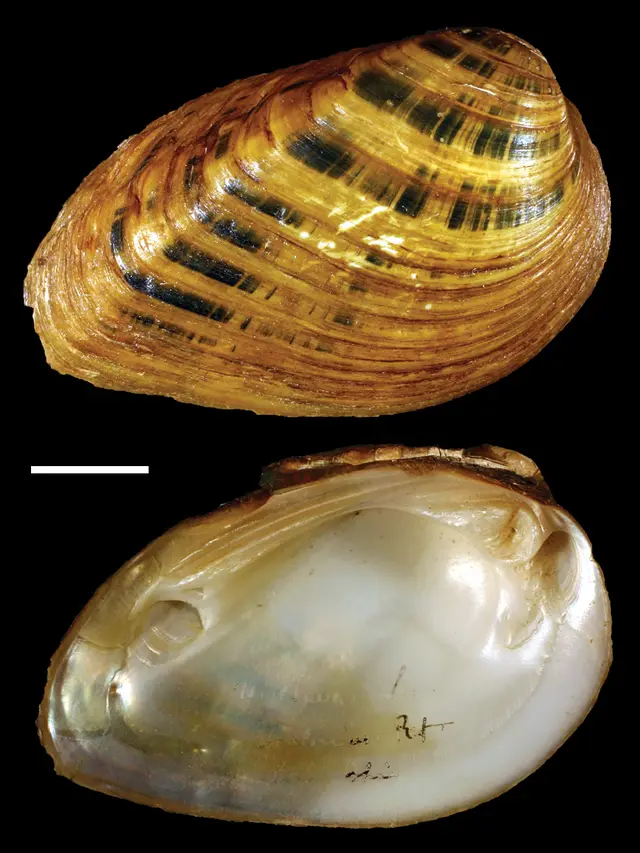
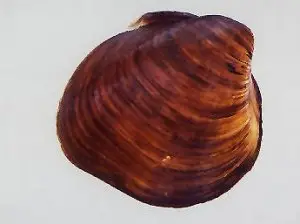
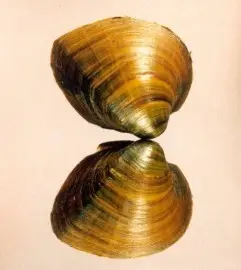
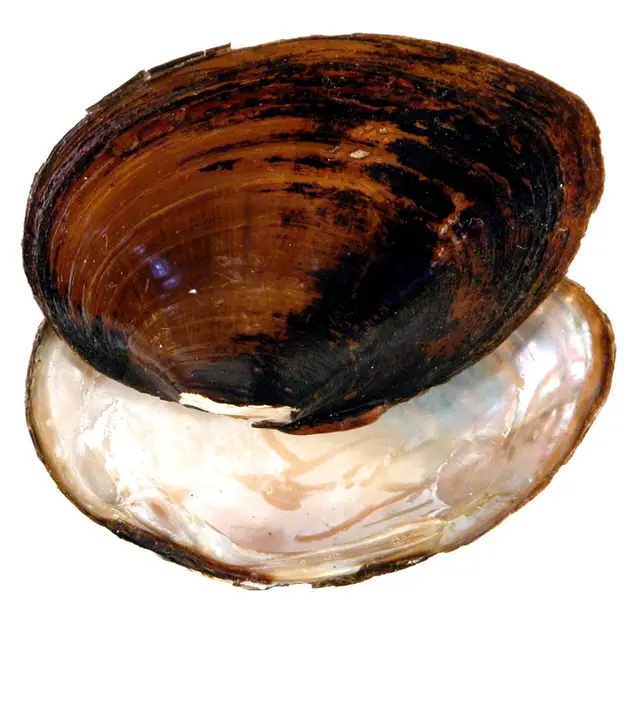
This is a small mussel with a thick, triangular shell that rarely grows longer than about 6 cm (2.3 inches). Young animals are yellowish brown. Adults darken to a deep mahogany, and the inside of the shell is peach to orange.
Isaac Lea described it in 1838. It was long placed in the genus Pleurobema, and the IUCN still uses the name Pleurobema gibberum. After molecular studies, the U.S. Fish and Wildlife Service moved it to the genus Pleuronaia in a 2022 rule, so current US documents call it Pleuronaia gibber.
Where it lives
It lives in stream riffles with gravel or sand bottoms, and sometimes in mud or cobble. The whole species is confined to the upper Caney Fork drainage, a tributary system of the Cumberland River.
Historically it occurred in five tributaries above what is now Great Falls Reservoir. The 1992 recovery plan listed isolated populations in short reaches of Barren Fork, the Calfkiller River, Cane Creek, Hickory Creek and the Collins River. A few more animals have since turned up in Hills Creek, West Fork Hickory Creek, Liberty Creek and Witty Creek. Surveys in 2021 found none in the Caney Fork main stem or the Rocky River.
Pins are Wikidata “endemic to” fields. Orange dots, when present, are GBIF occurrence tiles — survey bias included.
How it lives
Like many river mussels, it filters plankton and fine organic material from the water. The female takes sperm from the current and broods fertilised eggs in her gills. Her larvae, called glochidia, must then attach to a fish before they can become juvenile mussels.
A 2003 study by Layzer and colleagues in Southeastern Naturalist identified the telescope shiner and the striped shiner as host fish. At least 30 percent of wild telescope shiners caught in the Collins River carried glochidia, and juvenile mussels released from those fish survived in the lab. The egg packets the mussels release held fewer than 50 larvae each and were mostly unfertilised eggs.
Why it is in trouble
Great Falls Dam was built in 1917, and the reservoir behind it drowned much of the shallow, flowing habitat these mussels need. The dam still splits the remaining populations apart and blocks the movement of the host fish. Water pollution linked to coal mining, poor land use and waste discharge has reduced the range further.
A 2022 federal status review described low-density, fragmented populations. Sediment smothering the streambed is a continuing problem, and in the Collins River the review noted algal blooms and more water being drawn off, likely by nearby plant nurseries.
What is being done
The U.S. Fish and Wildlife Service listed the species as Endangered on 7 May 1991 and published a recovery plan in 1992. The plan's goal for delisting is six viable populations, separated enough that a single event could not wipe out more than one.
None of the recovery criteria had been met by 2022. The status review rated the Collins River and Cane Creek populations as the healthiest, with young animals present, while the Calfkiller River has produced only a handful of large, older mussels.
Sources
Written for this catalog in our own words from the sources below, checked against them on 12 November 2026. Population figures are estimates and carry the year they were made. Status and assessment year: IUCN. 2026. The IUCN Red List of Threatened Species. Version 2026-1. iucnredlist.org.